
Two Priests Consecrate Flatbread on the Floor, Churches Host Muslim Funeral and Buddhist Birthday Party; Meanwhile, SSPX Still in “Schism.”
Müller punctures the SSPX confession scare while Muslim funerals, floor liturgies, and Buddhist rites enter Catholic spaces

.Müller Pulls the Pin
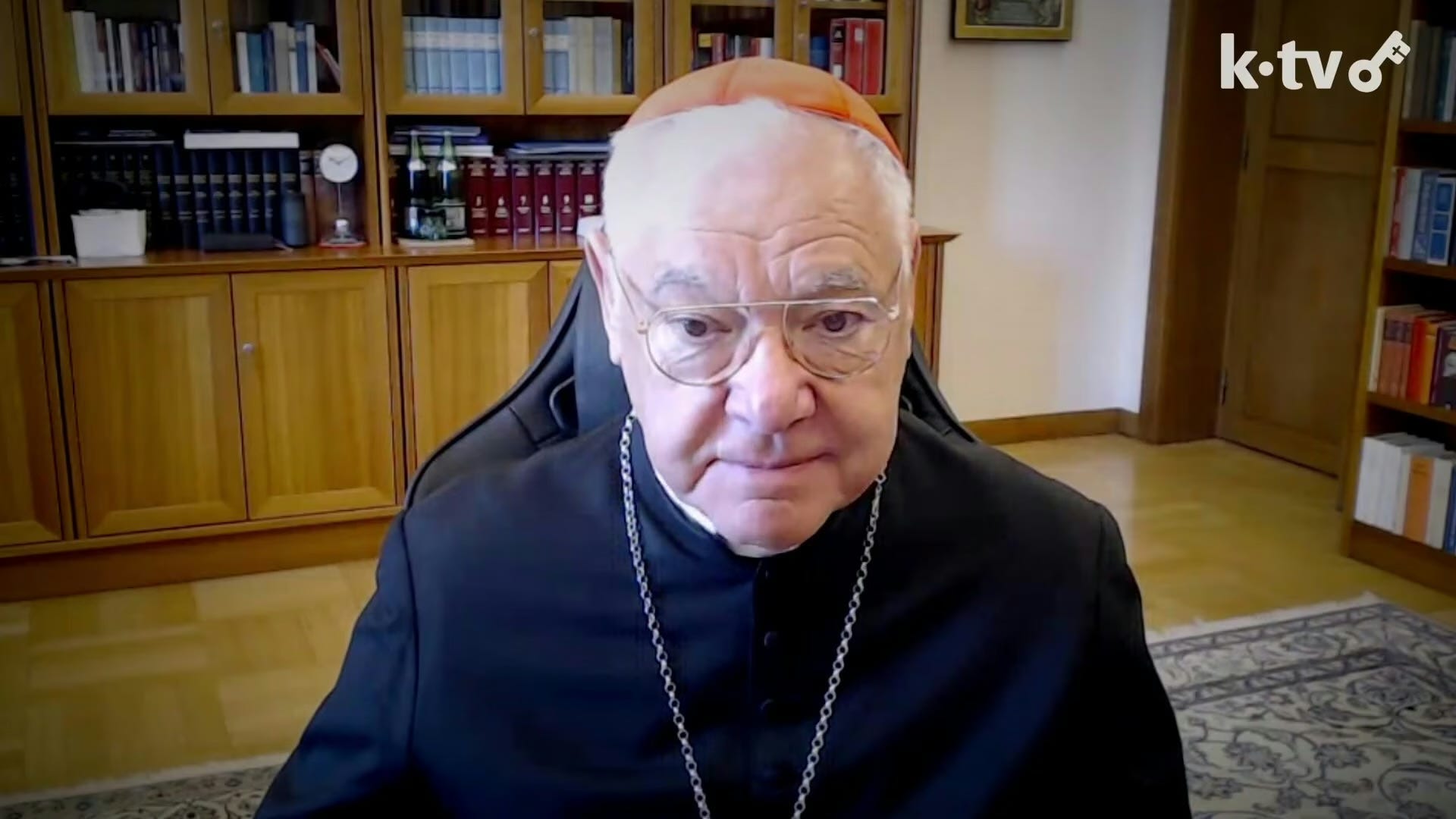
Cardinal Gerhard Müller has done something useful.
Asked on K-TV whether confessions heard by priests of the Society of Saint Pius X remain valid, he answered that they are valid though illicit. Two days later, after the Dicastery for the Doctrine of the Faith had claimed the opposite in its July 2 explanatory note, Müller doubled down. He called the note unclear, pointed to the sacramental power conferred in Holy Orders, and invoked the accepted validity of absolution in the separated Eastern Churches.
That public contradiction matters more than another round of internet canon-law combat.
Rome’s campaign against the SSPX depends heavily on fear. Bishops can be condemned, priests can be branded, and chapels can be stigmatized, yet the deepest pressure reaches the faithful through the confessional. Tell a Catholic that his absolution failed and you reach straight into his conscience. Tell a mother that years of family confessions may have been empty ceremonies and you create panic. Tell the dying that the priest who came to their home lacks the power to forgive, and the decree becomes a weapon against peace of soul.
Fernández wanted a clean declaration. Müller has exposed a dispute at the highest level of the Roman establishment.
The scare no longer looks clean.
The Faculty Rome Forgot to Revoke
Müller’s first explanation was too broad. Canon 966 says valid absolution requires both priestly orders and the faculty to exercise that power for the penitent. Ordination alone does not settle every case.
The stronger argument lies elsewhere, in an act of Francis that the new note seems eager to forget.
At the close of the Jubilee of Mercy, Francis extended to SSPX priests the faculty to absolve validly and licitly “until further provisions are made.” That grant was public, personal, and indefinite in duration. It was issued for the pastoral benefit of the faithful so that nobody would be deprived of sacramental reconciliation.
A serious revocation should identify the grant and revoke it.
Fernández’s explanatory note reportedly declares invalidity without doing that work. No careful account of when the faculty ceased. No explanation of how the faithful are supposed to reconcile the new claim with the earlier papal act. A sentence appears, reporters repeat it, bishops issue warnings, and families are expected to tremble.
Müller’s intervention gives away the bluff because it shows that Rome itself cannot present a coherent account of the faculty.
The DDF could have issued a precise juridical instrument. It chose rhetoric.
Müller Is Still Defending the Revolution
Nobody should mistake Müller for a defender of the SSPX position.
He remains a Vatican II man. He accepts the postconciliar settlement, attacks Écône, insists that unity outside the current Roman structure is impossible, and treats Benedict’s arrangement as the proper solution. His disagreement with Fernández concerns the edges of the punishment, not the legitimacy of the system imposing it.
That is what makes his confession answer so damaging.
Müller comes from inside the machine. He once headed the Congregation for the Doctrine of the Faith. He has every incentive to protect Roman authority and every reason to condemn the consecrations. When even he says the DDF’s invalidity claim is unclear, the faithful have solid grounds to reject panic.
His Orthodox comparison also cuts deeper than he may realize. Canon law itself allows Catholics, under defined conditions, to receive penance from non-Catholic Eastern ministers whose sacraments the Catholic Church recognizes as valid. Rome can acknowledge valid absolution outside full communion in the East while declaring every SSPX confession dead with a few lines in an explanatory note.
The contradiction is too obvious.
The Wrong Question: “Is the Old Rite Forbidden?”
Müller becomes less useful when the subject turns to the old Mass.
He says the old rite is not forbidden. Strictly speaking, he can point to permissions that survive under narrow conditions. That is a lawyer’s answer to a historical campaign.
Traditionis Custodes calls the postconciliar books the unique expression of the Roman Rite’s lex orandi. It requires episcopal authorization for the 1962 Missal, blocks new groups, restricts locations, subjects newly ordained priests to additional approval, and directs bishops toward a single reformed form over time. Francis’s accompanying letter says openly that older-form communities should return “in due time” to the reformed Roman Rite.
Calling that arrangement “not forbidden” is like saying a condemned building remains available because one room opens twice a month with written permission.
The point of Traditionis Custodes was suppression through attrition.
Müller prefers a controlled old Mass inside Vatican II. He objects when suppression drives Catholics toward the SSPX because the Society offers the liturgy together with a doctrinal indictment of the Council. His solution keeps the Mass and neutralizes the memory carried by it.
That is why approved conservatives suddenly discover generosity after Écône acts. They want the old rite available as an alternative to the SSPX, stripped of the theology that makes it dangerous to the synodal order.
The Mass becomes containment.
The Council remains untouchable.
Turin Invents the “Christian Sympathizer”
The funeral report from Turin shows the opposite instinct at work.
An Iranian Muslim dies. His coffin enters the parish church of Sant’Anna. A priest presides. Incense is used. Christian readings and prayers accompany the body. When questions arise, the parish priest reaches for a new category: the deceased was a “Christian sympathizer,” or at least belonged to a family of parish sympathizers.
Catholic law already has categories.
The baptized faithful receive ecclesiastical funerals. Catechumens are counted among them. In the conciliar Church, under limited circumstances, a baptized non-Catholic may receive Catholic funeral rites when his own minister is unavailable and his intention does not oppose it. An unbaptized adult Muslim falls outside all of those categories.
There may be lawful ways to pray privately for a non-Christian family or to offer human consolation. The issue here is the use of a Catholic church, a coffin, clergy, incense, readings, and a ceremony close enough to a funeral that the priest feels compelled to insist upon a semantic distinction.
Calling it a “farewell” changes little.
The ritual teaches through its shape. People see a body brought into a parish church and honored with Christian forms. They naturally understand that the Church is treating the deceased as one of her own, or at least treating religious identity as a detail that pastoral creativity can overcome.
The “sympathizer” category exists because the old categories would have required a difficult answer.
Modern pastoral practice invents a new noun whenever doctrine says no.
Flatbread on the Floor
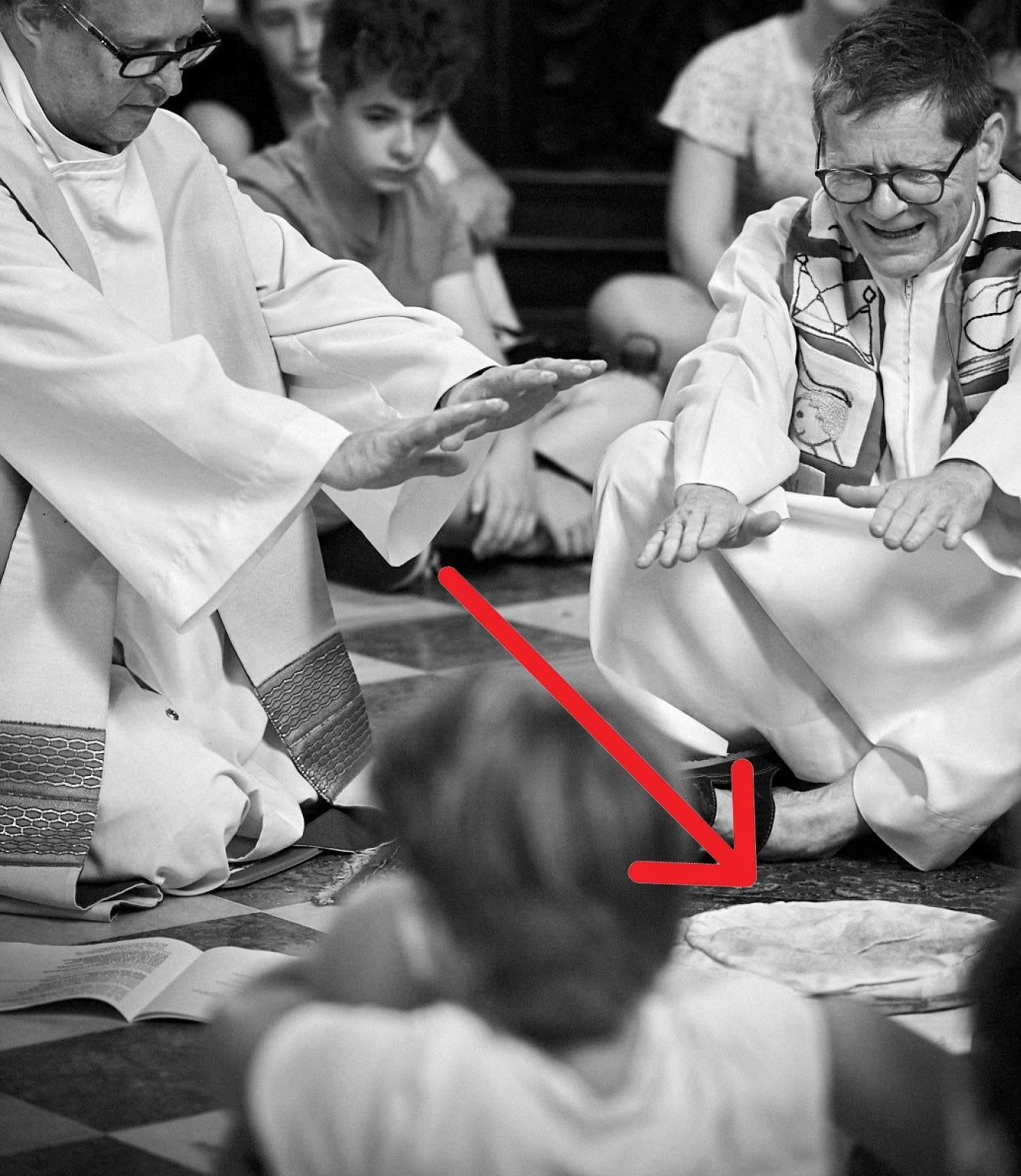
Austria supplies a liturgical companion piece.
According to the Diocese of Gurk-Klagenfurt’s own description, two priests marked thirty years of ordination at a school with “a Mass sitting on the floor and with flatbread.”
The description reveals the instinct behind the event.
Why advertise the Mass through the furniture and the bread? Why make the novelty the headline? Because the celebration is being presented as intimate, informal, communal, and liberated from the visual grammar of altar, sanctuary, vestment, kneeling, and sacrifice.
The Church’s own postconciliar instruction says Eucharistic bread must be unleavened and purely wheat. It condemns improvisation, arbitrary additions, and experimentation. It warns that liturgical abuses obscure Catholic faith and doctrine concerning the Eucharist.
The practical system rarely acts as though those words carry urgency.
A school-floor liturgy with flatbread receives a cheerful diocesan write-up. The Roman Mass that formed saints for centuries receives permits, restrictions, surveillance, and an official plan for eventual disappearance.
The problem reaches beyond taste. The old liturgy tells the body that Calvary has become sacramentally present. The casual liturgy tells the body that the community has gathered around a shared religious meal.
People usually believe the ritual they see.
A Buddhist Birthday on Catholic Property
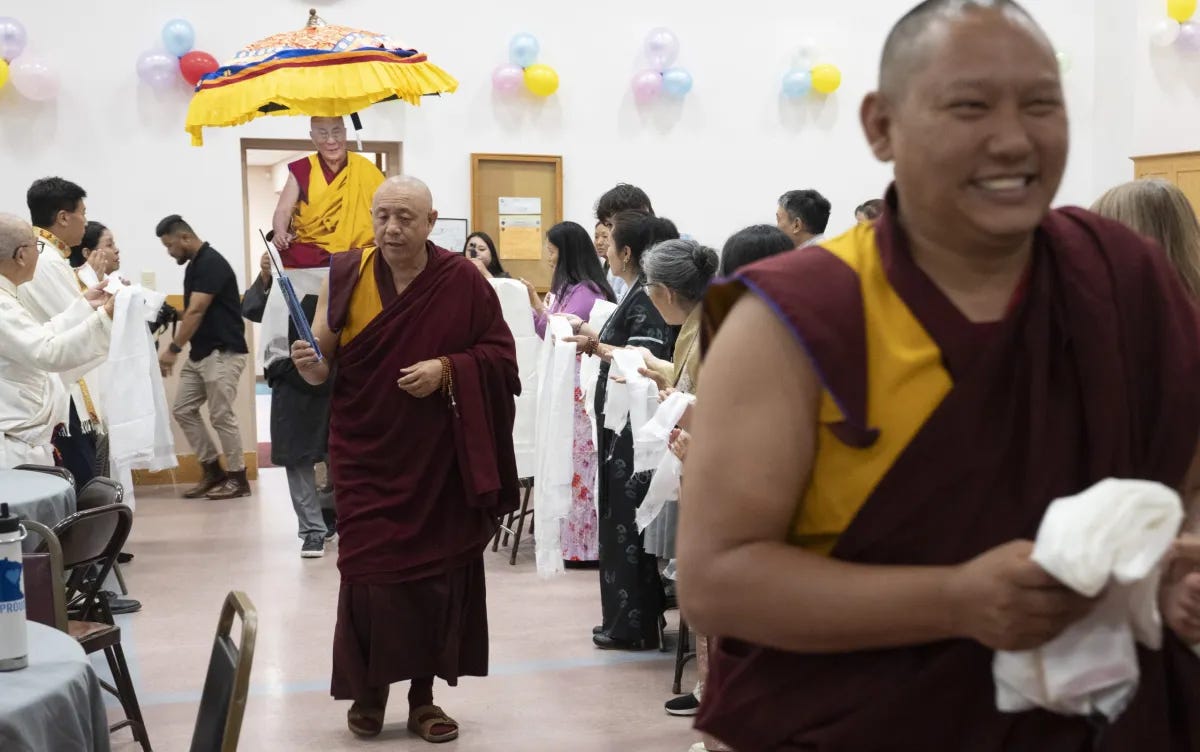
The Massachusetts story completes the picture.
A Tibetan Buddhist community gathered at Most Holy Redeemer Church in Hadley to mark the Dalai Lama’s ninety-first birthday. The newspaper account describes chanting “om,” tossing barley flour, mandala offerings, bows before an image of the Dalai Lama, and celebrations of Tibetan religious and national identity.
Why does parish property become a host site for devotional acts directed within a non-Christian religious system? A mandala offering before the Dalai Lama’s image is more than folk dancing or a cultural meal. The Dalai Lama is revered within Tibetan Buddhism as a religious figure, traditionally understood as an emanation of the bodhisattva of compassion. The event therefore carries a devotional meaning that a Catholic parish should identify clearly.
Hospitality does not require religious indifferentism. Support for persecuted Tibetans does not require Catholic property to become a platform for Buddhist ritual.
The same ecclesiastical world that discovers endless spaciousness for this encounter becomes cramped and anxious around the old Roman Rite.
Rome’s Last Prohibition
The current order has room for almost everything.
It can improvise a category for a Muslim funeral. It can make space for Buddhist devotion. It can celebrate Mass on a school floor and advertise flatbread. It can recognize Orthodox absolution outside full communion. It can revise, accompany, dialogue, host, adapt, and discern.
Tradition receives a different vocabulary: prohibition, authorization, irregularity, schism, invalidity.
This is why Müller’s intervention is key. He has broken the spell around the most frightening claim. He has shown that the Roman establishment itself cannot speak with one voice about the validity of SSPX confessions. The faithful should take the sacrament seriously, study the law, and refuse emotional blackmail.
They should also see the larger truth.
The postconciliar system does not fear irregularity as such. Its own life is full of improvisation and contradiction. It fears the old Faith operating beyond its ability to domesticate it.
A flatbread liturgy can be absorbed.
A Buddhist celebration can be welcomed.
A quasi-funeral can be renamed.
Écône remembers what Rome has spent sixty years trying to forget.
That is the offense.
If you value independent Catholic analysis and want to help keep this work going, you can make a contribution or subscribe below. Every donation and subscription directly supports the writing, research, and production of Hiraeth in Exile.
Thank you for helping preserve independent Catholic journalism rooted in truth and tradition.
Is every word of Vatican II untouchable? Even where it says that Hindus are "on a loving, trusting flight toward God"? I guess that St. Francis Xavier was wasting his time.
Ah, correct me if I'm wrong, but weren't we just talking about Müller the other day? Are we really going to trust this guy? What's his game this time? I am not saying that he's wrong here, because he isn't, but what's he up to?
Mr. Jackson is right about this being about fear, however any well- instructed Catholic knows that in danger of death any validly ordained priest can hear a confession and validly absolve a penitent, even if defrocked and laicized, or excommunicated, or suspended.
The Turin situation... Traditionally, that couldn't have happened of course, but this is the modern(ist) day, where the Vatican II revolution and the sin-nod-al "church" (for now) reign supreme...
The Flatbread on the floor nonsense is just another example of plain sacrilege. These so-called "priests" are apostates, plain and simple. And so is the "bishop" of that diocese.
Isn't there a Buddhist monastery or temple in that area? I don't know if there is or not, but if there is, why wasn't the birthday celebration held there? Or at some public venue? Or even a public park?
In truth, the Vatican has never had a consistent position on the SSPX, other than that it was "excommunicated". Several Archbishops and Cardinals in the Vatican who (were) are members of various Congregations who could speak authoritatively have made statements about the SSPX situation, which have been (and are) routinely ignored by the SSPX haters.
Mr. Jackson closes with:
"Écône remembers what Rome has spent sixty years trying to forget.
That is the offense."
Exactly. The SSPX is just doing what Catholics have done for centuries. Put God first.
The Vatican II revolution puts man first.