
Globalism Forever!
Zen names the manipulation, Rorate sells rehab, Leo trades the Cross for branding, and the diplomatic corps gets a January sermon for the borderless world

The week the mask slipped in public
Rome gave us a neat little January packet. An “extraordinary” consistory on January 7–8, a new papal staff debuted January 6, and a January 9 address to the diplomatic corps that reads like a grant proposal written by a UN committee with a patristic epigraph taped to the top.
One thread runs through all of it. Vatican II’s political religion keeps demanding loyalty to process, to tone, to managed outcomes, to the vocabulary of global governance. Anyone who refuses the script gets treated as an inconvenience, a lack of “dialogue,” a threat to “unity.” The same machine that dissolves doctrine into “pastoral accompaniment” dissolves nations into “migratory movements,” then baptizes the dissolving with holy words.
Cardinal Zen, at least, said the quiet part out loud.
Zen says “manipulation” and the room proves his point
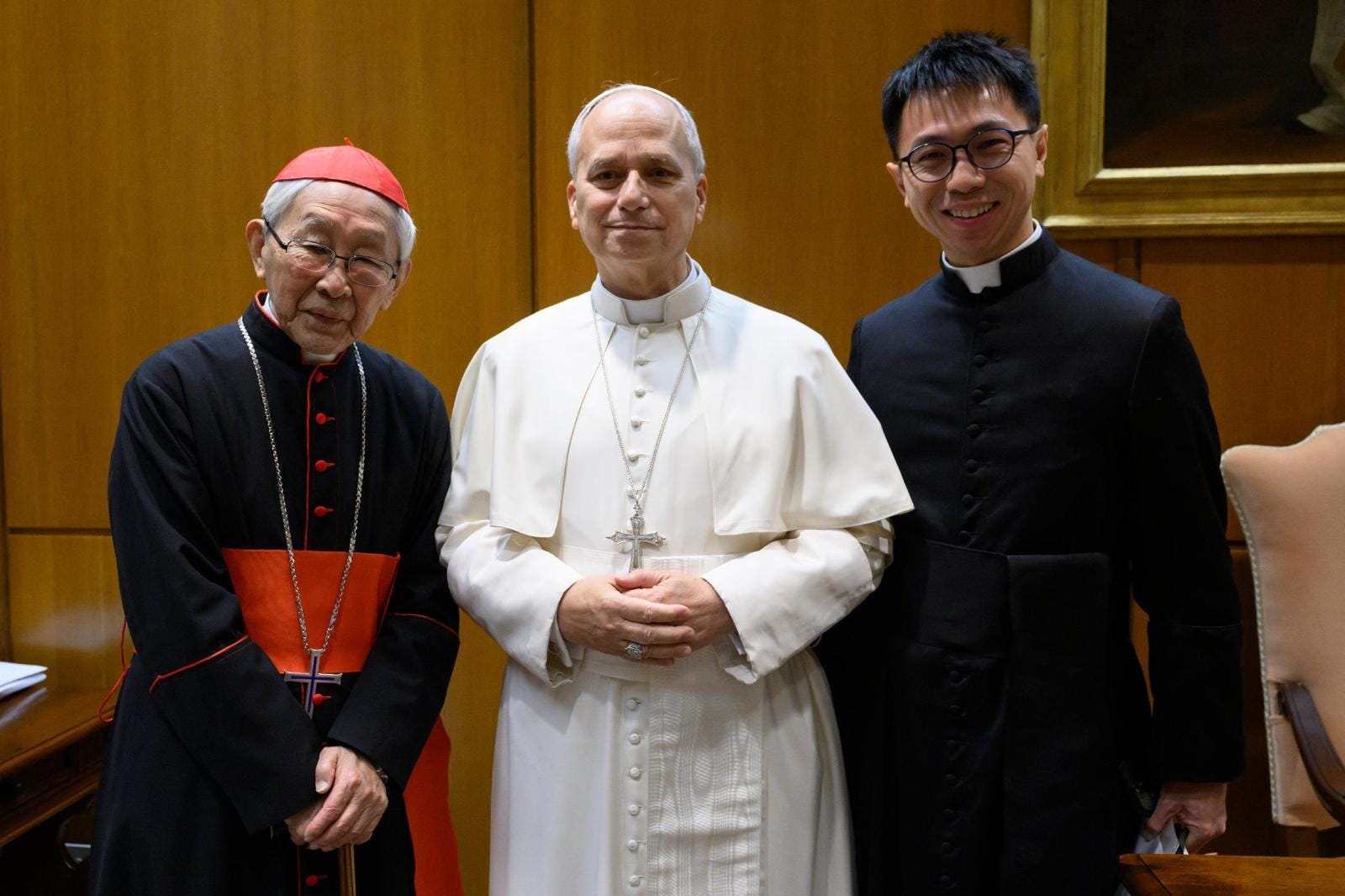
Zen’s intervention is short because he had three minutes. Three minutes, in an assembly of 170 cardinals, addressing a three-year synodal project that was marketed as the Spirit’s masterpiece. That contrast tells you what Rome calls “listening.”
Zen’s central charge lands cleanly. The synodal process functioned as “ironclad manipulation.” The bishops, successors of the apostles, were treated like stage props. The Holy Spirit was invoked as a rubber stamp for preselected conclusions. Zen calls that invocation “ridiculous” and “almost blasphemous.” He asks the obvious question that every Catholic with a pulse has been asking since 2021: are we really supposed to expect “surprises” that contradict what the Spirit already inspired in the Church’s two-thousand-year Tradition?
The deeper point hides in the procedural details Zen flags. The Final Document gets described as magisterium, then described as “not strictly normative,” then described as requiring “mediations,” then described as open to local adaptations and divergent interpretations. That is not an accident. That is the operating system. Ambiguity as a feature. Elasticity as a virtue. Accountability as a rumor.
Zen warns about the Anglican trajectory, and he is right to do it. Give everyone “authoritative proposals” with culturally tailored interpretations, then watch doctrine fracture into national churches. Rome will still call it “unity,” because the paperwork will remain unified even when belief does not.
Zen’s critique deserves respect. It also exposes the problem he cannot solve from inside this framework. A Church governed by managed language and managed structures will treat any clear accusation as an irritant. The machine survives by absorbing outrage, then continuing the process.
Rorate’s optimism reads like a hostage letter
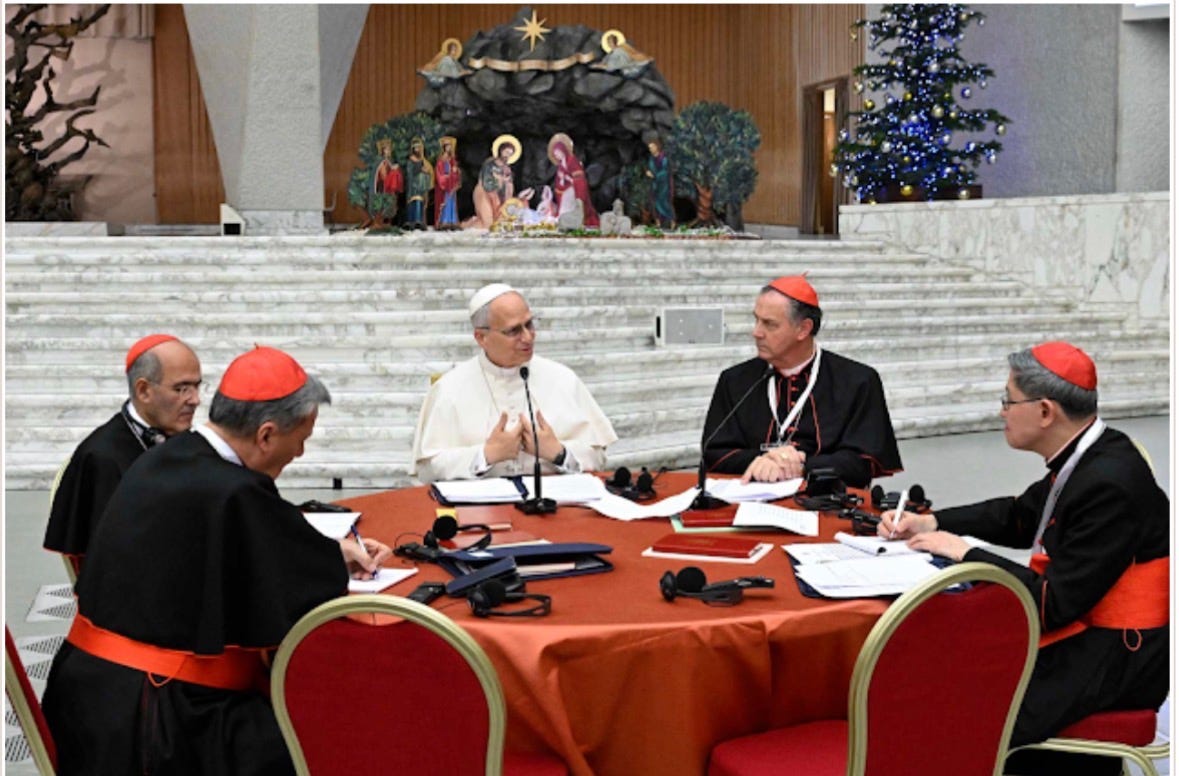
Rorate’s write-up tries to sell the consistory as a “messy learning curve” that signals a return to normalcy. The argument goes like this: Leo XIV wants consultation, fear is gone, cardinals spoke freely, no predetermined agenda, no predetermined outcome, future consistories will be longer, synodality is losing its “supreme status,” the council can be reread through continuity, the whole thing looks encouraging.
This is the familiar rehabilitation narrative. Find a procedural change, call it a reset, declare the crisis manageable. Pretend the problem was Francis’s personality rather than the postconciliar program that produced Francis in the first place. Treat the Vatican II ecosystem as fundamentally sound, in need of better management.
The same article quietly admits the reality it tries to soften. The College of Cardinals is “a complete mess.” Many appointees lack formation and competence. The priorities are muddled. Liturgy gets sidelined. Curial modernists dominate by office and position. In other words, the house is rotting, and the optimistic take is that the new homeowner is repainting the shutters.
The most revealing move is the insistence that Leo can make synodality “mean something completely different.” That is exactly the problem. Words become policy instruments rather than expressions of truth. If a key ecclesial concept can be redefined at will, the faithful are being trained to live under a regime of elastic meaning. Zen’s warning about language applies here too.
Rorate is reading tea leaves. The Vatican is writing memos.
A staff that preaches escape from Calvary
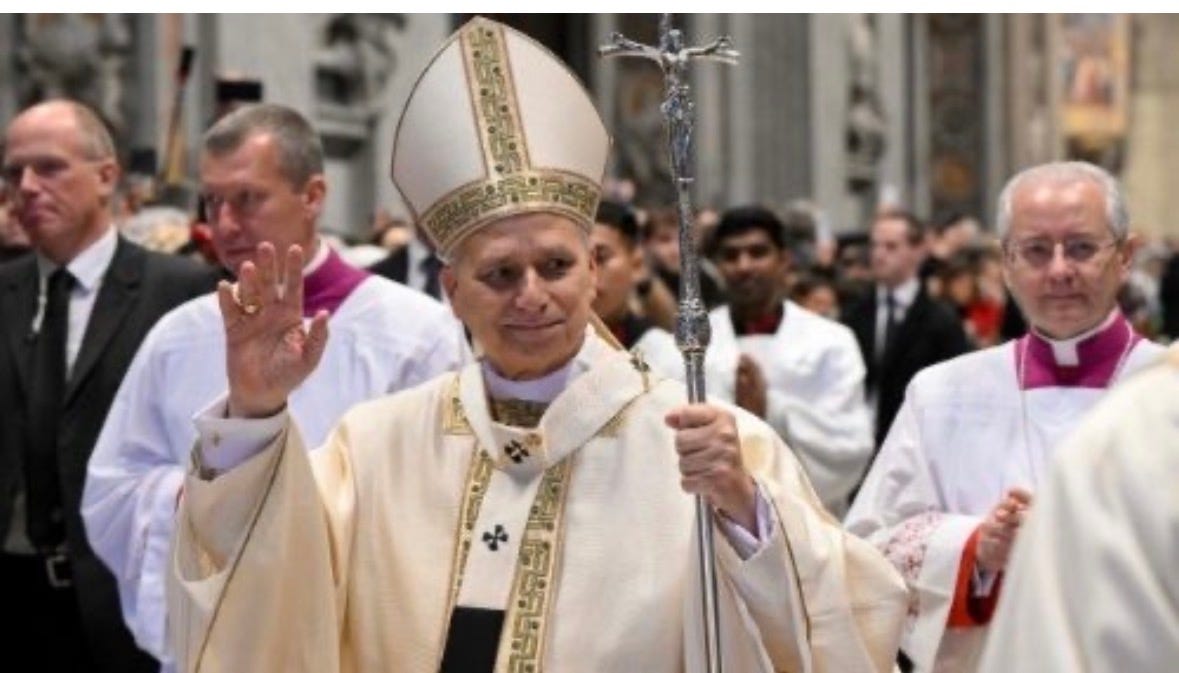
Vatican News presents Leo’s new pastoral staff as “continuity,” uniting Cross and Resurrection. The staff shows Christ no longer bound by the nails, glorified, ascending, wounds shining as “luminous signs of victory.”
That sounds pious until you look at what is being formed in the mind. The Cross becomes a transitional aesthetic, not the altar of sacrifice. The Passion becomes a brief phase before the real message, the “uplift,” the therapeutic glow. The image catechizes. The staff does not simply decorate, it teaches.
Traditional Catholic piety does not fear the Cross, and it does not hurry past it. Modern Rome does. It wants Resurrection without reparation, glory without propitiation, victory without the scandal of suffering offered to God. The liturgical instinct matches the political instinct. Remove anything that feels like judgment, punishment, borders, limits, penalties, exclusions. Replace it with symbols of transcendence without confrontation.
A crucifix that looks like a man fleeing the Cross fits the pastoral era perfectly.
The Diplomatic Corps address as a manifesto for the borderless world
Leo XIV’s January 9 address deserves to be read as political theology, because that is what it is. It uses Augustine as staging, then pivots into contemporary governance. The speech praises multilateralism, laments nationalism, warns against “false representations of history,” speaks warmly of the UN’s role, urges reforms for efficiency, condemns violations of humanitarian law, critiques shrinking speech freedom, criticizes “Orwellian” language, defends conscientious objection in theory, then moves into the sacred cows: migration, climate, abolition of the death penalty.
On migration, the framework is predictable. Every migrant has inalienable rights. State action against trafficking must not become a “pretext” for undermining dignity. Climate change is included among the drivers of displacement. The moral pressure is one-directional: toward accommodation, toward international management, toward the perpetual exception that becomes the rule.
A Catholic reads that and recognizes the game immediately. A nation that cannot enforce its border is no nation. A people that cannot say “no” to entry, settlement, and demographic transformation is not practicing charity, it is being managed. Charity begins with order. Order begins with duties. Duties include the state’s obligation to protect its own citizens, its own culture, its own stability. The Church once spoke that language with clarity. The postconciliar apparatus speaks the language of NGOs, then sprinkles it with Scripture.
The speech also praises renewable energy projects and “caring for creation” as shared commitments with the Italian state. That phrase has become a passport for global regulatory regimes, wealth transfers, and bureaucratic control. Catholics are instructed to treat contested policy programs as moral inevitabilities. A Catholic can love God’s creation and reject climate managerialism at the same time. The speech does not make room for that distinction. It prefers the ambiance of consensus.
Then comes the line that tells you the entire political vision: a “short circuit” of human rights where new rights restrict old ones. That diagnosis can be true, and then the speech turns around and repeats the same human-rights vocabulary that created the short circuit. The postwar rights regime gave us abortion empires, censorship regimes, gender ideology, soft totalitarian speech codes, and borderless managerial states. The Vatican now asks the authors of the problem to fix the problem, with the UN as mediator.
On the death penalty, the speech calls for abolition, framing it as destroying hope of renewal. Pre-Vatican II Catholic teaching does not treat the death penalty as intrinsically evil. Legitimate authority has the right to inflict proportionate punishment, including capital punishment, for grave crimes, for the sake of justice and the common good. The modern line treats retribution as barbaric, then wonders why societies unravel into lawlessness. That is sentimentality with body counts.
The speech praises Francis repeatedly, calls him a father, folds the Jubilee into a pastoral narrative of comfort, then makes the predictable ecumenical moves, including references to Nostra Aetate and Jewish-Christian dialogue in the official anniversary tone. This is the same postconciliar package every time: soft canonization of the predecessor, hard entrenchment of the council’s vocabulary, a diplomatic posture that treats national sovereignty as the suspect force and international bureaucracy as the mature solution.
The Church used to convert nations. Now it congratulates the managers of nations.
The through-line: managed synods, managed borders, managed meaning
Zen called synodality “ironclad manipulation.” The diplomatic address shows the same instinct in the political realm: ironclad moral framing that narrows legitimate policy disagreement, then blesses the preferred global posture as ethical inevitability. The staff symbolizes the same instinct in worship: transcendence without sacrifice, uplift without judgment, victory without penance.
Rorate’s optimism works as the necessary lubricant. It trains traditional Catholics to interpret every procedural reshuffle as a return to sanity. It persuades readers to treat the postconciliar engine as reliable, in need of calibration. Zen’s intervention reads like a protest note slipped under the door of a locked room.
A Catholic does not need to pretend this is normal or to pretend globalism is charity. The postconciliar regime wants Catholics fluent in ambiguity, obedient to process, suspicious of borders, allergic to punishment, sentimental about “dialogue,” confident that the same institutions that broke the West will heal it.
January made the program visible again. The question is simple. Are Catholics going to keep applauding the management, or are they going to recover the faith that speaks plainly, governs plainly, worships plainly, and tells the nations the truth without asking permission from the diplomatic corps?
If you value independent Catholic analysis and want to help keep this work going, you can make a contribution or subscribe below. Every donation and subscription directly supports the writing, research, and production of Hiraeth in Exile.
Thank you for helping preserve independent Catholic journalism rooted in truth and tradition.
Feser is clueless: https://x.com/feseredward/status/2009714401834566022?s=46&t=R4xyMNVYgeB6hu6jyd3HHA
i read a synopsis of Leo's aka Robert Prevost's opening remarks, and the first thought that came to mind was: CONTROL. Control the faithful, control the Church, but in a modernistic progressive way, so minds will be changed, attitudes and hearts will be changed from the Truth, to a touchy feely faith, that accepts all and not the guidelines so to speak, given to us to lead our lives in this new Synodal NuChurch of Jorge Bergoglio.
A Church that has no restraints, no following the rules, all is possible without the Cross of Jesus Christ, no consequences of sin. unity with all regardless of faith, acceptances as one is, not requiring any change in one's lives. Accepting all in their sin, as Jorge said, all will go to heaven.