

The Hospital Bracelet
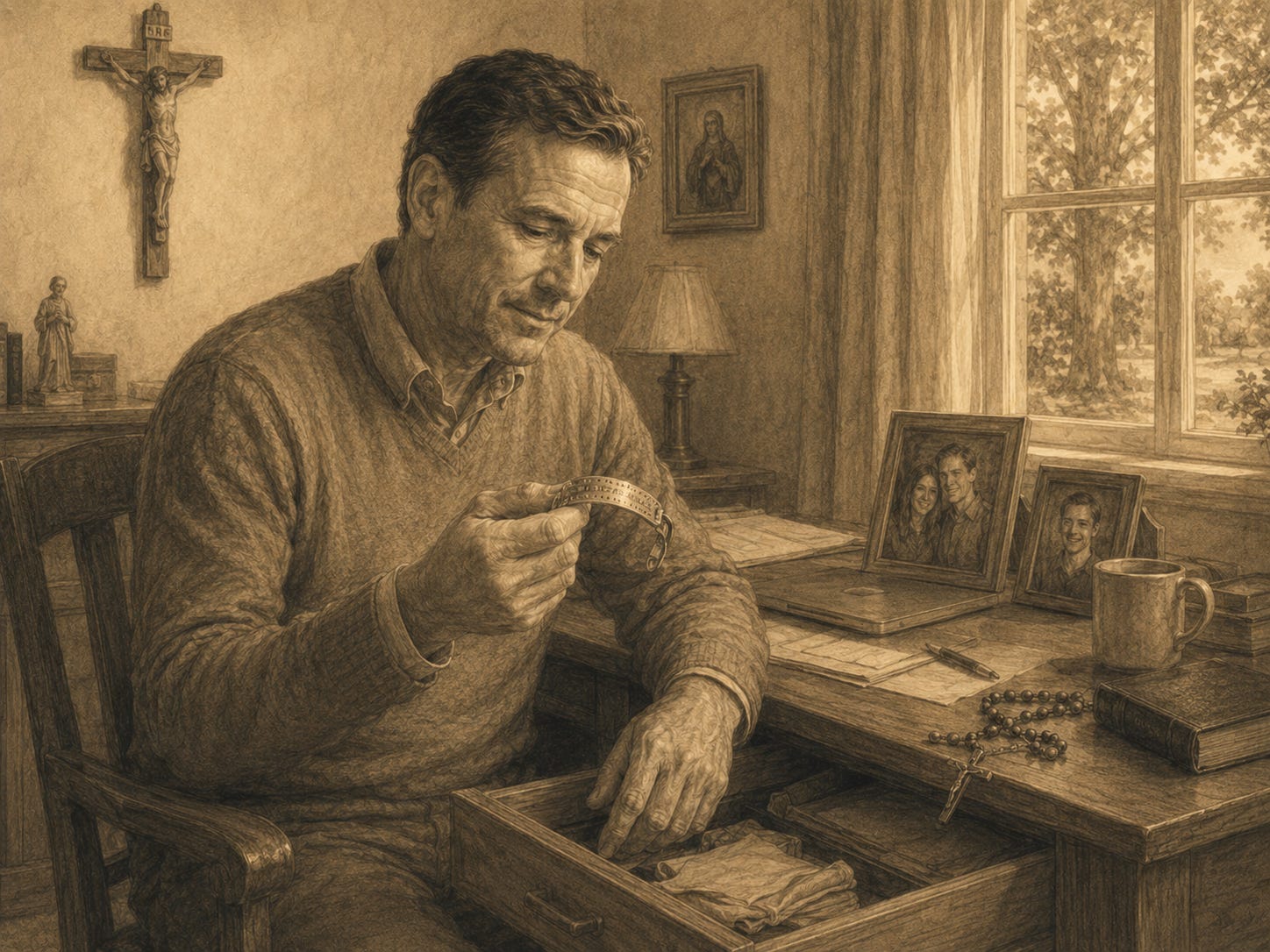
A man kept his hospital bracelet in the top drawer of his desk for eleven years.
He had been forty-six when the ambulance came. Chest pain after dinner, then the frightening blur of fluorescent lights, electrodes, signatures, nurses asking the same questions twice. His wife sat beside the bed with a rosary twisted around one hand. A priest arrived after midnight.
The doctors were guarded. The man was less guarded with God.
He promised everything.
If I get out of here, I will change.
I will stop missing Mass.
I will make things right with my brother.
I will pray with the children.
I will quit postponing confession.
He lived.
For several months he kept most of those promises. Then normal life returned with its astonishing ability to make yesterday’s terror feel melodramatic. Work got busy. His brother remained difficult. The family Rosary became occasional. Sunday Mass stayed, though sometimes as another item on the weekend schedule.
The bracelet went into a drawer.
Eleven years later, looking for an old warranty, he found it.
His name was still there in faded black letters. So was the date.
He sat down at the desk.
The room around him suddenly seemed extravagant: photographs of grown children, the window overlooking the yard, a mug his wife had left beside the computer, the ordinary sound of somebody running water upstairs. All the things he had once begged God to let him see again had become background scenery.
That Saturday he went to confession.
On Sunday, after Mass, he remained in the pew long after most people had left. He asked for nothing.
For once, he had come back simply to say thank you.
That man belongs in today’s Gospel.
So do the other nine.
Look to Thy Covenant, O Lord
The Mass opens with a cry from a wounded people.
“Look to Your covenant, O Lord, forsake not forever the lives of Your afflicted ones. Arise, O Lord; defend Your cause.”
There is almost violence in the prayer.
The Church does not say, Everything is fine.
She does not tell the afflicted that their distress is an unhealthy attachment to the past. She places the wound before God and reminds Him—reverently, desperately—of His covenant.
Dom Guéranger says the Church deliberately takes up the language of the just under the Old Law, men who lived on promise before the mysteries of salvation had been accomplished. Christians possess far greater riches, yet he immediately warns of a danger created by abundance: we can forget what we have received. Forgetfulness ripens into ingratitude.
Before we reach that warning, however, the Introit gives traditional Catholics a prayer almost painfully fitted to our time.
Arise, O Lord; defend Thy cause.
Your cause.
That matters.
Men have desecrated sanctuaries and called it renewal. They have treated inherited worship like contraband, emptied seminaries, confused moral teaching, spent fortunes discussing synodality, and disciplined Catholics whose principal offense was wanting the religion their grandparents recognized.
Families have watched priests disappear. Chapels have been closed. Altars that survived wars were ripped from walls in a generation of peace. Children were handed catechetical mush and then blamed when they stopped believing.
There is no spiritual virtue in pretending otherwise.
Yet the cause belongs to God.
That is why a Catholic can expose what has happened without carrying the whole Church on his shoulders at three in the morning.
“Arise, O Lord.”
We should say it more often.
Rome will answer for Rome. Bishops will answer for dioceses. Fathers will answer for households. Writers will answer for words. Priests will answer for altars.
God will defend His cause.
Our work is to remain faithful inside it.
Love What Thou Commandest
The Collect asks for an increase of faith, hope, and charity. Then comes the harder petition:
“Make us love what You command.”
Obedience alone can be miserable.
A child cleans his room because his father threatened punishment. A man drags himself to Sunday Mass while wishing he were somewhere else. A Catholic avoids mortal sin because hell frightens him. These things may represent real beginnings.
God intends more.
He wants the commandment loved.
This is very different from the modern habit of making commandments lovable by removing their teeth. Christ never needed to soften adultery, impurity, dishonesty, sacrilege, or apostasy until the sinner found them agreeable.
Grace changes the appetite.
The command remains.
Eventually the man who once experienced confession as humiliation discovers relief there. The woman who resented Sunday obligation begins arranging her week around Mass. The teenager who hated the Rosary carries one in his pocket at college.
The law has moved from the wall into the heart.
The Sunday Phone Call
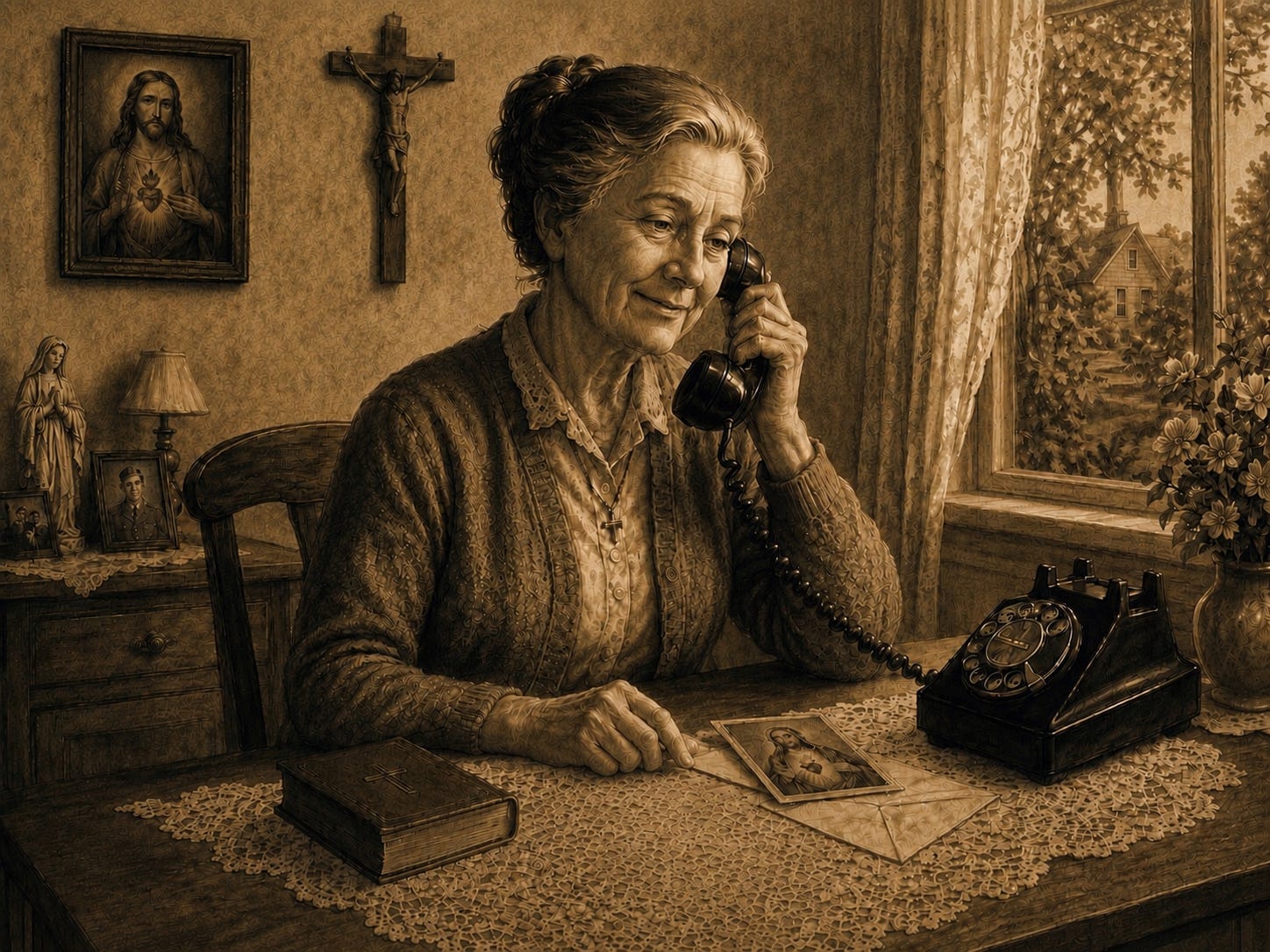
A widow named Catherine had one son, thirty-two years old, living six hours away.
He had stopped attending Mass in college. She knew because she asked too often.
Their Sunday phone calls developed a pattern.
“How was your week?”
“Busy.”
“Did you get to Mass?”
“Mom.”
“I’m only asking.”
“I know.”
Sometimes the conversation ended there.
Catherine thought persistence was fidelity. Perhaps part of it was. Another part was fear with nowhere else to go.
Her confessor finally told her something she disliked.
“Stop interrogating him on Sundays.”
She looked shocked.
“Father, if nobody says anything—”
“I said stop interrogating him. I didn’t say stop praying.”
He told her to offer one decade of the Rosary for her son each morning and, once a month, have a Mass offered for him. When he called, she should talk to him like a mother who loved him rather than a customs officer checking his Catholic papers.
For months, nothing happened.
Then one Sunday her son called and mentioned that he had gone into a church.
She kept her voice steady.
“Oh?”
“It was open. I sat there for a while.”
She wanted to ask twenty questions. She asked one.
“Was it peaceful?”
“Yeah.”
Another six months passed before confession. Mass came after that.
Years later he told her that one reason he had begun thinking about the Faith again was that his mother had stopped making every conversation feel like a trial.
Catherine never stopped wanting obedience from her son.
She learned to want something deeper.
She wanted him to love what God commanded.
The Promise Came First
St. Paul’s Epistle can look technical until its nerve is exposed.
Abraham received a promise.
The Law came four hundred and thirty years later.
Therefore the Law could not cancel the promise, and the Law itself could never give the supernatural life promised in Christ.
Goffine explains that the Mosaic Law restrained transgression and prepared for fulfillment, while liberation from sin came through Christ, the promised Seed.
Guéranger pushes the contrast further. The Law could identify the wound. It could prescribe safeguards. It lacked the power to put supernatural life into the wounded man. Christ is the Physician whom the Law awaited.
This distinction matters enormously now.
Law is good.
Law is necessary.
Canon law matters. Rubrics matter. Jurisdiction matters. Discipline matters.
Yet paper cannot resurrect a corpse.
A decree cannot create Catholic faith in a man who has lost it.
An episcopal conference cannot vote reverence into a sanctuary.
A dicastery cannot manufacture vocations through administrative language.
A Roman penalty does not turn error into truth, any more than a Roman permission makes Catholic tradition holy. Tradition was holy before the permission slip arrived.
The present ecclesiastical crisis has exposed what happens when institutional machinery is confused with supernatural life. For decades, men revised laws, erected commissions, invented programs, reorganized parishes, commissioned studies, issued pastoral plans and called the activity renewal.
Then somebody looked up.
The pews were empty.
The convent was closed.
The confessional had become a closet.
The children no longer knew the Creed.
Life comes from Christ.
The institution serves that life or betrays its purpose.
The Binder on the Kitchen Shelf
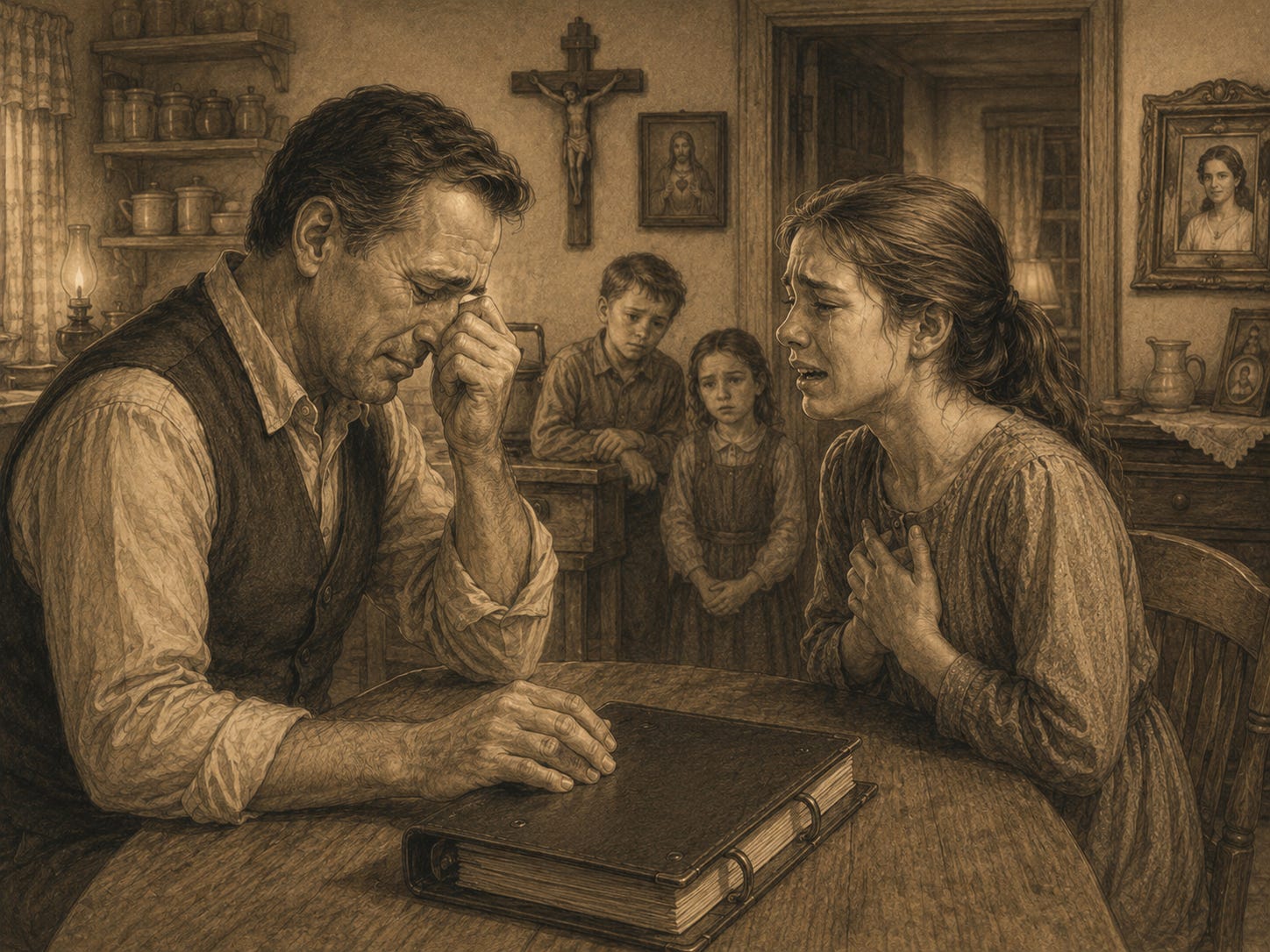
A father named Joseph kept a three-ring binder in the kitchen.
Inside were the family rules.
Screen limits. Curfew. Chores. Sunday schedule. Dress expectations. Dating rules. Consequences for lying. Consequences for missing assignments.
His wife teased him about the binder. His children did not.
After she died suddenly, Joseph became stricter.
He had four children and was terrified that the household would come apart. Rules became the scaffolding around grief. He checked everything. Corrected everything. Enforced everything.
His sixteen-year-old daughter finally exploded one evening after he caught her violating the phone curfew.
“You think if everybody follows the binder, Mom won’t still be dead.”
That stopped him.
The girl began crying almost immediately, horrified by what she had said.
Joseph closed the binder.
Then he cried too.
The rules stayed.
So did the curfew.
What changed was the house.
Joseph began eating breakfast with the children instead of checking email before work. He prayed with them at night. He asked questions whose answers were allowed to be longer than yes or no. Once a week they talked about their mother—sometimes laughing, sometimes falling apart.
The binder had restrained chaos.
It could not give the family life.
Love had to inhabit the law.
Ten Men Standing Far Away
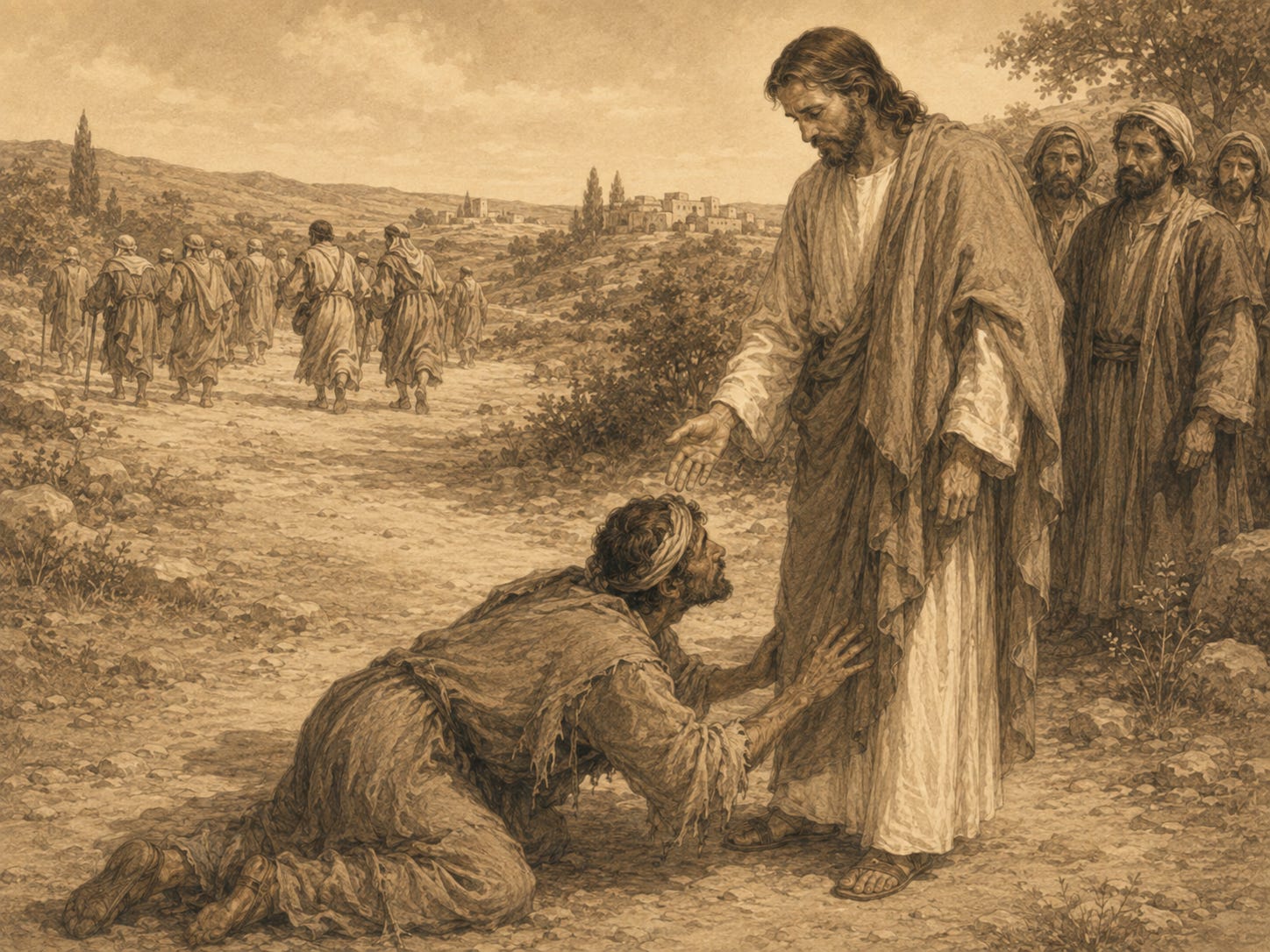
Then we meet the lepers.
Ten of them.
Cornelius à Lapide notices a remarkable detail. Their common disease had united men who ordinarily would have kept apart. Jews and a Samaritan stood together because leprosy had made their ordinary social divisions seem suddenly less important. They raised one voice toward Christ.
Suffering can do that.
A cancer ward contains Republicans and Democrats without assigned seating.
Parents outside an operating room stop asking one another where they went to college.
And Catholics who discover that the faith of their children is in danger begin meeting people they had previously been warned about.
The present crisis has produced strange congregations.
There is the lifelong SSPX family beside a convert who discovered the Latin Mass six months ago.
There is the old diocesan refugee who spent forty years believing every promise from the chancery.
There is the young man reading sedevacantist arguments on his phone after Mass.
There is the grandmother who knows none of the terminology and only knows that this is the first church in years where her grandson has asked to come back next Sunday.
The disease has pushed them together.
They may differ about causes, canonical theories, timelines, and remedies.
All of them know enough to cry:
Jesus, Master, have mercy on us.
À Lapide notes that they stand far away physically, yet prayer draws them near.
That may describe many Catholics now.
Far from the cathedrals.
Far from institutional approval.
Far from whatever Rome currently calls the periphery while somehow ending up treated as the real periphery themselves.
Prayer still reaches Christ.
As They Went
Our Lord gives the ten men a strange command.
“Go, show yourselves to the priests.”
They are still lepers.
The Law required a priest to certify cleansing before a healed leper could return to society. There is one obvious difficulty.
They have not been healed yet.
Still they go.
Then St. Luke gives us four words on which an entire spiritual life could be built:
As they were going.
The flesh changes on the road.
À Lapide sees the command as a trial of faith and obedience. The men begin walking because they believe Christ will make the journey meaningful before they arrive.
We usually want the order reversed.
Heal the marriage, and I will behave differently.
Remove the temptation, and I will become disciplined.
Give me consolation, and I will pray.
Show me that my child will return, and I will trust.
Fix the Church, and then I will stop being afraid.
Christ sometimes says: walk.
The healing meets us underway.
The Thirty Days
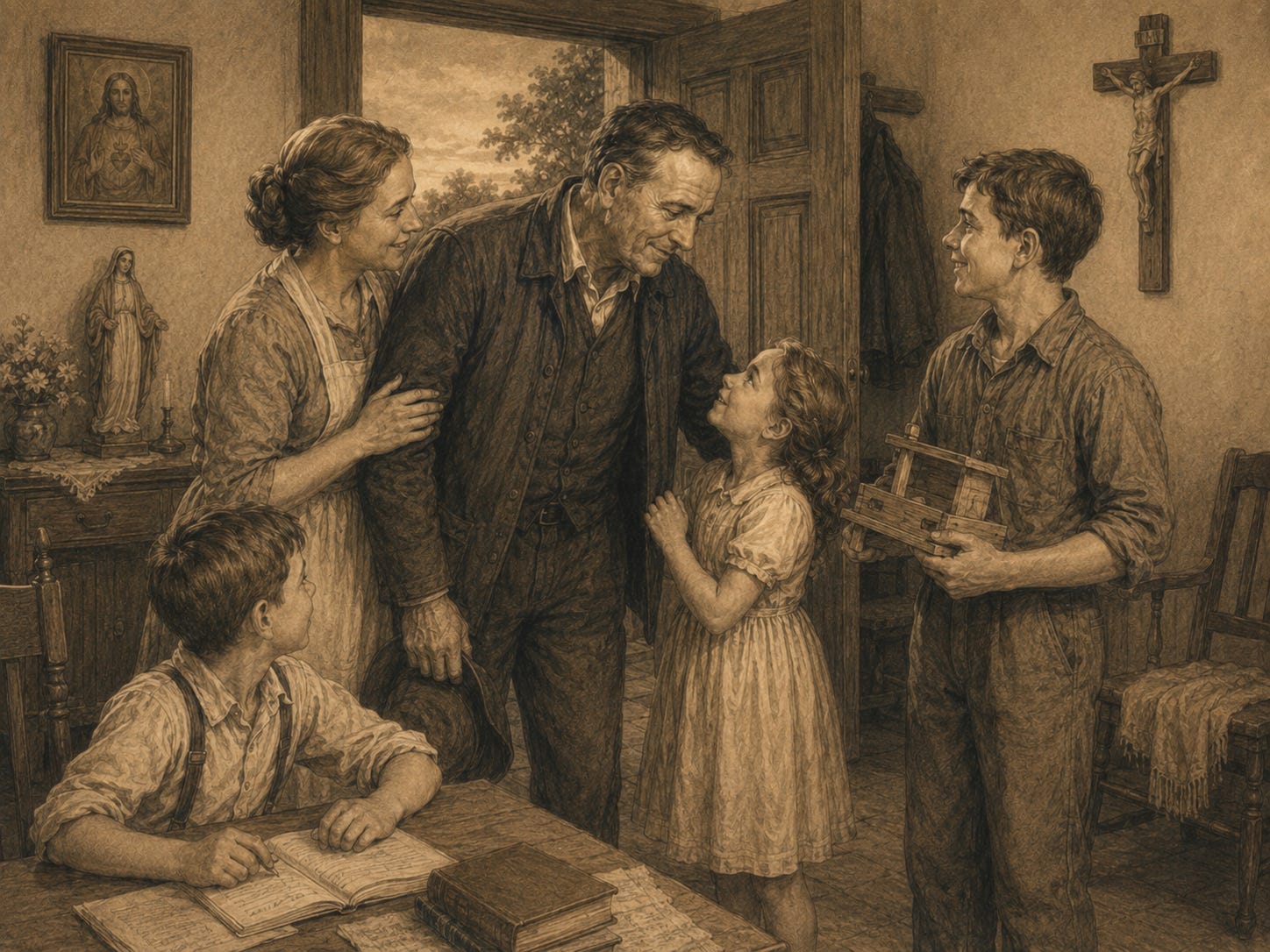
A man came to confession exhausted by the same sins against anger.
He had plenty of reasons.
His job was miserable. His teenage son was defiant. His wife had begun answering him with the careful tone people use around explosives.
He confessed yelling.
Again.
The priest asked what happened each evening before the yelling began.
The man thought about it.
“I come home, check email, eat, and usually start dealing with whatever went wrong while I was gone.”
“What do you do when you walk through the door?”
“I just told you.”
“No. Whom do you greet?”
The man stared at him.
The priest gave him a strange prescription.
For thirty days, when he arrived home, the phone stayed in the car for fifteen minutes. He was to kiss his wife, greet every child by name, and ask one question before correcting anything.
“That seems pretty small, Father.”
“Good. Then you can do it.”
The first week felt artificial.
The second felt less so.
On the eighteenth day his son met him at the door because he wanted to show him something he had built in the garage.
Near the end of the month his wife said, “You seem different when you come home.”
The man still had a temper.
He still needed confession.
The healing had begun while he was walking.
Show Yourselves to the Priests
Goffine and à Lapide both draw the traditional sacramental meaning from Christ’s command.
Under the Old Law, the priest inspected the leper and declared whether he was clean.
Under the New Law, the priesthood receives something far greater: through the sacrament of Penance, the priest absolves the sinner by Christ’s authority.
This is one reason the devastation of the Catholic priesthood has been so catastrophic.
A priest is supposed to help the sinner get rid of the leprosy.
He has no commission to rename it.
A physician who tells the patient that the tumor is an identity has become useless. A confessor who turns mortal sin into a lifestyle category has done something worse.
The Church’s mercy was always medicinal.
Contrition.
Confession.
Absolution.
Penance.
Amendment.
Modern pastoral language often begins by worrying whether the sick man will feel judged by the diagnosis. Christ loves him too much to leave the disease unnamed.
This is also why Catholics have traveled absurd distances for good priests during the present crisis.
Two hours for Mass.
Another state for a retreat.
A chapel in a rented building.
A priest hearing confessions in a room that was never designed as a confessional.
People do this because they need the medicine.
The priesthood exists for souls.
When ecclesiastical authorities make faithful priests difficult to reach, the hunger does not disappear. Families go looking.
They should.
The Priest at the Folding Table
A priest visited a family whose father was dying.
There was no parish nearby where they trusted the confession schedule or even knew whether a priest would come in time, so they called a traditional priest who drove nearly ninety minutes.
The house was crowded when he arrived.
He asked everyone to leave the bedroom.
Twenty minutes passed.
Then thirty.
The adult children sat at the kitchen table saying almost nothing.
When the priest finally opened the door, the old man’s face looked different.
Still sick.
Still dying.
Different.
He received Extreme Unction and Holy Communion later that evening.
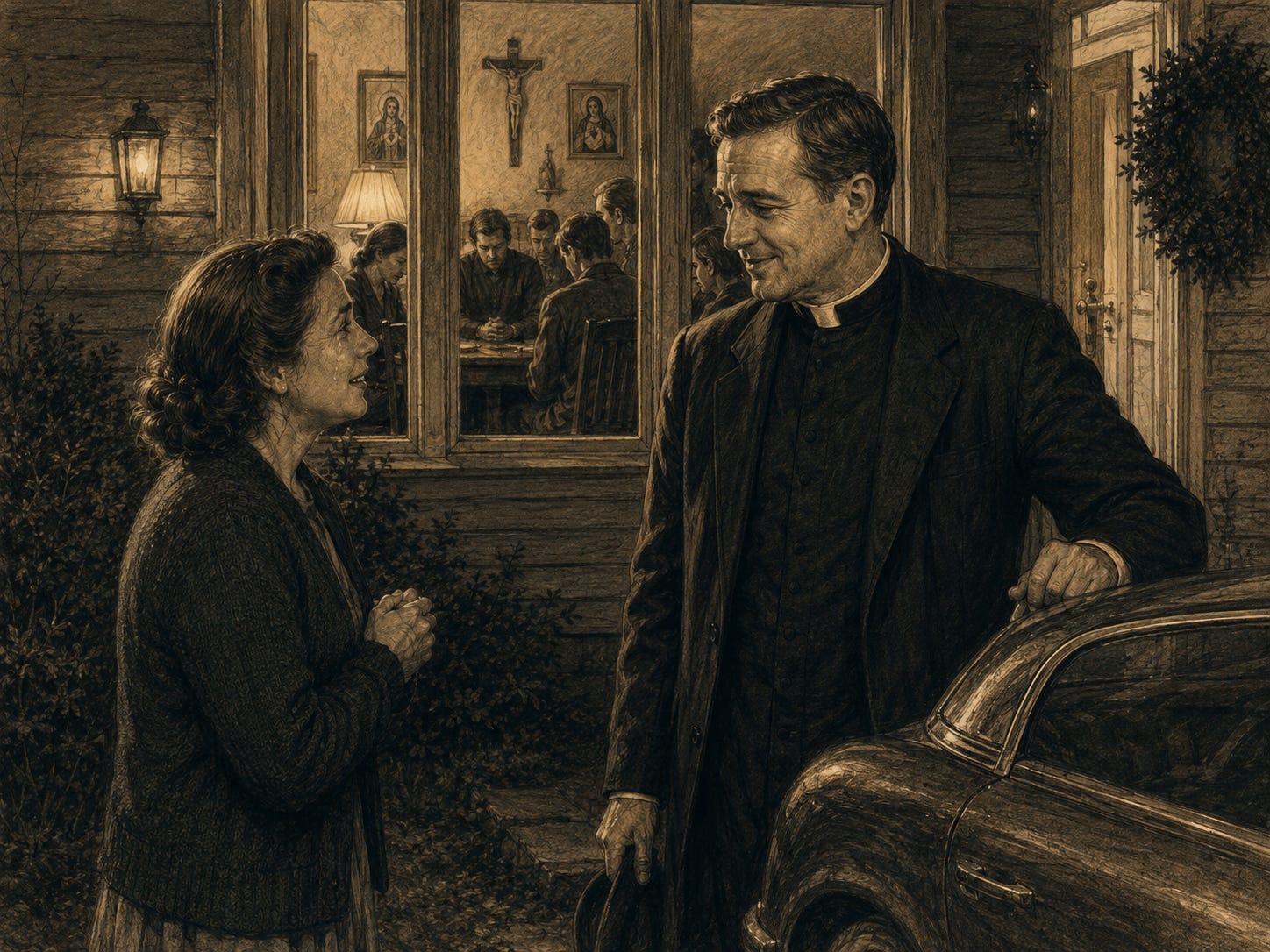
The eldest daughter walked the priest to his car.
“Father,” she said, “I was angry that you live so far away.”
He smiled.
“So am I.”
Then she began crying.
“Thank you for coming.”
The priest looked toward the house.
“That is why I was ordained.”
Every Catholic crisis eventually becomes concrete.
Theories matter. Jurisdiction matters. Ecclesiology matters.
Then somebody’s father is dying at 9:40 on a Tuesday night.
The Church needs priests who come.
Where Are the Nine?
All ten are healed.
One turns around.
Nine continue toward the priests.
À Lapide gives them an almost painfully ordinary motive. They are delighted to be healthy again and eager to return to society. Their minds fill with their restored lives. Jesus recedes from view.
That is the frightening part.
They did nothing spectacularly wicked.
They simply went on with life.
Imagine what healing meant.
A wife could be embraced again.
A child could climb into a father’s lap.
A man could enter the synagogue.
He could sleep beneath his own roof.
He could work.
He could stop shouting “unclean” when another human being approached.
The gifts were good.
The gifts became the distraction.
Guéranger says this is precisely why the Church gives us the Gospel: Christians possess blessings their ancestors could only await, and abundance creates the danger of forgetfulness.
Goffine quotes the old spiritual tradition with unusual severity. Ingratitude blocks the stream of grace; the remedy is deliberate remembrance and thanksgiving.
How much of our life consists of answered prayers we no longer remember asking?
The spouse asleep beside us.
The child whose fever broke.
The job that arrived when money was running out.
The confession that ended ten years of wandering.
The chapel we complained was forty minutes away until it closed and the next one was ninety.
The priest we took for granted.
The Mass we once begged God to preserve for our children.
The Faith itself.
Where are the nine?
Often they are us.
Gratitude During an Ecclesiastical Famine
Traditional Catholics have particular reasons for anger.
Real ones.
The inheritance was squandered in front of us, and in many places the men responsible spent the following decades congratulating themselves on renewal.
Gratitude does not require historical amnesia.
The Samaritan never had to deny that he had been a leper.
He looked at the healed flesh and knew exactly what had happened.
Our gratitude should be equally concrete.
Thank God for the priest who refused to modernize his faith.
Thank Him for Archbishop Lefebvre’s refusal to let the traditional priesthood vanish quietly.
Thank Him for every old missal that escaped the dumpster.
For every nun or grandmother who taught a child the Rosary after the parish stopped bothering.
For the chapels.
For the converts.
For young families with six children packed into a pew.
For men who discover Catholic tradition at twenty-five and wonder why nobody told them sooner.
For confession lines.
For Gregorian chant heard again where guitars once seemed permanent.
For every altar rail rescued from storage.
These things do not make the crisis imaginary.
They tell us the destruction failed.
There are still fragments because Providence intended somebody to gather them.
The danger comes when a man becomes so expert in describing the thieves that he forgets the treasure lying on the table in front of him.
Expose the theft.
Guard the treasure.
Thank the Owner.
All three belong together.
The Empty Pew
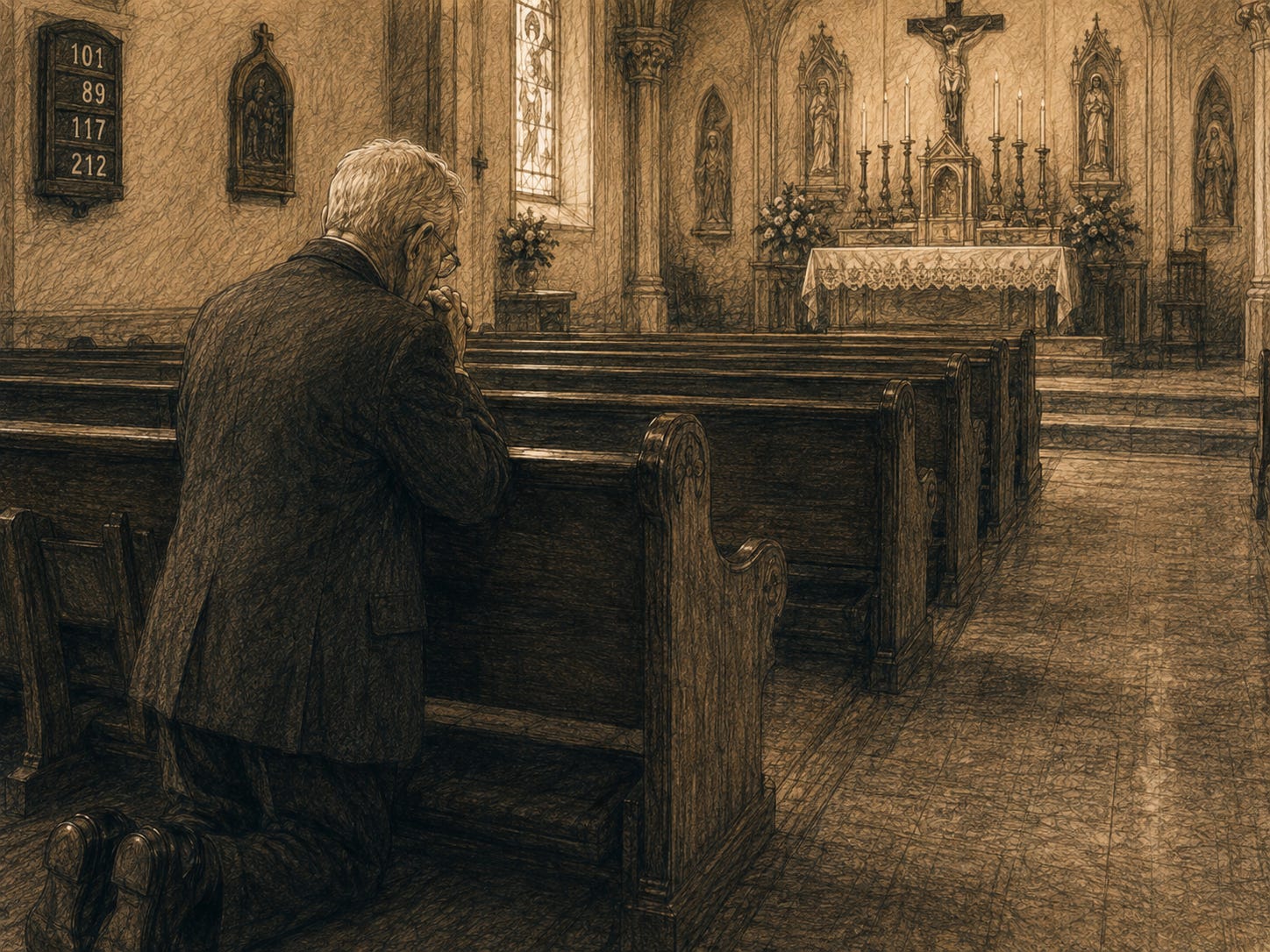
An elderly man attended the same traditional chapel for twenty-two years.
His wife always sat to his right.
She chose the aisle because of her knees. She kept her mantilla in a plastic pouch inside her purse and arrived fifteen minutes early because she hated walking in after the Asperges.
Then she died in February.
For months he continued sitting in the same pew, leaving her place empty.
People offered to sit with him. He preferred the space.
On the anniversary of her death, the priest offered Mass for her.
Afterward the old man remained kneeling.
A friend eventually approached and put a hand on his shoulder.
“Hard day?”
He nodded.
Then he looked toward the altar.
“Fifty-three years,” he said.
His friend waited.
“I spent half of them complaining about something she did.”
He laughed, though his eyes were wet.
“Fifty-three years. What an idiot.”
He stayed a little longer.
Then he whispered something his friend barely heard.
“Thank You.”
Grief had finally taught him the size of the gift.
The Stranger Came Back
There is another sting in the Gospel.
The grateful man is the Samaritan.
The outsider.
The one from the religious community Jews regarded as corrupt.
The nine who possessed the superior religious inheritance failed the test of gratitude.
Familiarity can make grace look like entitlement.
À Lapide observes that those close to a benefactor sometimes feel the benefit is somehow owed to them, while the outsider sees the gift with fresher eyes.
Any traditional chapel has witnessed this.
A cradle traditionalist yawns through the Canon.
Beside him kneels a convert who discovered the Mass six months ago and can barely believe such a thing exists.
One man complains that the choir dragged the Kyrie.
The newcomer is crying.
The old Catholic knows every rubric.
The convert has just realized what the altar is.
Perhaps that is one reason Providence keeps sending outsiders into the ruins.
They remind us what we have.
In Thy Hands Is My Destiny
The Offertory answers the anxiety of the Introit:
“My trust is in You, O Lord; I say, You are my God. In Your hands is my destiny.”
That is the prayer of a Catholic who has stopped demanding a timetable from Providence.
He wants Rome restored.
He wants his children faithful.
He wants the old Mass free.
He wants good priests protected.
He wants the confusion ended before another generation grows up inside it.
Reasonable desires.
Some may remain unanswered during his lifetime.
“In Thy hands is my destiny.”
Faith does not become real only when Providence explains itself.
Abraham received a promise and then waited.
The lepers started walking before they saw clean skin.
The Samaritan returned after receiving a gift he could never have produced.
Our part is smaller than we imagine.
Walk.
Believe.
Return.
Give thanks.
Bread From Heaven
The Communion antiphon changes the scene entirely:
“You have given us, O Lord, bread from heaven, endowed with all delights and the sweetness of every taste.”
Now we understand where the grateful leper was really going.
Back to Christ.
The other nine wanted restored life.
He wanted the Giver.
At every Mass the same decision appears before us.
We can come seeking consolation, community, beautiful music, tradition, stability for children, answers to the crisis, an hour away from the ugliness of the world.
All good things.
At the center is Someone.
The Eucharist is itself thanksgiving—eucharistia.
The Samaritan falling on his face before Christ already has the posture of the Catholic soul approaching the mystery of the altar. He has received mercy and returns to the feet of Mercy Himself.
This is where the Thirteenth Sunday after Pentecost finally lands.
The Church begins by crying from affliction:
Look to Thy covenant, O Lord.
She remembers Abraham’s promise.
She confesses that law alone cannot give life.
She watches ten dying men encounter the Physician.
She sees them healed while they walk in faith.
Then she counts.
Ten received the gift.
One came back.
A Catholic who understands the old Mass should recognize himself there. We have lived through an age that squandered much. Yet somehow the Faith reached us. Somehow the Mass survived. Somehow priests were ordained, children baptized, sins forgiven, hosts consecrated, rosaries prayed in dark bedrooms, doctrine preserved in books that the revolution failed to burn.
Somehow we are still here.
So we return.
We kneel.
We give thanks.
And while doing so we can still ask, without embarrassment and without surrender:
Arise, O Lord.
Defend Thy cause.
Remember Thy covenant.
Do not forget the voices of those who seek Thee.
If you value independent Catholic analysis and want to help keep this work going, you can make a contribution or subscribe below. Every donation and subscription directly supports the writing, research, and production of Hiraeth in Exile.
Thank you for helping preserve independent Catholic journalism rooted in truth and tradition.
Thanks for the exposé of entitlement which afflicts us increasingly with each generation.
My immigrant peasant grandparents were more devout and grateful in their poverty than me and my children and grandchildren will ever be in our abundance.
One salvific concrete inheritance is the devotion to the rosary.
It was not an abstract concept in their homes and lives.
It still upholds and terrifies me-
Pray for us Holy Mother of God,
They We May Be Made
Worthy
Of The Promises of Christ.
Lord have mercy.
Mr. Jackson: For every ten who read this, one will thank you. We here are that one. Thank you and may God bless you.