
Strobe Lights, Sacred Rites
It’s murder on the dance floor. But you better not kill the groove.

This week’s bundle of stories has one shared logic. Real conflicts are treated as optics problems. Scandal is treated as a branding opportunity. The Roman Rite is treated as a political irritant. Evangelisation becomes the all-purpose solvent, a word that can mean everything except the one thing it used to mean: the conversion of the world to the Kingship of Christ through the clear teaching of the Faith and the disciplined worship of God.
A consistory built to avoid the question everyone came to ask
The College of Cardinals Report says Leo XIV plans a second consistory around June 27–28, near Saints Peter and Paul, and Matteo Bruni floated a yearly consistory lasting three to four days so the cardinals can have more time for “key issues” and “free interventions.” The headline reads like momentum. The details read like containment.
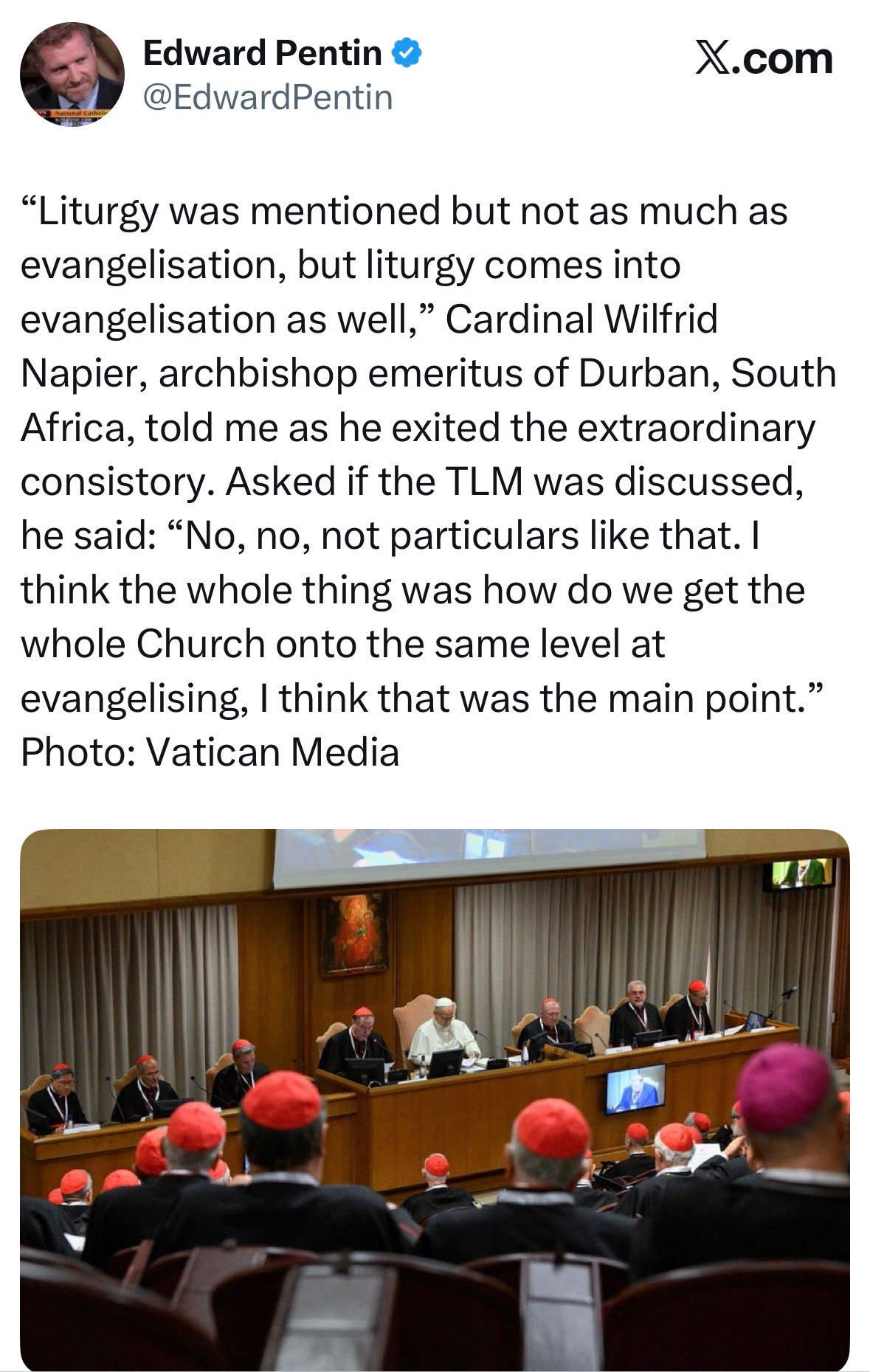
The first extraordinary consistory (Jan. 7–8) already offered a preview. According to multiple accounts cited by en.news, the Roman Rite never reached the floor in any serious way. Edward Pentin quoted Cardinal Wilfrid Napier describing the focus as evangelisation, with “no, no, not particulars like that” when asked about the Traditional Latin Mass. Cardinal Jean-Paul Vesco described the conversations in the register of “Eucharist” and “synodality,” a pair of words that now function like duct tape: they hold together whatever Rome needs to keep from being examined.
Then the mechanics emerge. en.news describes a programme that narrowed the agenda to synodality and evangelisation after an appeal to “time constraints,” with liturgy and curia-diocese relations postponed. Two dozen speakers out of roughly 170 cardinals managed to speak during “free interventions.” That number tells the story more loudly than any press release. A room full of princes of the Church, a handful of microphones, an agenda engineered to produce the correct impression.
A consistory can be a genuine act of governance. It can also become an annual theatre of consultation, an event where the faithful are told “discussion happened” and then discover the only thing discussed was the process for discussing.
Evangelisation as a euphemism for leveling, not converting
Napier’s comment lands with an unintended clarity: “how do we get the whole Church onto the same level at evangelising.” “Same level” has become the tell. The postconciliar instinct rarely aims upward. It equalizes. It smooths. It standardizes. In practice, it means that any pocket of reverence or doctrinal clarity becomes a “problem” for unity, then a target for “integration,” then a candidate for suppression.
The Roman Rite is not a hobby for aesthetes. It is a living witness that the Church once knew how to worship God without entertaining the congregation, without improvising the sacred, without converting the sanctuary into a stage. That witness exposes the past sixty years as a choice, not an inevitability. No amount of managerial vocabulary can make that exposure go away.
So the Roman question gets renamed. It becomes “values attached to it,” as Cardinal Hollerich put it in the en.news account, with a neat list of accusations: no interreligious dialogue, non-acceptance of Vatican II, and so on. The rite becomes an ideological signifier, the faithful become a constituency, and the hierarchy gets to treat worship as sociology.
Evangelisation in the Catholic sense starts with adoration, doctrine, penance, sacramental discipline, and a supernatural horizon. Evangelisation in the new sense starts with coordination, messaging, and consensus.
“Good solution for everyone”: the promise that keeps the system humming
Cardinal Müller told EWTN that the liturgy and the “old” and “new” rites were discussed and he expects Leo XIV to find a “good solution for everyone.” Rome lives on that phrase. “Good solution for everyone” becomes the tranquilizer. It invites hope, delays judgment, and buys time. It also avoids the one question that actually matters: what is true, what is owed to God, what is permitted, what is forbidden.
A “solution for everyone” in this regime usually means one side gets permission to exist under conditions designed to exhaust it. The other side keeps expanding, keeps experimenting, keeps forming priests in the spirit of the age, then asks why the Church lacks missionaries.
A Church that cannot say “this is right” and “this is wrong” never finishes the sentence “Go and teach all nations.” It starts speaking in workshops.
Beirut’s DJ priest: a parable of the new clerical celebrity
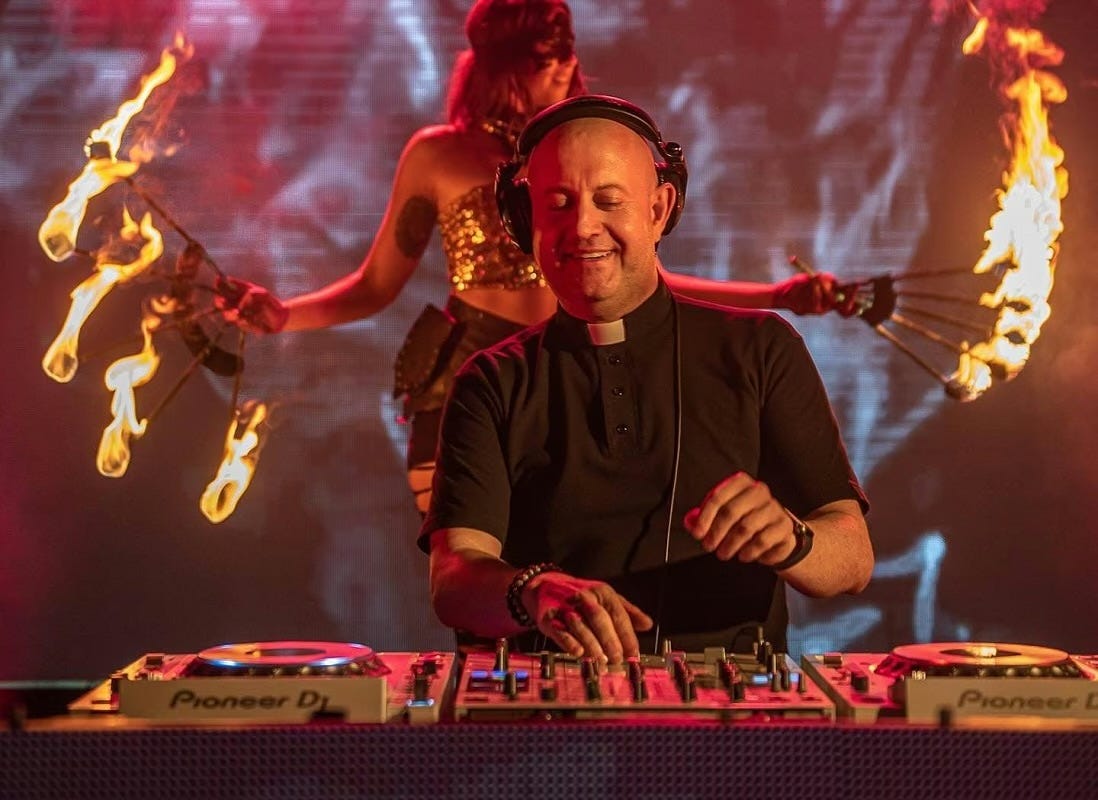
(He took a pill in Ibiza. To show Leo he was cool. And when he finally got sober he felt ten years older, but he understood Vatican II.)
The Lebanon story reads like satire that forgot to be funny. A priest scheduled to perform electronic dance music in a nightclub in Beirut, blending religious imagery with club culture, with supporters citing recognition by church authorities and pointing to an appearance at World Youth Day 2023 near Francis’s Eucharist.
The petition to halt it through the state courts matters less than the ecclesial posture behind the performance. A priest in a nightclub is not a “new avenue of outreach.” It is a confession that the salt has lost its savor and is trying to regain relevance by borrowing glamour from the world it was sent to convert.
A priest is set apart to offer the Holy Sacrifice, preach the Faith, absolve sins, and form souls for heaven. The nightclub priesthood is the inverse: the sacred becomes content, the collar becomes a prop, the altar becomes an accessory to a personal brand. Evangelisation becomes a playlist.
The faithful are expected to treat this as creative ministry, then they get scolded for caring about kneelers.
Madrid’s seminary formation: lobbying groups shaping priests, then calling it “accompaniment”
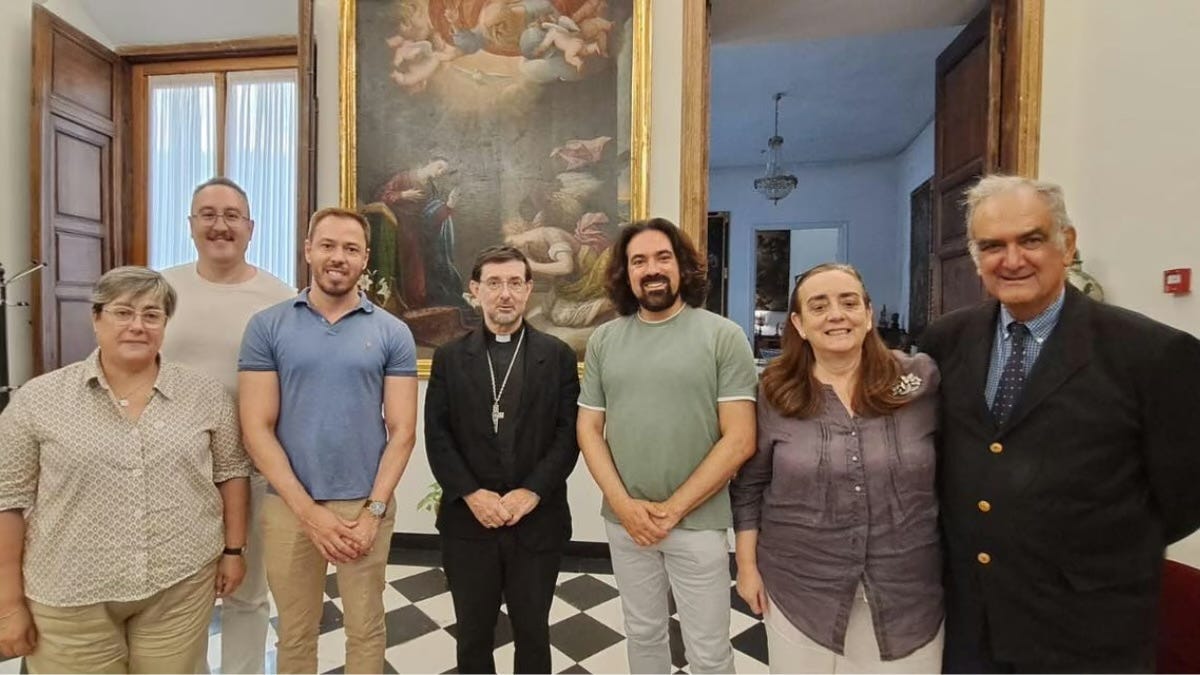
The report from InfoVaticana via en.news describes Crismhom, a homosexual lobby group, running training sessions in Madrid’s seminary across three dates in late 2025, led by a priest who serves as the group’s spiritual director, with claims of defending sodomy as an expression of human love and presenting liberation-theology frameworks as preferred pastoral options. Deacons raised objections. The rector corrected the deacons. The story ends in the familiar fog of “later meetings” that never arrive.
A seminary is not a laboratory for fashionable anthropologies. It is a forge for priests, men who must preach Catholic moral theology without euphemism and without fear. Formation shaped by pressure groups produces clergy trained to manage feelings, not confront sin. It also produces the kind of priesthood that needs “annual meetings” to discuss “mission” while the moral law dissolves into “journeys.”
The system always protects the programme. The dissenters in cassocks become the problem.
Brazil’s new archbishop: suppress the Roman Rite, praise the revolution, wave the rainbow
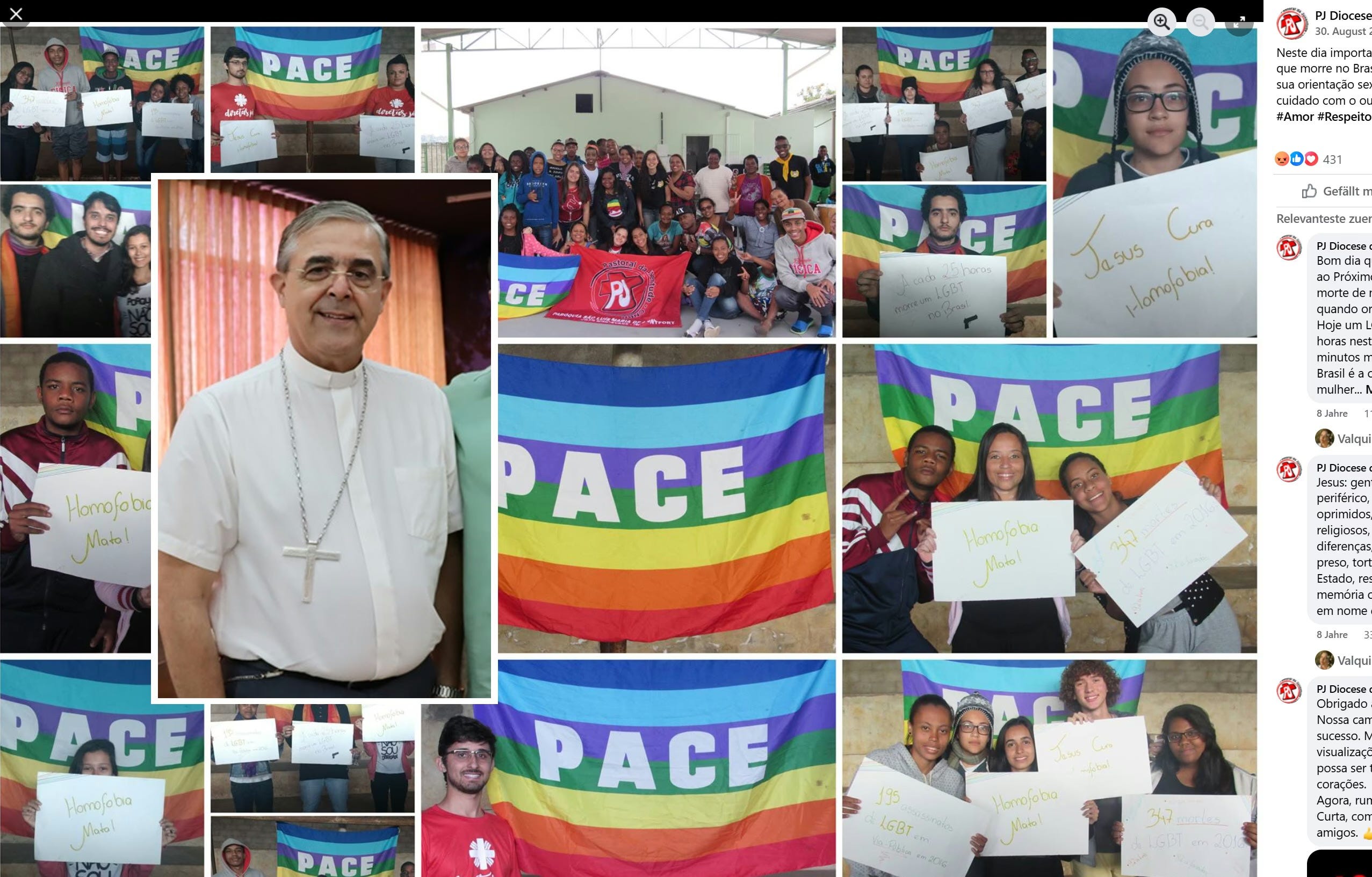
The appointment of Monsignor Marco Aurélio Gubiotti as Archbishop of Juiz de Fora, as presented by en.news, reads like a résumé of the postconciliar ideal: alignment with Francis-era pastoral orientation, hostility toward Roman Rite communities, enthusiasm for Vatican II’s “fruits,” and comfort with LGBT political language.
His 2014 letter warning the faithful away from Roman Rite Masses associated with a breakaway chapel is revealing for its logic. Participation places the faithful “outside” the Church. The rite becomes a boundary marker. Unity becomes uniformity. The hierarchy claims the power to declare a venerable liturgy “out,” then tolerates slogans like “Jesus cures homophobia” displayed amid rainbow flags. The same hand that swats incense welcomes propaganda.
Then comes the familiar line about celibacy: open reflection, no immediate change. The world hears “change is coming.” The faithful hear “stay calm.” Seminarians hear “everything is negotiable.”
A Church that treats tradition as suspicious and modern ideology as pastoral inevitably forms priests who fear tradition and accommodate ideology.
The deeper scandal: discipline for reverence, indulgence for degeneration
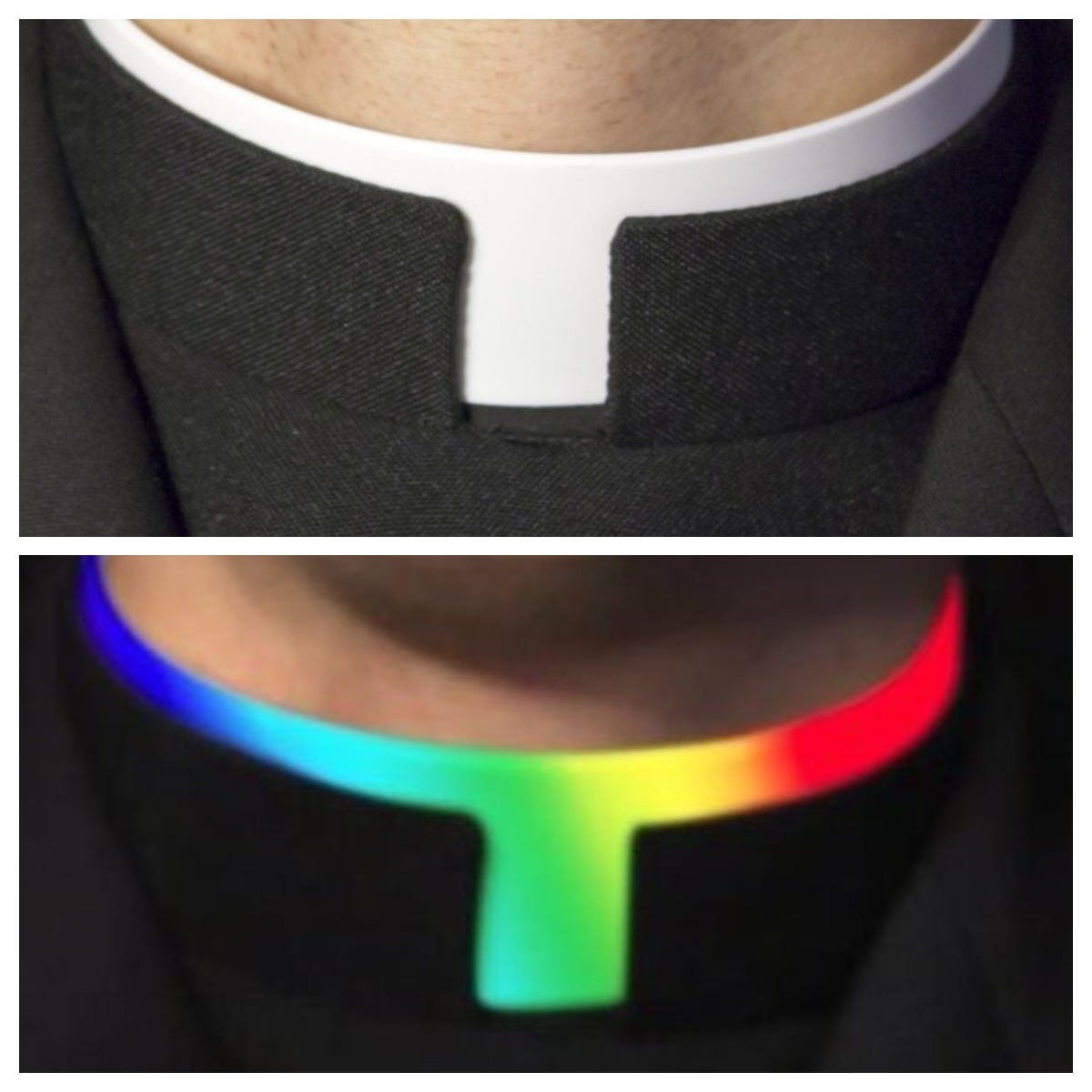
Gene Thomas Gomulka’s long essay on a “double standard” presses on a truth many Catholics have learned to ignore: discipline in the modern Church often falls hardest on the people trying to live like Catholics. The content of his piece ranges widely, with numerous anecdotes and allegations involving clergy culture, seminary life, and episcopal toleration.
The Church’s leadership frequently treats heterosexual lapses as intolerable scandal and homosexual networks as an “internal matter,” a topic to be managed quietly, a secret to be preserved for the good of “the mission.” In practice, the “mission” becomes protecting careers, reputations, and institutions. Meanwhile, ordinary Catholics are told to lower expectations, stop noticing, and avoid “division.”
The modern system can turn a diocesan chancellor’s public same-sex “marriage” into a news cycle, then return to business as usual. It can platform lobby groups in seminaries, smile for photos, then call the objectors rigid. It can stage consistories where the Roman Rite is never “on the agenda,” then promise a “good solution for everyone.”
A Church that fears clarity starts fearing Catholics who still believe the moral law is real.
Liturgy postponed, synodality promoted, scandals normalized
Put the pieces together.
A consistory engineered to avoid liturgy and maximize process. Annual meetings proposed as a substitute for decisive governance. Cardinals speaking in the language of “Eucharist in the context of synodality,” as if the Sacrifice of Calvary needs a committee frame. Clerical celebrity culture dancing in nightclubs. Seminary formation shaped by activist groups. Episcopal appointments that punish Roman Rite worshippers and bless ideological slogans.
This is not “renewal.” This is a managed decline with upbeat music. The Roman Rite persists as an indictment. That is why it stays off the agenda.
The faithful keep asking for bread. Rome keeps offering formats.
If you value independent Catholic analysis and want to help keep this work going, you can make a contribution or subscribe below. Every donation and subscription directly supports the writing, research, and production of Hiraeth in Exile.
Thank you for helping preserve independent Catholic journalism rooted in truth and tradition.
never thought i would see Juiz de Fora mentioned here. A friend of mine from the region thought this could be an opportunity to positively impact the situation of catholic schools in the region. I knew Prevost would never allow for a shepherd brave enough to face and to reform these decaying institutions, since that would run contrary to the current church ethos.
If you look through his articles in the old parish, there is a post dated march 5, 2025 called "ecological fraternity, a path of hope" that talks about sinodality, fraternity, ecology, all the synodal trigger words we are familiar with. Here's a translated excerpt from the post:
"In 2025, the theme of the Fraternity Campaign is "Fraternity and Integral Ecology," and the motto is from the biblical account of creation: "God saw that everything was very good!" (Genesis 1:31). Integral ecology is not just green ecology, that is, caring for nature, forests, rivers, etc., and combating their degradation. It also involves caring for the environment in which we live and interact: the city, work, family, spirituality, caring for all human and social relationships that make up life in our Common Home, because "everything is interconnected."
this yearly fraternity campaign is an entire subject by itself. I regret giving money to this liberation theology scam as a kid. No wonder Rome choose this guy, he fits right in with the bunch.
The city he now rules over has a precarious, small latin mass comunity that only serves mass twice a month, and a melkite rite parish that thankfully has its own bishop. In any case, pray for catholics in brazil and in the entire world. May we show, by our example, that the church cannot be truly defeated. We are the salt of the earth, and if it seens like the conciliar-synodal church has won, this eclipse does not obscure our duty to be a testament to the faith of our fathers, and a foreshadowing of a future restauration in glory.
Brilliant as usual! God bless you for your continued dedication to articulate the Hell we are living through. Of all the voices, you write the most beautifully and powerfully. A true wordsmith in an increasingly world of mundane sound bites. Truly a chastisement but with the hope that She will crush his head with her bare heel soon!!