
One Table, Many Altars
Leo XIV’s “We Are One” Ecumenism, the Augsburg Confession, and the Slow Conversion of Catholicism into a Museum of Symbols

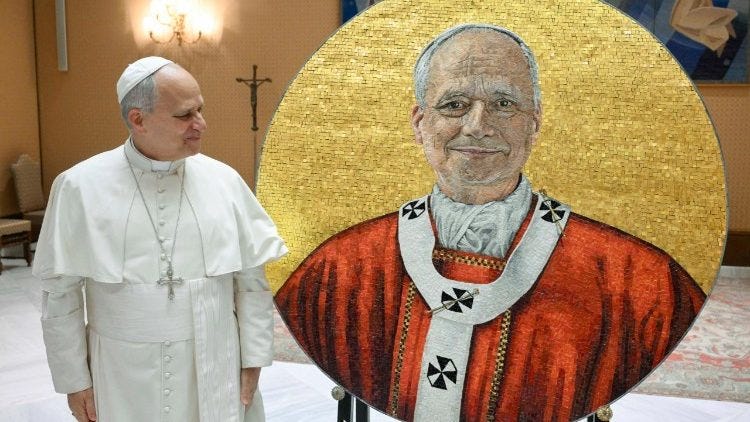
The Feast of Paul, the Anti Paul Homily
On the Solemnity of the Conversion of Saint Paul, you expect the Church to sound like Paul.
You expect the thunderclap, the knife edge, the old Apostolic cruelty toward error, the kind that saves souls precisely because it refuses to flatter them. Paul converts by being knocked down, blinded, stripped, and re made. He does not “journey” into a wider tent, discover a “common basis” with the Sanhedrin, or negotiate a “synodal structure” with the idol temples of the Gentiles. He declares war on the world’s gods, and he wins by losing everything.
Then you read Leo XIV’s homily at St Paul Outside the Walls, closing the Week of Prayer for Christian Unity, and you watch the feast quietly get repurposed into something else. The rhetoric borrows Paul’s vocabulary and then drains it of Paul’s content. Conversion becomes a warm metaphor for “transformative encounter,” and the central line arrives with the kind of confidence that only modern ecumenism can produce: “We are one. We already are.”
If “we already are” one, then division is reduced to surface level misunderstanding, the kind that can be healed by committees, pilgrimages, shared recitations, and improved feelings. Error becomes a mere lack of radiance on the face, not a rupture in the Faith.
Paul’s conversion is the opposite of that. Paul’s conversion is a declaration that the previous structure of worship was false and that its substitutes could not be baptized into legitimacy. Paul does not say, “We already share the same faith in one baptism, let us recognize it and make it visible.” Paul says, in effect: everything I defended was loss, everything I treasured was dung, everything I built was rubble compared to Christ.
So when Leo XIV stands at the tomb of Paul and offers a homily whose main energy is directed toward validating present day ecumenical assumptions, something grotesque happens. The feast becomes a stage for the post conciliar religion to congratulate itself. Paul is used as a mascot for the very thing he would have opposed: the normalization of doctrinal boundaries as a form of violence.
Leo frames divisions as something that “does not prevent the light of Christ from shining,” only makes the face “less radiant.” That seems charitable, even pious, until you notice what has been smuggled in. A Church that can tolerate contradictory confessions as long as they collaborate on witness. A Christianity whose unity can be spoken as already real, even while Catholics and Protestants still disagree on the nature of the Mass, confession, priesthood, papal authority, justification, and the sacramental economy itself. The point is no longer to end error. The point is to stage togetherness.
“We Are One” Meets the Old Catholic Answer
The pre Vatican II Church desired unity. It simply lacked the modern fantasy that unity can be achieved by pretending the doctrinal rupture was never decisive.
Pius XI addressed the ecumenical movement of his day with language that feels almost illegal to quote in 2026. He calls the “pan Christian” project dangerous precisely because it rests on the idea of finding “a common basis” of spiritual life across rival confessions. He says Catholics cannot approve these attempts when they are founded on the false opinion that religions are “more or less good and praiseworthy.”
Then he goes to the heart of the matter. The union of Christians can be promoted only by promoting the return of those separated from the Church “to the one true Church of Christ.”
That sentence does not fit inside the post conciliar liturgy of niceness. It destroys the whole sentimental architecture. It tells you what unity actually is. Unity is not “making visible what already exists.” Unity is the submission of error to truth, the return of schism to the fold, the rejection of counterfeit sacraments and rival authorities, the end of Protestantism as Protestantism. Unity is conversion.
That is exactly what Leo XIV avoids saying, even while standing on Paul’s feast day, even while repeating “one body, one Spirit, one hope, one Lord, one faith, one baptism.” The older Catholic mind hears those words and immediately asks: one faith in what sense, when Luther denies the sacrifice of the Mass and Trent anathematizes that denial? One baptism in what sense, when baptism is not a magic token that automatically confers ecclesial unity regardless of what you later confess? One Lord in what sense, when rival communions deny what He instituted, reject what He commanded, and overturn what He taught?
Leo’s answer is essentially: unity is already real, divisions only obscure the radiance, and the cure is deeper ecumenical synodal practice.
That diagnosis is inverted.
The Augsburg Confession as “Common Basis”
Now place Leo’s homily next to the Curia’s other ecumenical messaging this same week.
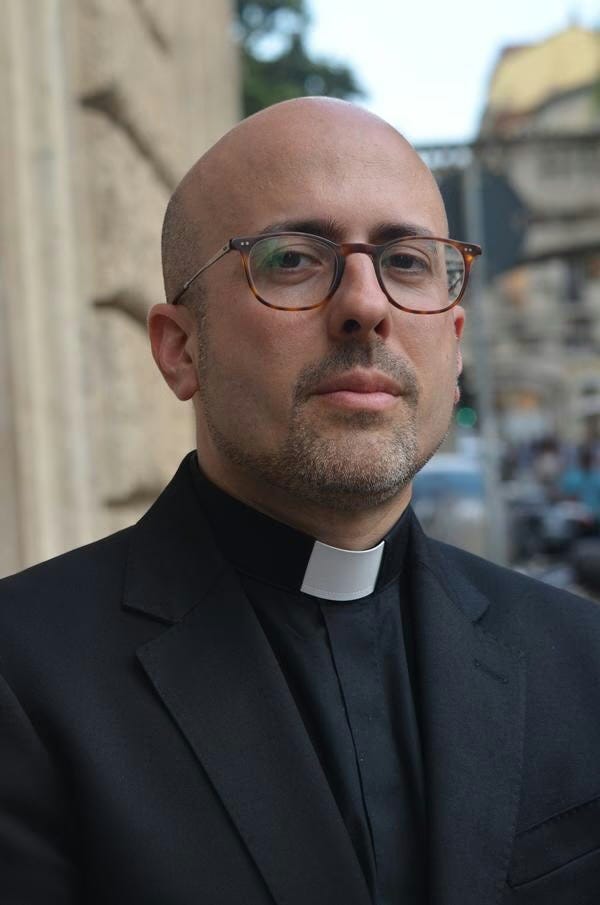
Archbishop Flavio Pace, Secretary of the Dicastery for Promoting Christian Unity, speaks about an ecumenical commemoration planned for 2030, the 500th anniversary of the Diet of Augsburg and the Confessio Augustana. In a Vatican News interview, he describes commemorating that text so as to “rediscover a common basis” for today.
The phrase “common basis” shows up again, now attached to one of the foundational confessional documents of Lutheranism. The older Catholic instinct is immediate: you do not build “common basis” on a document that denies what the Church defines.
The Augsburg Confession is a doctrinal program designed to establish a rival confession against Rome, anchored to a rejection of Catholic sacrificial and sacerdotal theology. Even Leo’s own ecosystem tacitly admits the core conflict every time it talks about “sitting at the one table of Christ.” The one table only exists in one sacrificial economy. The Mass is the heart.
Trent’s teaching on the Sacrifice of the Mass is the Church defining reality. The Mass is a true and proper sacrifice offered to God. To deny that is a doctrinal rupture with an anathema attached to it.
So what does it mean for a Curia archbishop to speak of the Augsburg Confession as a “common basis” to be rediscovered? It means the entire post conciliar project has a new catechism, one written in smiles.
The logic runs like this. If unity is already real, then doctrinal contradictions cannot be treated as deadly. They become wounds to be honored, differences to be managed, gifts to be exchanged. Then the next step becomes plausible: the sacrificial nature of the Mass becomes negotiable language, the priesthood becomes a spectrum, confession becomes a pastoral tool, papal authority becomes one tradition among many.
When Pace muses about “sitting at the one table of Christ,” he is either speaking nonsense or he is speaking revolution. Nonsense if the word “table” is reduced to a symbol of fellowship without sacrificial content. Revolution if it implies a future settlement where Catholic claims about the Mass and priesthood are re framed so that Protestant denial can coexist at the same altar.
The tragedy is that this is no longer fringe talk. It is official tone. It is Vatican News language. It is being written into the calendar.
From Ecumenism to Indifferentism, the Slide Has a Shape
Some readers will say: you are overreacting, this is only diplomacy, only friendship, only prayer.
Then you look at what “friendship” produces on the ground.
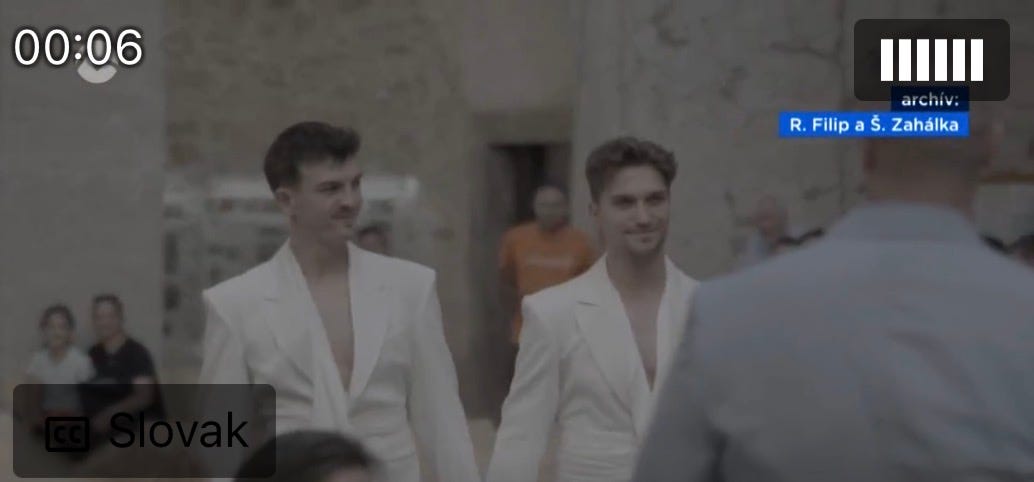
In September 2025, two men held a simulated wedding ceremony inside a Catholic church in Neratov, Czech Republic, celebrated by a Protestant pastor from the Evangelical Church of the Czech Brethren. Reporting on the couple’s interview indicates they expected resistance from the Catholic priest, and did not get it. The priest is described as open and accommodating, permitting the ceremony to take place in the church.
This is the moral fruit of a doctrinal habit. Once the Church’s physical spaces become ecumenical venues, once sacred architecture is treated as a neutral atmosphere, once Catholic worship is re imagined as “community experience,” the sanctuary becomes rentable.
The Neratov story is a parable. It shows the endpoint of “we already are one.” If we already share the same faith, then why not let a Protestant minister bless a counterfeit wedding in a Catholic nave? If divisions are only about radiance, then the building is only a building. If unity is a sociological project, then the church becomes a stage.
A Catholic senses the horror immediately. A church is consecrated for sacrifice. Its meaning is not its ambiance. It exists for the Mass, and everything inside it is ordered toward that act. When you allow a simulated homosexual wedding ceremony in that space, you declare, in practice, that Catholic sacred space no longer belongs to the sacrificial cult of the true Faith. It belongs to the modern principle of inclusion.
That is indifferentism.
The Ratzinger Foundation Without Ratzinger
Now another story, smaller on paper, more revealing in symbolism.
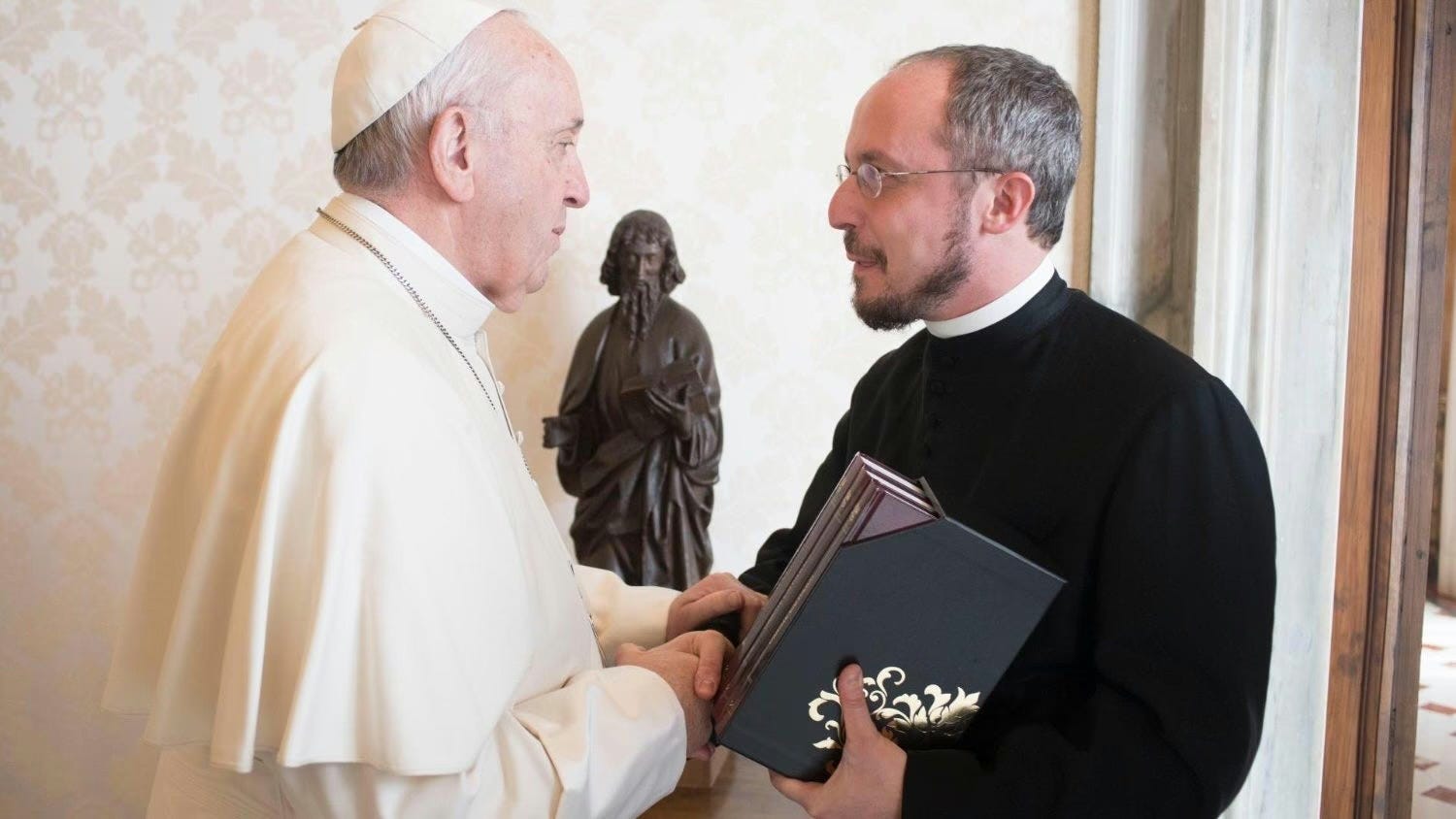
Reports indicate Don Roberto Regoli is preparing to replace Fr Federico Lombardi as head of the Vatican Foundation Joseph Ratzinger Benedict XVI.
Set aside personalities. Focus on what the post conciliar regime always does with memory. It converts memory into management.
A foundation dedicated to Joseph Ratzinger exists, and yet the career path to oversee it flows through the same bureaucratic bloodstream that normalized Francis era rhetoric and now supplies Leo XIV’s own messaging. Regoli has publicly framed Francis’s pontificate as engaging the Church on issues “at the heart of Western democracies,” including environment, education, and law. In an interview with Famiglia Cristiana, he warns against reading Francis as uniquely revolutionary, preferring to interpret him inside the trajectories of earlier pontificates, and he highlights ecological emphasis as a distinctive contribution with resonance in civil society. He has also spoken about the Abu Dhabi “Human Fraternity” approach as continuous with John Paul II style interreligious dialogue.
None of that is shocking in 2026. That is the point. A foundation meant to preserve and promote Ratzinger is naturally administered by men whose public commentary sits comfortably inside the post conciliar synthesis: continuity claims, dialogue framing, ecology as legacy, social acceptance as metric.
This is how the machine inoculates itself against its own critics. It takes the memory of a theologian who often sounded more Catholic than the council era allowed, places his name on an institution, then ensures the institution is staffed and governed by people fluent in the new dialect. The name becomes a brand. The content becomes negotiable.
You can see the same pattern everywhere. Everything becomes “trajectory.” Everything becomes “development.” Everything becomes a story told by managers, not a war fought by saints.
Cape Town and the Liturgy as Laboratory

Now take the global south, the place modern churchmen love to cite as the future, the “young Church,” the vibrant witness.
Leo XIV appoints Bishop Sithembele Anton Sipuka as archbishop of Cape Town. Reporting notes Sipuka’s leadership roles in ecumenical bodies and his interest in integrating ubungoma, a Zulu healer diviner practice involving ancestor channeling, into Catholic faith and worship through liturgical inculturation.
Read that again slowly. A bishop associated with ecumenical activism expresses interest in merging Catholic liturgy with a practice rooted in divination and ancestor mediation, and this is framed as a matter for research, development, direction.
This is the conversion of the liturgy into a laboratory.
The traditional Roman liturgy assumes something that moderns find offensive: God has revealed how He is to be worshiped, and the Church is guardian of that worship. The Mass belongs to Christ as sacrifice. When you treat local spiritual practices, especially those tied to superstition and spirit mediation, as candidates for “merging with faith,” you are renegotiating the borders of the first commandment.
The logic behind this is identical to Leo’s ecumenical logic. Walls are human constructions. Dividing lines are not permanent. Categories of insider and outsider are “human,” not divine. In that framework, the Church exists to reconcile everything, absorb everything, translate everything into the language of inclusion. Then the Mass stops being the clean oblation offered to God, and becomes a communal ritual open to endless cultural editing.
What is the sacrificial center holding all this together? In practice, nothing. You get a religion of symbols, gestures, dialogues, commemorations, healing narratives, and shared tables, with the altar quietly losing its dogmatic spine.
Synodality as the New Ecumenical Sacrament
Leo XIV explicitly links the ecumenical project to the synodal project, quoting Francis on the synodal journey being ecumenical and the ecumenical journey being synodal, then praising the synod assemblies of 2023 and 2024 for their ecumenical zeal.
That is the program. Synodality functions as a substitute sacrament. It creates the feeling of communion without requiring doctrinal submission. It is a process that can run forever, producing documents, assemblies, working groups, and listening sessions, while the hard question is always deferred. The hard question is: where is the Church?
If the Catholic Church is the one true Church of Christ, then ecumenism is ordered toward return, not mutual recognition. If the Mass is sacrifice, then Lutheran confessional documents cannot be treated as “common basis.” If moral doctrine is real, then a homosexual simulated wedding cannot be tolerated in a Catholic church as an “atmosphere” choice. If the first commandment binds cultures, then divination practices cannot be merged into liturgy.
Synodality lets you evade all of this by turning the Church into a permanent workshop. The “journey” becomes the point. The destination becomes rude.
The Real Conversion Missing from the Room
Paul’s conversion is terrifying. It is a mercy that feels like judgment. It ends in blood.
Leo XIV commemorates Paul, and in the same breath uses Vatican II’s language about bringing humanity the light of Christ “resplendent on the face of the Church.” Then he turns to an ecumenism that assumes the face can be shared even when the faith is contradicted.
The older Catholic answer is simpler, harsher, kinder.
Unity comes through truth. Charity comes through clarity. Peace comes through submission to Christ’s kingship, not through negotiated common baselines. The Church does not need to rediscover a “common basis” in the Augsburg Confession. The Church needs to rediscover Trent. The Church does not need to make unity visible by pretending it already exists. The Church needs to preach the faith that creates unity.
Pius XI saw this coming a century ago, and he named it: a movement that lures Catholics with the hope of union while hiding a grave error that destroys the foundations of Catholic faith.
In 2026, the error no longer hides. It speaks from microphones at Paul’s tomb.
If you value independent Catholic analysis and want to help keep this work going, you can make a contribution or subscribe below. Every donation and subscription directly supports the writing, research, and production of Hiraeth in Exile.
Thank you for helping preserve independent Catholic journalism rooted in truth and tradition.
The only way that all religions and denominations can be one is if truth does not matter. And ultimately the only place where truth does not matter is hell.
St Paul wrote that those who have not received a love of truth cannot be saved. Those who think that truth does not matter obviously do not have a love of truth.
NOT much more for me to add, Chris... another commenter beat me to it by mentioning yoga and reiki in Church. But I will add mountain biking, freefall rock climbing and an altar made out of a mound of dirt...in Germany, of course.