
Leo XIV Approves Beatification Process for Bishop who Allowed Indigenous Youths to Touch his Private Parts
His diary celebrates “blessed nudism,” recounts sleeping naked beside adolescents, and normalizes sexualized touching as “natural curiosity” — yet Leo still advances his cause.

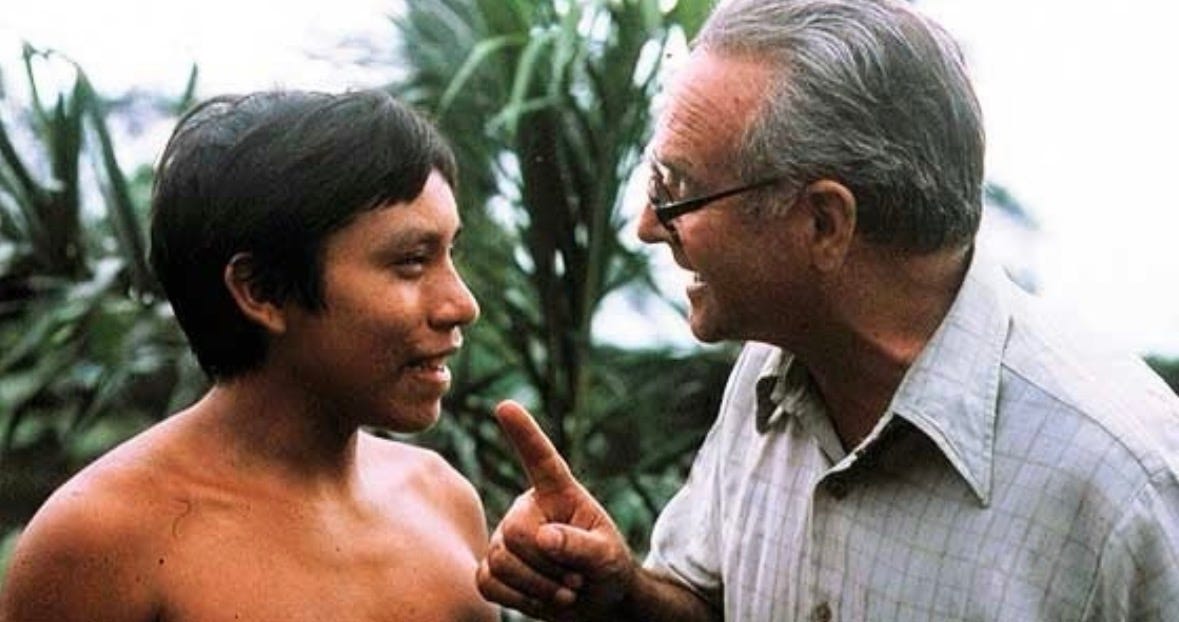
Venerable by decree, scandal by his own pen
On 22 May 2025, Leo XIV authorized the Dicastery for the Causes of Saints to promulgate a decree recognizing the “offering of life” of Alejandro Labaka Ugarte, Capuchin, Apostolic Vicar of Aguarico, killed in Ecuador in 1987. That authorization is exactly what moves a cause forward in the Church’s official machinery, placing the man on the track that ends, in the public mind, with altars, liturgical cult, and imitation.
Now comes the part that makes the stomach turn. On 12 February 2026, InfoVaticana published lengthy excerpts attributed to Labaka’s own writings describing his missionary “method” among the Huaorani, including passages praising “blessed nudism,” recounting his own nudity with them, framing their state as “Paradise before sin,” and narrating episodes of explicitly sexualized behavior involving adolescents that he claims to have endured with “naturalness.”
This is not hostile gossip from enemies, but the man describing himself.
“Blessed nudism” and the anti catechism of inculturation
Labaka’s language, as presented, treats Christian modesty as a civilizational costume problem. “Rags” get sneered at. Nudity becomes “blessed.” The Fall becomes something you can suspend if the tribe feels “pure” enough.
Traditional Catholic moral theology never spoke this way because it understands something modern Rome loves to forget. Modesty is not a European fashion, it is an application of chastity. The priest has obligations that do not evaporate in the rainforest. The duty to avoid scandal does not dissolve because a culture has different customs. A missionary can learn a language, eat what is set before him, sleep in a hut, accept poverty, accept danger, accept martyrdom. He does not get to sanctify conditions that predictably invite sexual sin, especially in the presence of the young.
“Blessed nudism” is a sick slogan that lowers defenses and baptizes the very atmosphere that Catholic asceticism trains a priest to resist.
The diary scenes that should have stopped everything
According to the excerpts InfoVaticana published, Labaka recounts bathing in the presence of “young people and children,” allowing “natural curiosity” involving touching and seeing “how we differ,” and narrating situations with adolescent boys engaging in sexualized “games,” including attempts to arouse him, culminating in his decision to share a bed naked under the same mosquito net with a youth he had previously rejected because of “provocative homosexual attempts.”
A Catholic reaction begins with first principles. A priest does not “manage” near occasions of sin by leaning into them. He flees them.
A priest does not treat adolescent sexual aggression as a cultural curiosity. He stops it, leaves, reports it, removes himself, draws a bright line.
A priest does not permit minors to touch his body for “curiosity,” especially his genitals, then narrate the episode as a pastoral lesson in “naturalness.”
The conduct described is egregiously disordered and scandalous. The very telling of it, written as though the “difficulty” is maintaining composure while being touched, reveals the rot. Catholic sanctity has always been recognizable partly because it is allergic to this kind of self justifying intimacy. Saints do not flirt with fire and call the smoke “inculturation.”
What Leo’s approval signals about the Synodal project
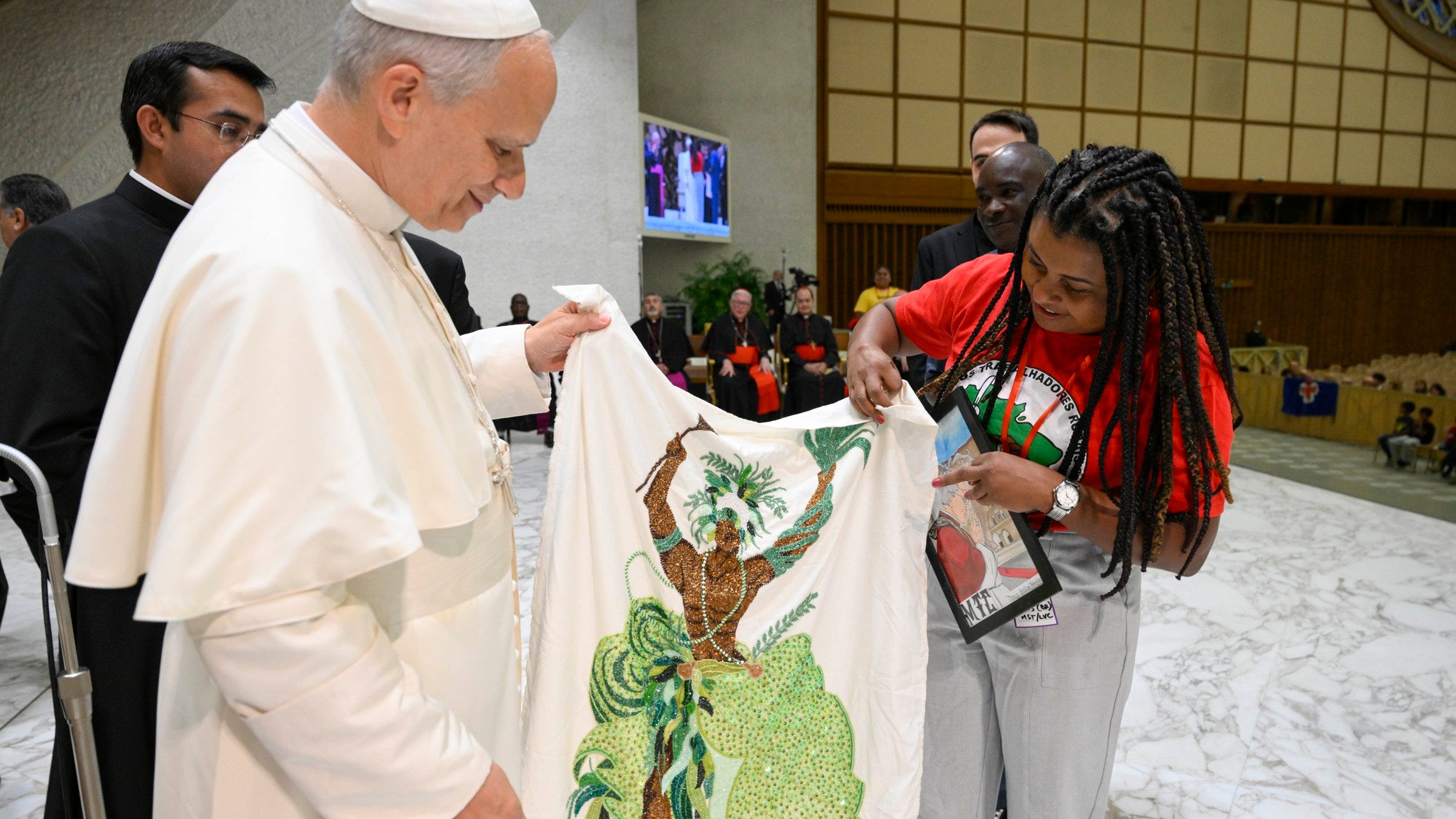
Leo XIV authorized the decree that advances the cause, the institutional act that tells Catholics this life belongs on the shelf of heroic virtue and “offering.”
In an older Church, these revelations would have frozen the cause. In the Synodal Church, the reflex runs the other direction. The category “offer of life” becomes a theological solvent. It dissolves prudence, dissolves moral clarity, dissolves the obvious duty to avoid scandal, then replaces all of it with a soft headed narrative about “being with the people,” “accepting,” “esteeming culture,” “not making drama,” “laughing with them,” “sharing their reality.”
This is the same spiritual grammar Catholics keep seeing everywhere else. Boundaries get recast as coldness. Judgment gets demonized. Moral distinctions get treated as “exclusion.” The sixth commandment becomes forgotten. The priest becomes a social worker with a stole.
A Church that can look at a record like this and still say “advance the cause” has announced, without needing to publish a syllabus, what kind of sanctity it plans to canonize next.
Dublin’s sermon: Mass is not worship, kneeling is for animals
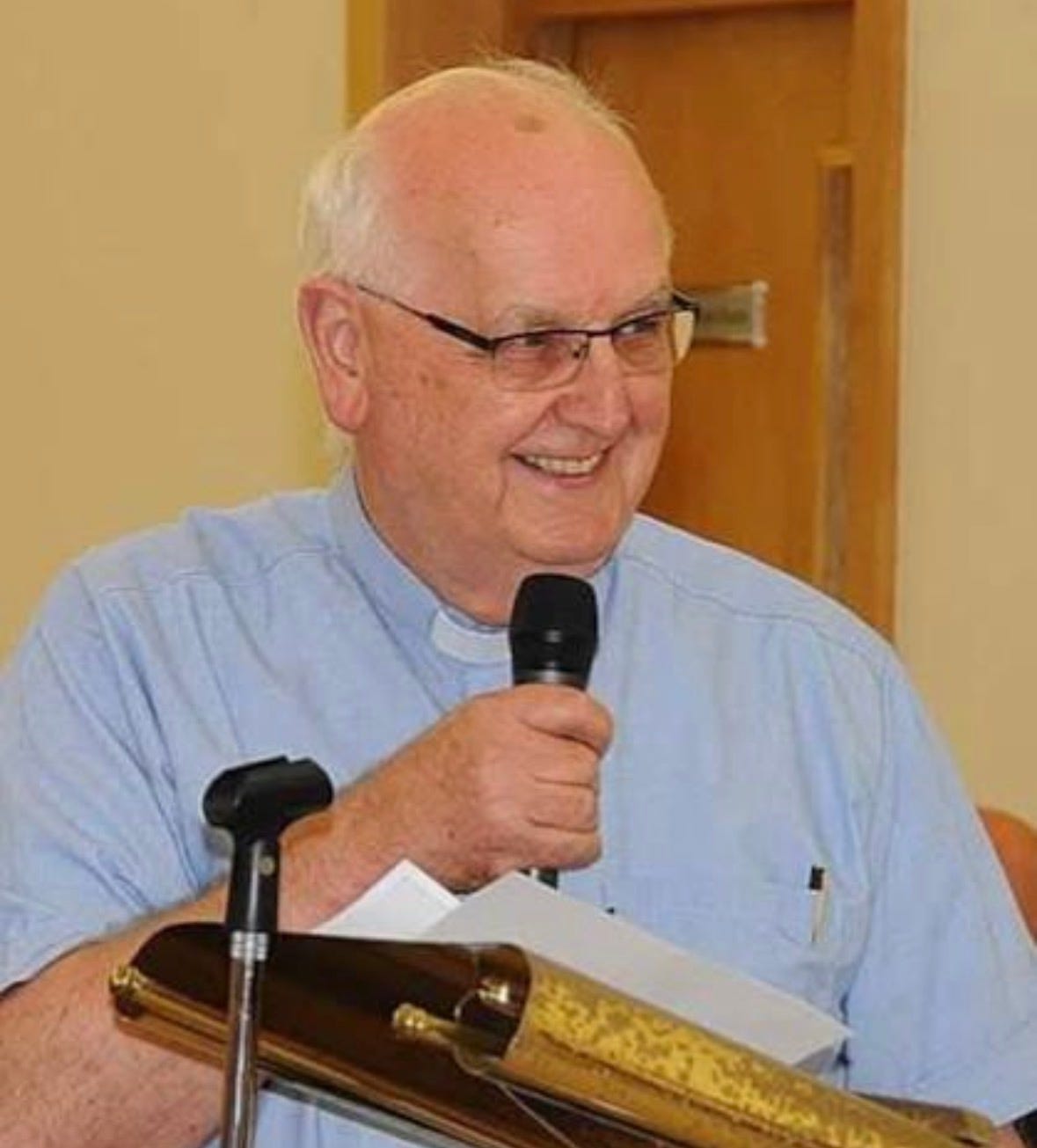
On 11 February 2026, at St Paul of the Cross Church in Dublin, Pat Fitzgerald preached, “We don’t come to Mass to worship God,” and framed the liturgy as “sharing meals,” then mocked kneeling for Communion as “being fed like animals.”
Video here. Click below to view on X.

That is the catechesis of the new rite stated out loud, with the old religion treated as primitive: adoration downgraded, sacrifice blurred, posture ridiculed. Once kneeling becomes “animal,” the faithful are trained to feel shame for reverence.
Atlacomulco: “No one can be excluded from receiving a blessing”
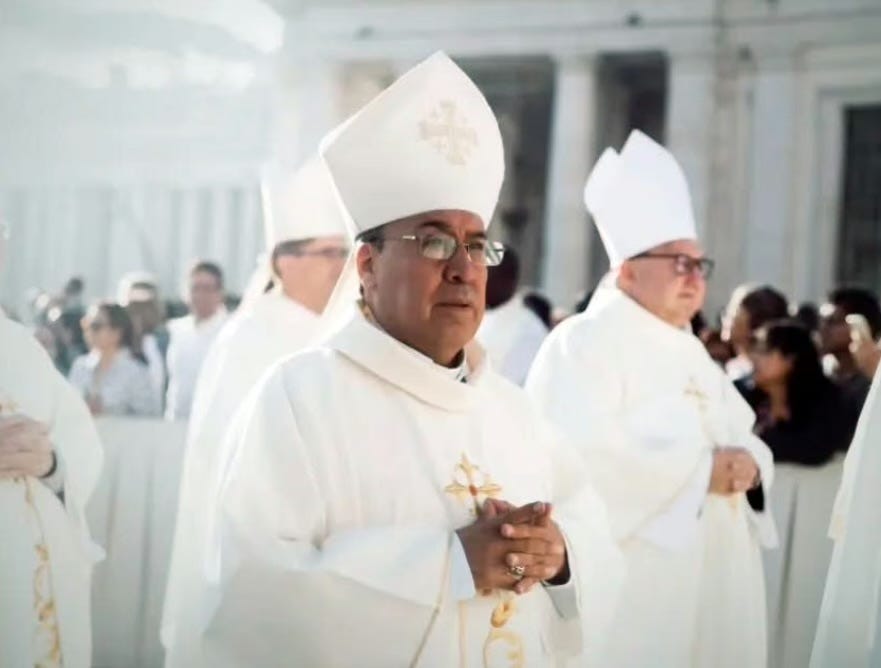
On 11 February 2026, the Holy See Press Office announced the appointment of Adolfo Miguel Castaño Fonseca as Bishop of Diocese of Atlacomulco, noting his birth in 1962, priestly ordination in 1987, and prior episcopal roles.
This is how the machine works. The personnel pipeline stays steady, the language stays familiar, and every appointment quietly rewards the same instincts that produced the sermon in Dublin: horizontal communion, therapeutic speech, and suspicion of visible devotion.
The controversy attached to Castaño revolves around his public defense of Fiducia Supplicans, chastising Catholics for “exaggerating” and “polarising,” and insisting that “no one can be excluded from receiving a blessing,” paired with the now standard line that “we cannot become judges.”
This sounds merciful until you track what it does in practice. It turns moral discrimination into “exclusion,” converts pastoral governance into “judging,” and makes the Church’s first duty sound like customer service. A blessing becomes a right, then a demand, then a weapon.
Castaño has also been described as presenting Francis’s synodal project as analogous to the Council of the Apostles in Acts 15, using the rhetoric of “walking together,” “listening,” and “discernment” under the Holy Spirit.
The move is strategic. Once “synodality” gets baptized as “Acts 15,” any resistance becomes resistance to the Bible, and any doctrinal boundary begins to look like a failure to “listen.” That is the same logic as “no one can be excluded.” It is governance by slogan, with Scripture recruited as the mascot.
Charlotte’s password protected episcopate
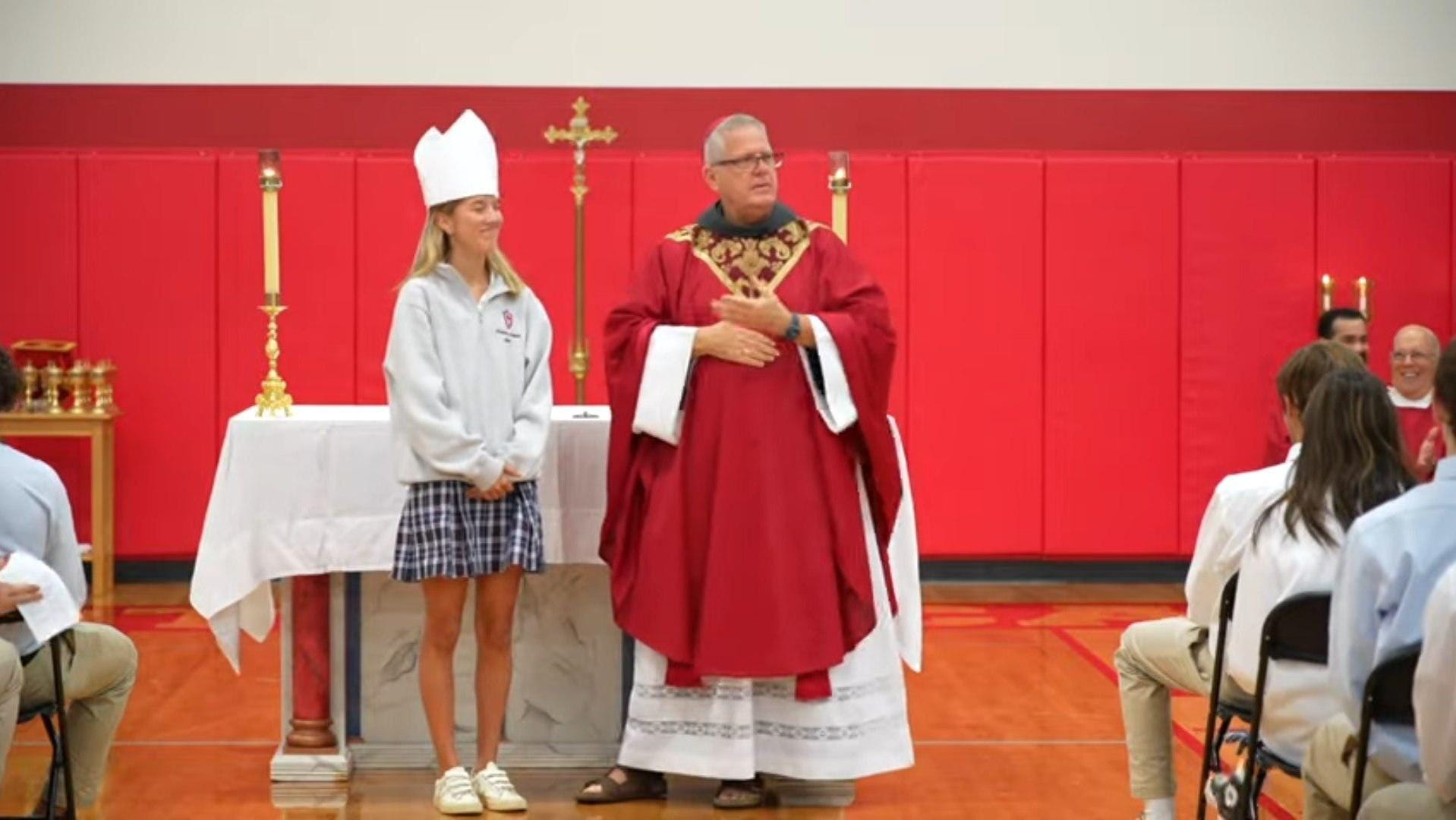
On 12 February 2026, Zeale News reported that Michael Martin directed pastors across the Diocese of Charlotte to play a video message at all Masses, describing his “pastoral vision,” with the file password protected until shortly before weekend liturgies.
A bishop ordering a video at every Mass is already a statement. Adding a password and timing the release turns the sanctuary into a controlled distribution channel, with the clergy reduced to technicians pressing play.
Zeale’s report ties the video directive to months of liturgical conflict, including a 5 January letter of dubia reportedly sent by 31 diocesan priests about the bishop’s authority to impose changes such as forbidding altar rails.
A separate national report described Martin saying he was not “threatened” by the dubia and would comply if Rome judged he overstepped.
Put Dublin beside Charlotte and the principle becomes visible. Words target worship, policies target kneeling, structures target the old architecture of devotion. A Church trained to stand, smile, and “share a meal” is a Church trained to stop adoring.
Conclusion: the same revolution in four accents
The old Faith had a tell: it produced men who feared sin, fled the near occasion, guarded the young with severity, and treated worship as the Church’s first act. This new apparatus has its own tell: it sanctifies “naturalness,” rewards slogan theology, elevates men who dissolve moral distinctions, and turns the liturgy into a managed messaging platform. When a diary record like Labaka’s can be pushed toward veneration, while Dublin mocks kneeling, Mexico promotes the Fiducia logic, and Charlotte scripts Sunday with a passworded “vision,” the through line is inversion. And the conclusion is not subtle: a Church that trains Catholics to normalize what Catholic morality once named as scandal has declared war on the instincts that once protected souls.
If you value independent Catholic analysis and want to help keep this work going, you can make a contribution or subscribe below. Every donation and subscription directly supports the writing, research, and production of Hiraeth in Exile.
Thank you for helping preserve independent Catholic journalism rooted in truth and tradition.
The counterfeit church has fully separated from the Catholic Church, yet 99.9% of baptized Catholics adhere to the wrong one.
This is abhorrent demoralizing act by the Pope to canonize perverted behavior.
Where are these theological virtues stepped into bloody actions leading our Roman Catholic Church.
I claim to The Divine Trinity, to help and have Mercy for the innocent of so perverse behavior.
Devastated by this.
Thank you for bringing it to light.