
Boy Denied Confirmation for Calling LGBTQ Activism “Nonsense”
A Dutch “inclusive” parish excluded a Catholic teenager, while Europe’s bishops promote queer Bible readings, trans blessing workshops, and a new moral theology where everyone is welcome except Trads

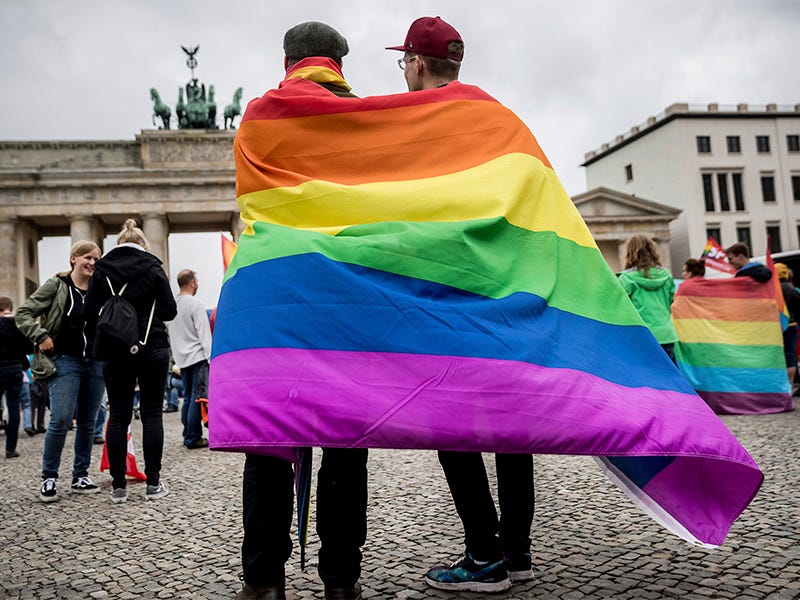
The Rainbow Flag at the Church Door
There is a small scene from the Netherlands that deserves more attention than it will receive.
Auxiliary Bishop Rob Mutsaerts of Hertogenbosch recently described arriving at a parish for Confirmation and seeing a rainbow flag outside the church. Before the entrance procession, he asked one of the boys what he thought of it. The boy shrugged, more or less unmoved by the entire ecclesiastical signaling exercise, and said he would rather have seen a PSV football flag. After Mass, parishioners explained to the bishop that they were an “LGBTQ church,” a “Rainbow Church.” Mutsaerts then asked the obvious question: what does “inclusive” actually mean?
The answer came soon enough.
According to Mutsaerts, he later learned that one boy had been asked to withdraw from Confirmation preparation because he had dismissed “Purple Friday,” a Dutch LGBTQ initiative, as nonsense. The bishop confirmed him a week later in another church. The irony practically writes itself: the “inclusive” parish excluded a teenage Catholic boy from sacramental preparation because he failed to genuflect before the proper flag.
This is the new pastoral regime in miniature. The old Church had boundaries and admitted it. The new Church has boundaries and lies about them. It says “all are welcome,” then quietly defines “all” as those who accept the revolution’s anthropology, vocabulary, and emotional blackmail.
The boy’s crime was skepticism. He saw the flag and failed to be moved. In a saner Catholic world, that would have been called maturity.
Würzburg: The Counter-Catechism Gets a Conference Schedule
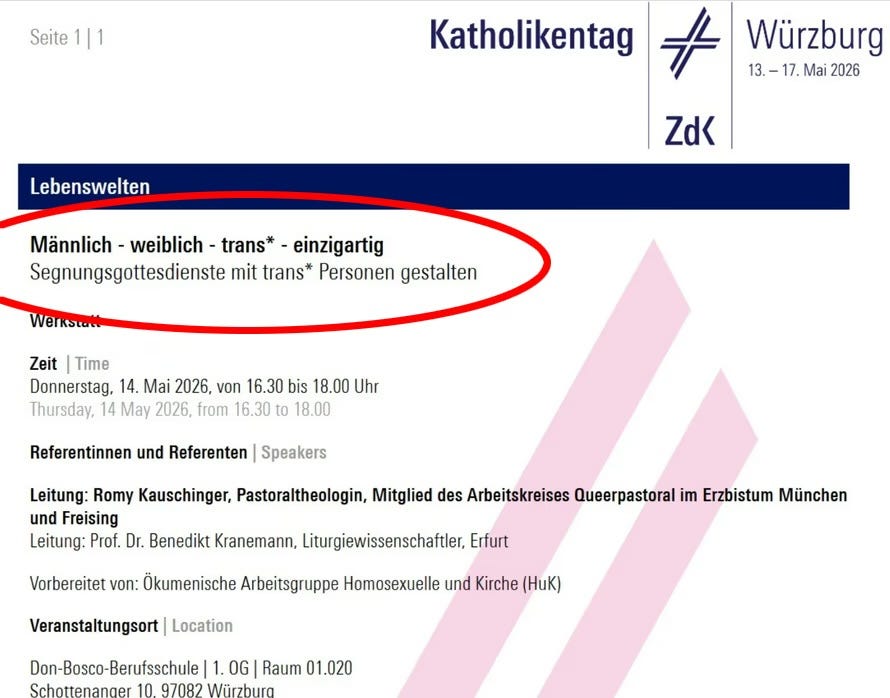
The Dutch episode would be disturbing enough on its own. But it sits inside a wider European pattern.
The 2026 German Catholic Congress in Würzburg included a workshop titled “Männlich – weiblich – trans* – einzigartig,” focused on planning blessing services with trans-identifying persons. Its official program also listed a queer worship service titled “Das Leben ist bunt – Vielfalt in der Kirche?!” prepared by groups including #OutInChurch, the Network of Catholic Lesbians, and the Ecumenical Working Group Homosexuals and Church. Another Bible workshop, “Bibel queer gelesen,” was subtitled “Why G*D is a fan of diversity.”
This is catechesis. Bad catechesis, but catechesis all the same.
A Catholic Congress that teaches people how to plan blessing services for trans-identifying persons, hosts queer Bible readings, and builds worship around diversity rhetoric has already decided which anthropology will govern the event. The Church’s revealed doctrine is permitted to appear, perhaps, as one voice among many. But the emotional and institutional momentum belongs to the therapeutic revolution.
The exhibition listing is even more revealing. The official program’s organization area included the Network of Catholic Lesbians, the Ecumenical Working Group Homosexuals and Church, and even an “Ecumenical Working Group BDSM and Christianity.”
One hardly knows whether to laugh or ask for an exorcist.
Cardinal Vesco and the Disappearance of Sin
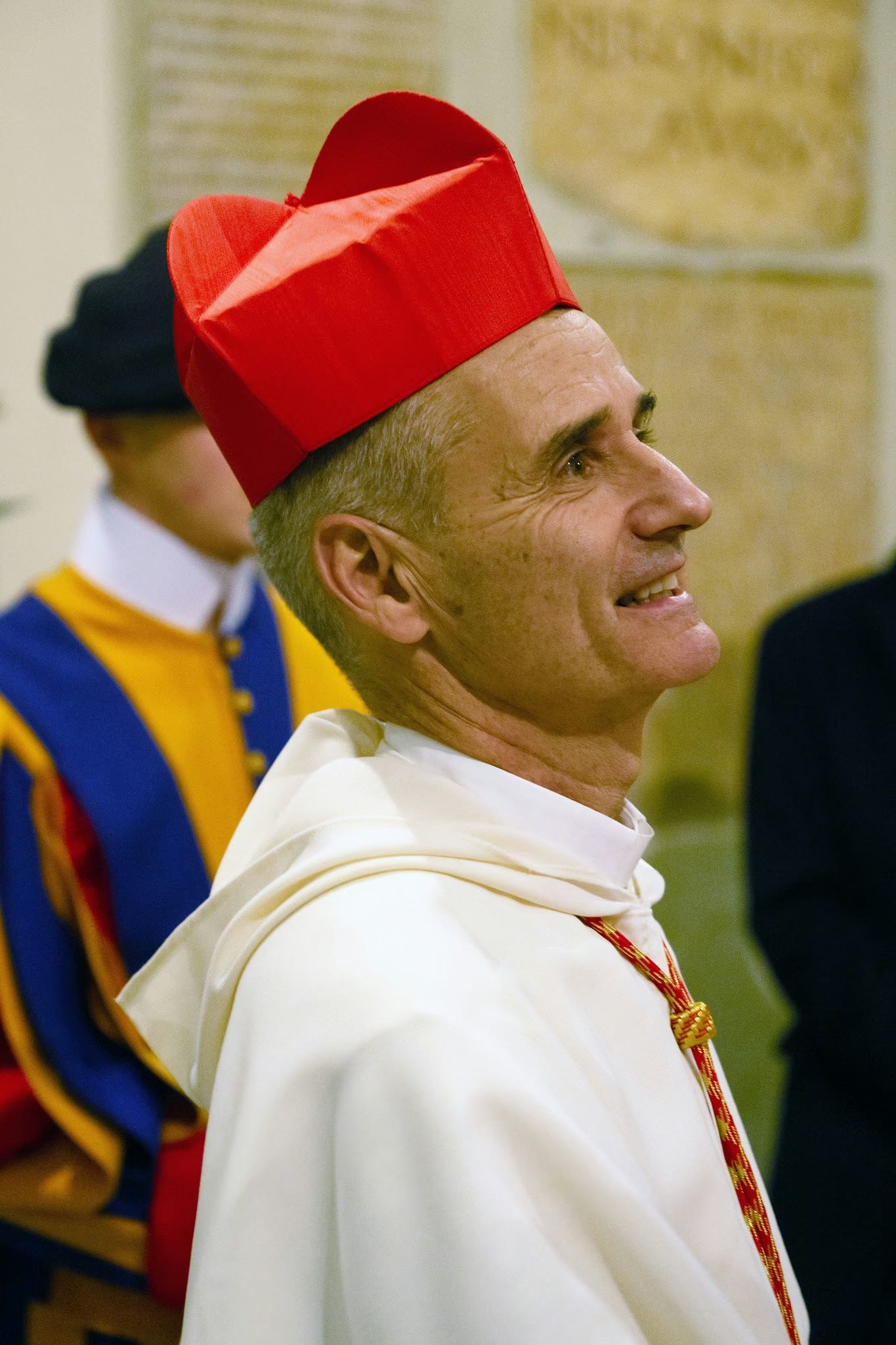
Then comes Cardinal Jean-Paul Vesco of Algiers, writing in Outreach. Vesco says that his “road to Damascus” came when a homosexual Dominican brother told him that no one chooses to be homosexual. From this he concludes that homosexuality is not sinful because sin is freely committed. He places homosexual orientation within creation rather than disorder or pathology, and he treats Fiducia Supplicans as a text whose pastoral and doctrinal significance “changes everything.”
The sleight of hand is familiar by now.
Catholic moral theology has always distinguished inclination, temptation, consent, habit, culpability, and act. The mere experience of an inclination is not the same thing as a freely chosen act. That is elementary. But the modern pastoral argument takes that valid distinction and quietly converts it into something else: if a desire is unchosen, then the erotic identity built around it must be affirmed; if the identity must be affirmed, then the relationship must be blessed; if the relationship is blessed, then the old moral doctrine survives only as a museum label.
Fiducia Supplicans itself attempts to maintain the line. It says that the Church’s traditional doctrine on marriage remains firm, that no liturgical rite resembling marriage is permitted, and that blessings of irregular or same-sex couples do not validate their status or change Catholic teaching on marriage. But the document also explicitly opened the possibility of blessing such couples, which is why men like Vesco can read it as a breakthrough rather than a boundary.
That is the genius of the postconciliar method. Issue a document that says the doctrine remains unchanged, then allow the pastoral application to create a new public reality. Later, when Catholics object, accuse them of lacking nuance.
The Dianin Appointment: Amoris Laetitia Moves to Gorizia
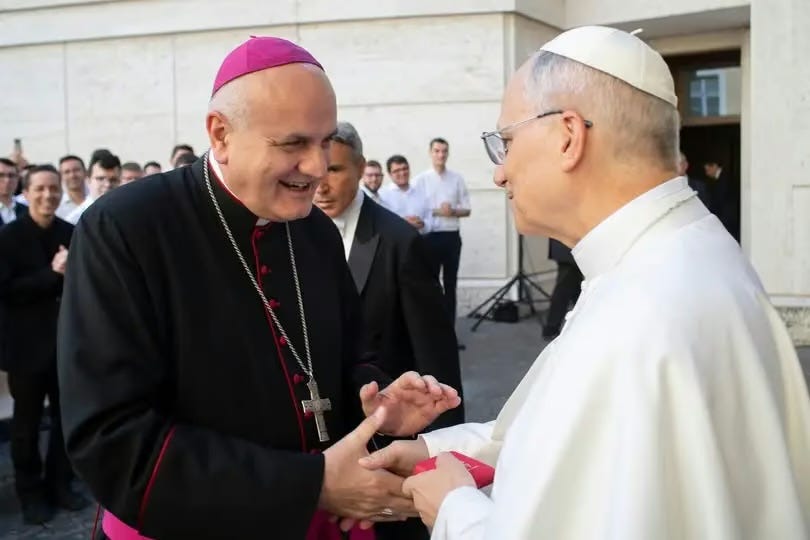
On May 14, Leo XIV appointed Bishop Giampaolo Dianin as Metropolitan Archbishop of Gorizia. The Vatican’s own announcement notes Dianin’s doctorate in moral theology, his seminary background, and his role as the Italian bishops’ delegate for seminaries.
That appointment matters because Dianin’s theological record is not mysterious. In a 2017 article on Chapter VIII of Amoris Laetitia, he discussed divorced-and-remarried Catholics, continence, discernment, and sacramental access. He wrote that where living as brother and sister is difficult or dangerous for the couple, Amoris Laetitia does not deny openness to other choices, including the sacraments. He also raised the question whether sexual relations in a divorced-and-remarried union should simply be equated with adultery.
Compare that to Familiaris Consortio. John Paul II reaffirmed the Church’s practice, based on Scripture, of not admitting divorced-and-remarried persons to Holy Communion because their state of life objectively contradicts the union of Christ and the Church signified by the Eucharist. Where separation is impossible for serious reasons, the couple must live in complete continence.
This is exactly how revolution happens in Catholic language. Nobody announces, “We are abolishing the Sixth Commandment.” Instead, they speak of accompaniment, discernment, complexity, the concrete situation, the internal forum, gradual integration, and pastoral creativity. The norm remains printed in the book while the exception consumes the parish.
Dianin’s public record also tracks the broader sexual-morality realignment. The Diocese of Chioggia, under his leadership, published a favorable explanation of Fiducia Supplicans, saying the declaration made possible blessings of same-sex couples outside a ritual framework and presenting this as pastoral development rather than doctrinal change.
Again, the same pattern: doctrine unchanged, practice transformed, objectors pathologized.
Seminaries, Formation, and the Future Clergy
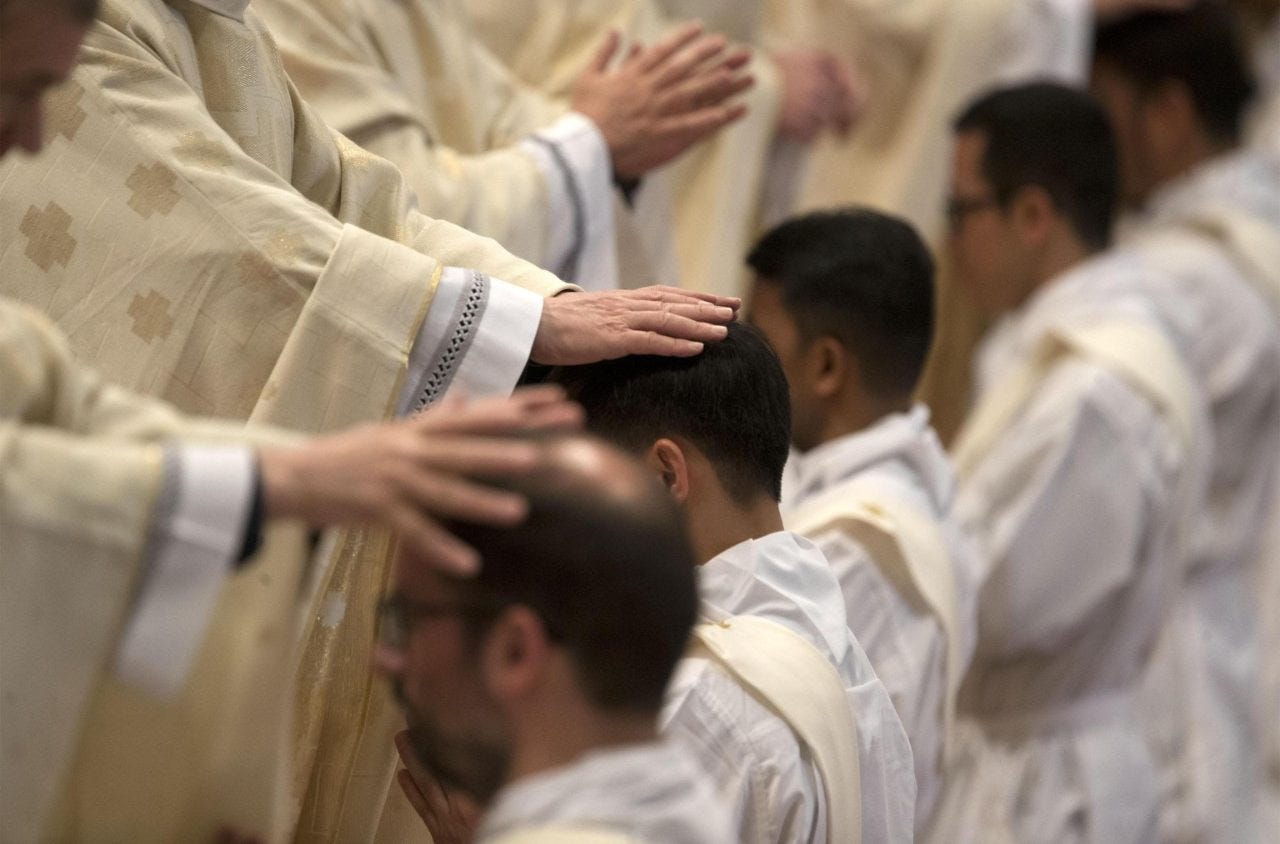
Dianin’s relevance grows further when one remembers his role in seminary formation. The new Italian seminary norms approved for a trial period by the Vatican repeated the language of earlier prohibitions against admitting men with deep-seated homosexual tendencies, but also said discernment should not be reduced only to that fact and must consider the candidate’s whole personality.
In isolation, that may sound modest. In context, it reads differently. The same ecclesial class that has spent years softening, blurring, and reversing the practical force of Catholic sexual doctrine now asks us to trust its “discernment” in seminaries. We have seen this movie. The abstract rule remains. The local exception multiplies. The bishops praise complexity. The faithful are told that noticing the pattern is uncharitable.
The question is no longer whether the postconciliar institution can produce orthodox documents. Of course it can. The question is whether its governing class still wants those documents to govern.
Autuoro, Benevento, and the Synodal Construction Site
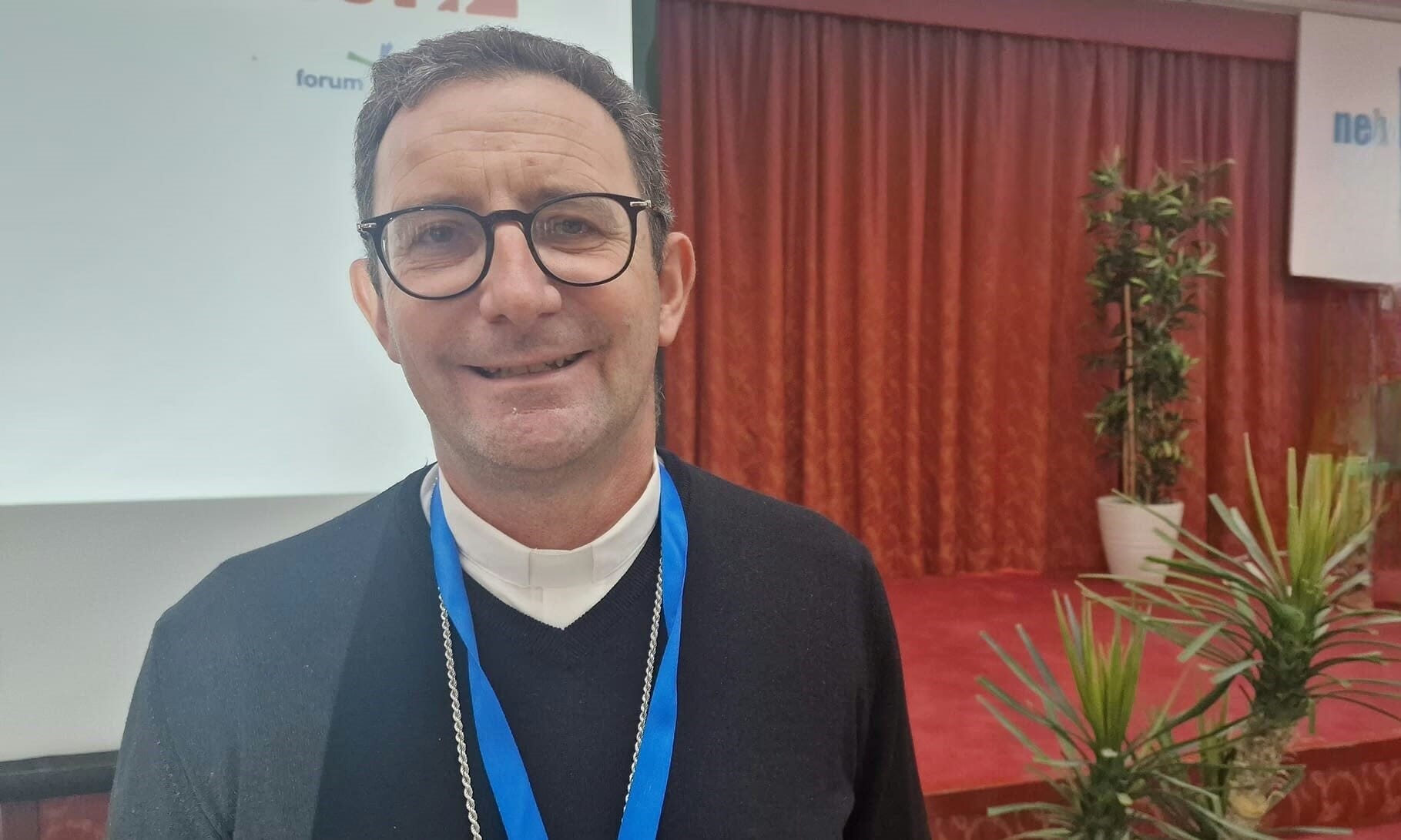
The day before Dianin’s appointment, Leo XIV appointed Bishop Michele Autuoro as Metropolitan Archbishop of Benevento, transferring him from his role as auxiliary bishop of Naples. The Vatican biography highlights his work in mission offices, seminaries, and the Italian bishops’ structures.
Autuoro’s own language is pure synodal boilerplate. In a 2024 interview, he described the Church as a “great construction site,” specifically the construction site of the Synod. He said the Synod is only a beginning, spoke of a desire for change, and described the Church as a banquet offered to all peoples where all must sit and no one must be excluded.
There is nothing wrong, in the abstract, with saying the Church has a mission to reach everyone. Our Lord commanded the Apostles to teach all nations. But that command included teaching them to observe all things whatsoever He had commanded. The modern “todos, todos, todos” rhetoric usually remembers the invitation and forgets the conversion.
The old missionary Church went to the nations with a crucifix, a catechism, and baptismal water. The synodal Church goes with a listening session, a demographic chart, and a permanent committee.
Naples and the Old Mass: Inclusion Has Its Limits
The rhetoric of total welcome becomes especially suspicious when Catholics attached to the Roman rite ask for the Mass of their ancestors.
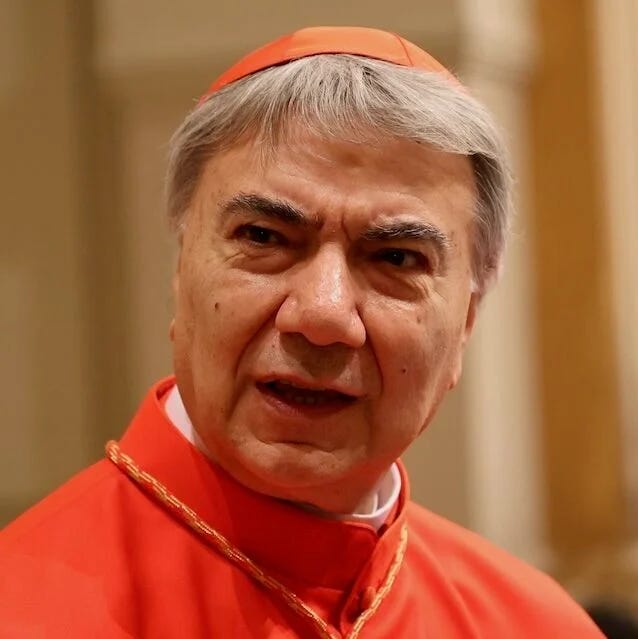
In Naples, Cardinal Domenico Battaglia suppressed the traditional Latin Masses in May 2024. Later reports from faithful attached to the traditional Mass described petitions, meetings, and frustration with diocesan officials. A Naples traditional Mass group alleged that a private letter from Auxiliary Bishop Autuoro to the Dicastery for Divine Worship justified suppression with claims of poor attendance, which the faithful disputed. That allegation should be treated as an allegation, but the surrounding facts are clear enough: the Masses were suppressed, petitions followed, and only a limited Saturday evening restoration eventually appeared.
This is where “inclusion” reveals its true hierarchy of values.
A Catholic Congress can make room for queer Bible readings and BDSM-adjacent religious exhibitors. A parish can fly the rainbow flag and treat a skeptical boy as the pastoral problem. A cardinal can write as though Fiducia Supplicans changes everything. But Catholics who ask for the immemorial Roman Mass are handled through decrees, restrictions, delayed responses, and bureaucratic fog.
Everyone gets a seat at the table, apparently, except the people who still recognize the table as an altar.
The Real Boundary: Not Mercy, But Apostasy From Memory
The deepest problem is not that bishops want to be kind to people with wounded lives. Any Catholic with a functioning heart wants that. The Church is a hospital because the world is full of sinners, and every one of us arrives bleeding.
The problem is that the new pastoral class increasingly treats the old doctrine as the wound.
In this inverted arrangement, chastity becomes cruelty, moral clarity becomes exclusion, the traditional Mass becomes dangerous nostalgia, and a teenage boy who shrugs at a rainbow flag becomes a threat to parish harmony. Meanwhile, the language of “discernment” baptizes situations the Church once called objectively disordered, and the language of “accompaniment” walks people deeper into confusion while congratulating itself for tenderness.
The preconciliar Catholic instinct was sharper because it had not yet been trained to distrust itself. It knew that mercy presupposes sin, that welcome aims at conversion, and that the sacraments are not affirmation ceremonies. It knew that a Church embarrassed by chastity would eventually become embarrassed by Christ.
Leo XIV’s Appointments Are the Message
The most important point is not one Dutch parish, one German conference, one Outreach essay, one Italian bishop, or one suppressed Latin Mass. The point is the convergence.
Leo XIV’s appointments of Autuoro and Dianin do not arrive in a vacuum. They come after years of Francis-era formation in which synodality, sexual-morality revision, migration politics, anti-traditional liturgical policy, and “todos” rhetoric merged into a single governing mentality. Leo may present himself with a different temperament, but appointments are acts of governance.
A pope tells the Church what he values by the men he promotes.
If men associated with Amoris Laetitia expansion, Fiducia Supplicans enthusiasm, synodal process theology, and resistance to traditional liturgy keep rising, then the message is not difficult to decode. The revolution is not being reversed. It is being staffed.
Conclusion: The Door Is Open, But the Faith Is Outside
The modern ecclesiastical establishment loves the image of the open door. Open doors sound generous. They photograph well. They make donors comfortable. They soothe journalists.
But a door opened onto what?
If the open door leads to repentance, baptism, confession, sacrifice, chastity, and the Cross, then it is the door of the Church. If it leads to a room where every identity is affirmed except Catholic identity, every relationship is blessed except tradition, and every voice is heard except the voice that says “go and sin no more,” then the door has become something else.
The Dutch boy understood more than the adults around him. He did not write a treatise. He did not cite Trent. He did not need to. He simply failed to perform enthusiasm before the banner of the new dispensation.
For that, they tried to keep him from Confirmation.
And that, in one small parish scene, tells us almost everything.
If you value independent Catholic analysis and want to help keep this work going, you can make a contribution or subscribe below. Every donation and subscription directly supports the writing, research, and production of Hiraeth in Exile.
Thank you for helping preserve independent Catholic journalism rooted in truth and tradition.
…where everyone is welcome except *Catholics.
The handwriting on the wall couldn’t be clearer.
Q. What exactly is the Synodal Church and Synodality?
A. Good question, and a lot of people are wondering the same thing. The word "Synodal" comes from two words: "Syn" or as we say, "Sin" and "Odious," which of course means "hateful." So what we have is a sinful and odious creation, inspired by the devil and begun with Francis, himself drenched in sin and very odious in so many ways and continued with Leo, also guilty of many grievous sins and odious in his own pathetic way. Does that answer your question?
Q. Wow, yes it does, I guess. I will then have no part of it.
A. That's a wise decision.