
Bishop Excommunicates All Catholics Who Attend “Unauthorized” Latin Masses
Meanwhile Leo Hosts Muslim, Jewish, Hindu & Buddhist Prayers in Rome

Something is badly wrong when dioceses can thunder about “automatic excommunication” for Catholics who want the traditional Roman rite, while the same ecclesiastical machine routinely finds reasons to tolerate, relativize, or “pastorally accompany” far more serious ruptures of faith and morals.
Today’s stories are unusually revealing because they put three things side by side that are usually kept apart: a Brazilian archdiocese using the vocabulary of schism to police the old Mass, a Rome style “vigil of prayer” that blends religious language across traditions like a tasteful civic ceremony, and then a sudden clerical panic when a purported “sedevacantist bishop” performs a baptism in a parish chapel that was mistakenly approved.
Taken together, they read like an x-ray of the postconciliar operating system.
Maceió: the old rite as a controlled substance
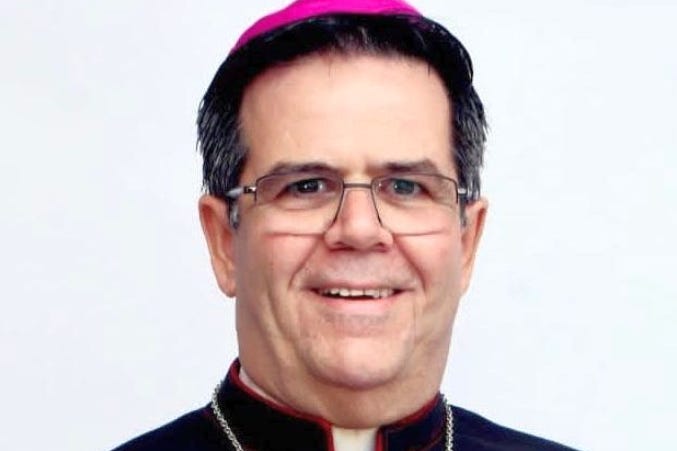
The Archdiocese of Maceió (Brazil) issued a note warning that attending the traditional Mass outside the one location authorized by the archbishop will be treated as “public schism” and will incur “automatic excommunication.” The notice specifies a single authorized chapel and even names the priest and Sunday time, which, ironically, is a violation of Traditionis Custodes. The bishop does this in accord with Leo’s view that ancient Roman rite is somehow a regulated dispensation rather than part of the Church’s own public worship.
This crackdown also has a history. Even when Summorum Pontificum (2007) was in force, the prior ordinary in 2010 had already prohibited the old rite in the diocese, ironically showing complete disregard and disobedience to Benedict XVI. In other words, what you are seeing now is a matured habit: the traditional Mass gets treated like an exception granted by management, and not like a patrimony that belongs to Catholics.
“Schism” as an administrative label

To justify the threat, the note invokes canons 751 and 1364 §1, and it quotes the definition of schism as refusal to submit to the Roman Pontiff or remain in communion with those subject to him.
Here is the sleight of hand. The document takes an act that is, on its face, liturgical and disciplinary (attending a Mass in the older rite in an unauthorized place), then reclassifies it as an act of schism, which is ecclesiological and juridical at the deepest level. This is how the new regime likes to work: swap a prudential decision for a moral absolute, then enforce it with the strongest words available.
In practice, “schism” becomes a synonym for “unlicensed.” The category stops functioning as a description of a real rupture from the Church and becomes a tool for compliance. If the loudest defenders of the postconciliar settlement regularly insist the SSPX is “not in full communion,” how does the system suddenly discover the sacramental equivalent of a nuclear button the moment Catholics attend the old rite somewhere it has not been approved?
The answer is not theological consistency. It is control.
The canon law hammer, selectively swung
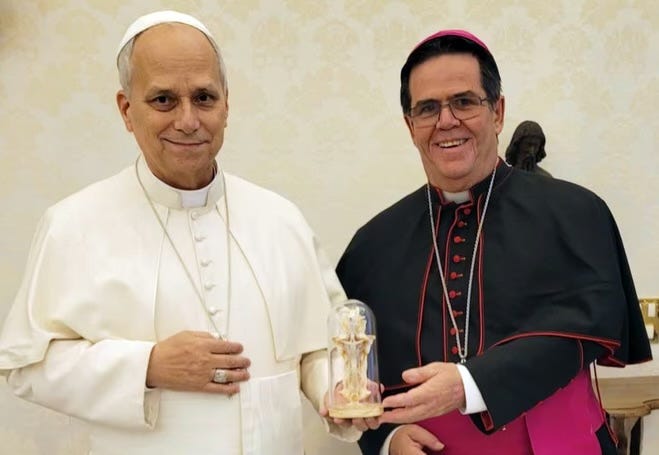
The story highlights the obvious double standard: severe language for traditional Catholics, soft language for real doctrinal and moral rot. That contrast is a pastoral fact that faithful Catholics live with.
In the postconciliar model, the institution’s “red lines” are not where Catholics instinctively expect them to be. The red line is not public irreverence, sacrilege, contempt for tradition, doctrinal ambiguity, or the catechetical collapse those things produce. The red line is disobedience to the managerial project, especially when it takes liturgical form. A traditional Mass outside the approved site is treated as a public threat to communion.
Notice the tone of certainty. The note does not merely warn of penalties. It frames the matter as straightforward: do this, incur excommunication. The pastoral goal is deterrence instead of persuasion. A faithful Catholic who simply wants the Mass of the ages is trained to think like a parolee.
Candles, continents, and a new liturgy for the world
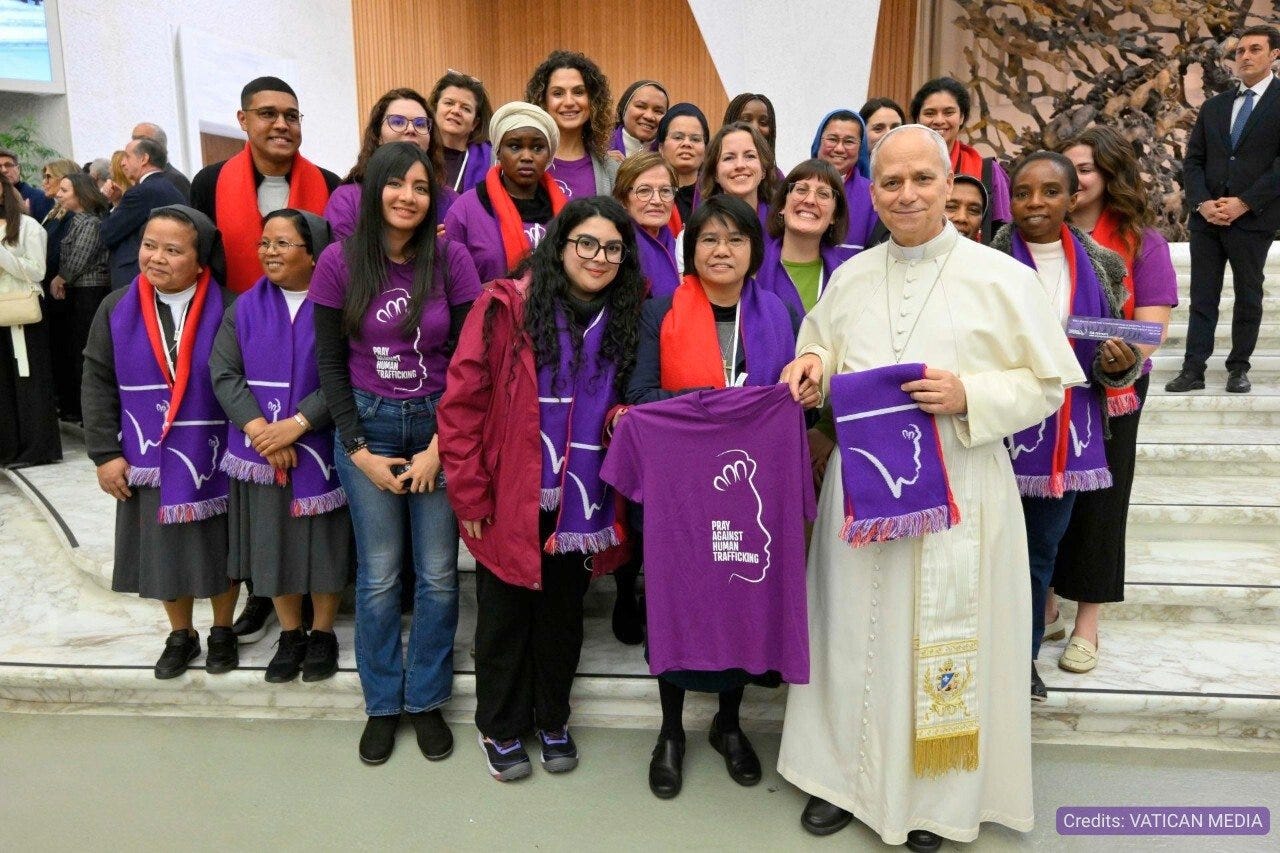
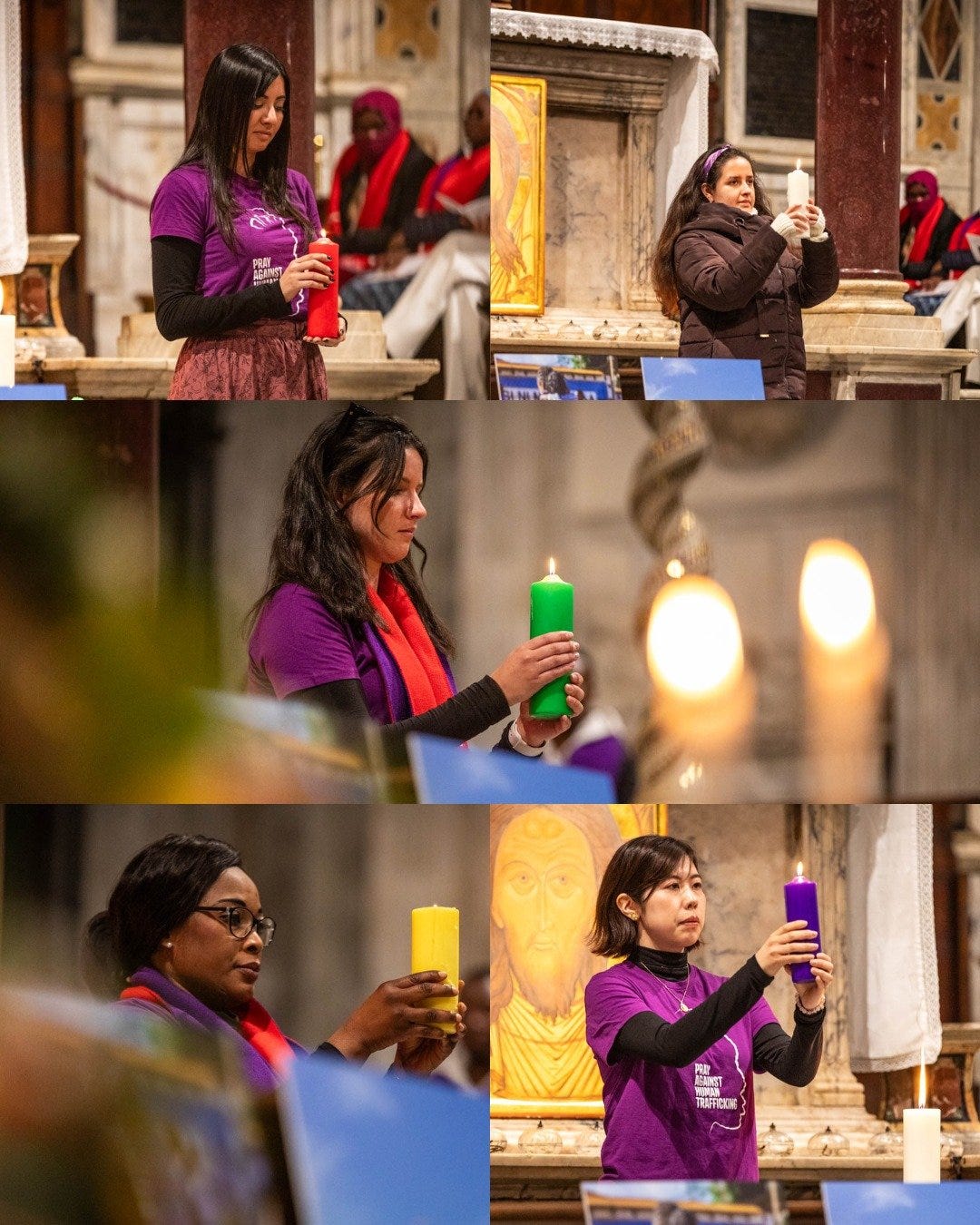
A “Vigil of Prayer” for the International Day of Prayer and Awareness Against Human Trafficking (February 8, 2026), was presented as “Peace Begins with Dignity,” and attributed to a Rome-centered initiative.
The vigil’s structure reads like a secularized devotional pageant, with five young people bringing symbolic candles representing continents and vulnerable groups. It then assigns prayers from multiple religions in sequence: a Christian beatitude, a Quran citation, a Hindu text, a Jewish citation, and a “Buddhist reflection.” It explicitly celebrates the gathering as a union “from every continent and tradition.”
The point here is not to diminish the evil of trafficking or the need for justice. The point is to notice what becomes “normal worship” in the postconciliar imagination. There is a kind of liturgy that the new system loves: moral themes, universal language, interfaith symbolism, and an atmosphere of uplift.
It even leans into a quasi-New Age register. Participants are invited to light candles while “sharing the vibration of love, hope, peace, faith, and justice.” The sending forth blesses the four directions like a ritualized civic benediction.
So pause and let the juxtaposition do its work.
A Catholic family that drives to an old Mass outside the authorized chapel is told they are flirting with schism and automatic excommunication. A Rome-approved “vigil” can comfortably blend quotations from false religions, treat Christianity as one flame among many, and close with a song slogan about carrying your candle.
This is the hierarchy announcing, by habit and by preference, what it believes the Church is for now.
The only baptism that causes alarm
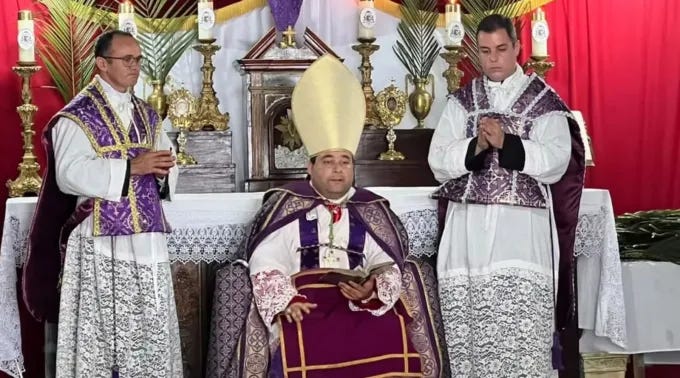
Finally, we land on an incident from the Archdiocese of Olinda and Recife: a warning about a “supposed baptism” performed in a chapel by a person “who presents himself as a bishop” but, since he is a sedevacantist, lacks canonical ties to the modern synodal Roman structure. The archdiocese calls it gravely illicit, especially because it was done in a parish chapel, and it exhorts the faithful to seek sacraments only from “legitimately constituted” ministers; in other words, those who believe in adulterous communion and blessing sodomy. It also admits internal administrative failure in authorizing the rite and claims the organizers lacked transparency and “communion.”
This reaction is fascinating precisely because it reveals the institution’s anxiety. For all the talk about “imperfect communion” and broad ecumenical gestures, the system still has reflexes. It can all of a sudden insincerely notice there is such a thing as sacramental authority, and realize the sacraments are not props.
But notice where that instinct gets deployed. Not against doctrinal innovators who hollow out the faith from within parish life, but against “irregular” truly Catholic clergy operating outside the official darkened channels. When the threat is to jurisdictional control, the language snaps back into focus.
The article then gives a biography of the man involved, including his prior ties to an SSPX-linked monastery, later proximity to the “Resistance,” ordination by Richard Williamson in 2017, and episcopal consecration by Daniel Dolan in 2021.
So here is the pattern the story unintentionally documents: the postconciliar structure is lenient about boundaries that protect doctrine, worship, and reverence, but extremely vigilant about boundaries that protect institutional permissioning.
What this reveals about the postconciliar religion
Put bluntly, the conciliar Church’s visible governance in these examples behaves like a regulator of religious expression inside a broader humanitarian and interfaith project rather than a “custodian of tradition.”
The old Mass is treated like an irritant because it stubbornly says, in public worship, that Catholicism is a revealed religion with a sacrificial liturgy, a priesthood ordered to that sacrifice, and a theological world that does not need to borrow legitimacy from a multi-tradition vigil. The traditional rite exposes the new priorities simply by existing.
That is why the system reaches for the strongest words when Catholics refuse to let the old rite be quarantined. It is why “schism” can be invoked for unauthorized liturgical persistence. And it is why the same system can simultaneously host ceremonies where Christianity is one candle among many “traditions,” with prayers arranged like an interfaith playlist.
What you have, in short, is a hierarchy that has become comfortable with doctrinal blur and symbolic ecumenism, yet increasingly intolerant of Catholic memory.
The practical takeaway for Catholics trying to stay sane
If you are a Catholic trying to keep the faith intact in 2026, these documents teach one hard lesson. Do not assume the loudest canonical threats correspond to the gravest spiritual dangers. Often they correspond to the gravest managerial inconveniences.
So when you see dioceses weaponize “communion” language against traditional Catholics, take it for what it is: an attempt to make the old faith feel illicit and socially dangerous, while the new “dignity and peace” religion continues to develop its own rites, its own sacred objects, and its own emotional register.
And when the same system suddenly discovers its sacramental scruples in the face of an unauthorized baptism, recognize the tell. Beneath the slogans, they still know that sacraments and authority matter. They just prefer to use that knowledge to police their institutional borders, not to defend the deposit of faith.
If you value independent Catholic analysis and want to help keep this work going, you can make a contribution or subscribe below. Every donation and subscription directly supports the writing, research, and production of Hiraeth in Exile.
Thank you for helping preserve independent Catholic journalism rooted in truth and tradition.
I excommunicate all bishops who participate in synodalism unless they repent and say 10 Hail Co-redemptrixes
This could drive us to despair and into the arms of the resistance, but then I think of the age of Arianism. We survived that. This too shall pass. I hope. It’s all so discouraging. I had hoped things might improve with a new Pope. In the meantime the FSSPX is my home.