
Avoiding Babylon, Avoiding the Question
They admit Rome hates Tradition, praise the SSPX, mock sedevacantists, and then refuse to face the ecclesiological disaster their own words expose.

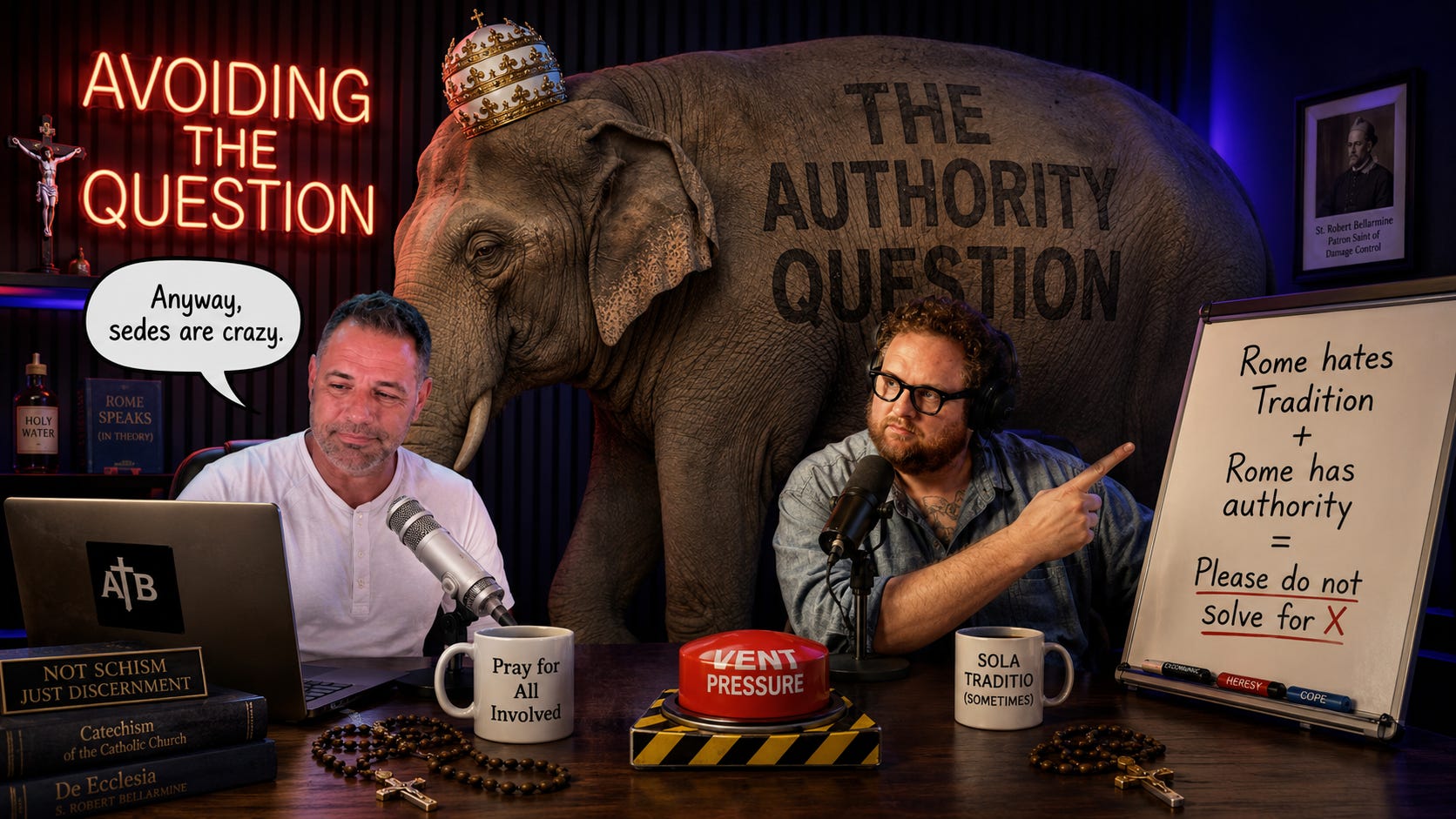
The Livestream Sees the Crisis and Then Ducks
The title screen says, “Catholics Lose Their Minds Over the SSPX Consecrations.”
That is already the tell.
The frame is psychological. Catholics are losing their minds. People are freaking out. Sedes are being crazy. Online trads are causing drama. Everybody needs to calm down.
Then the conversation begins, and the two hosts accidentally say half the things that need to be said.
They admit the SSPX Profession of Faith reads like Catholic doctrine. They admit that modern errors have penetrated the life of the Church under the influence of Vatican II and the postconciliar reforms. They admit that false ecumenism, liberalism, synodality, liturgical anthropocentrism, and interreligious fraternity are real attacks on Catholic order. They admit that Rome, or at least “the hierarchy,” hates Tradition. They admit that the faithful at SSPX chapels are often simply Catholics trying to be Catholic. They admit that the FSSP and ICKSP live under a sword hanging over their heads, because the local bishop or Rome can take away their Mass at any time.
Then they refuse the conclusion.
That is the whole show.
Avoiding Babylon sees Babylon, names Babylon, sells merch against Babylon, jokes about Babylon, and then insists that asking whether Babylon has really become the governing religious system is somehow lunacy.
This is the tragedy of much online traditionalism. It can diagnose the symptoms with energy, humor, and real affection for the old Faith. It can see that the official structures are full of revolutionaries. It can see that the postconciliar establishment punishes Tradition while blessing almost every liberal deviation and that the old Mass faithful are treated as dangerous while interreligious dialogue, synodality, and moral fog receive institutional protection.
But when the question becomes unavoidable, it changes the subject to tone.
The sedevacantists are mean. The converts are cringe. The “ultra-traditionalists” are driving wedges. The people who ask the hard question are “lunatics.” The real problem becomes not the revolution, but the person who refuses to sentimentalize the revolution.
“Rome Hates Tradition” Is Not a Throwaway Line
One of the most revealing moments comes when Anthony says plainly that Rome hates Tradition. Then he clarifies: not Rome, the hierarchy. The hierarchy hates Tradition.
That clarification is not a solution. It is the crisis.
If by “the hierarchy” he means a few bad bishops, fine. The Church has always had corrupt bishops. If he means many bishops are weak, worldly, cowardly, or compromised, fine. That is not new either.
But he is not talking about a few local embarrassments. He is talking about the machinery that governs Catholic life after Vatican II. He is talking about the people who can suppress the old Mass, discipline the SSPX, protect synodality, promote interreligious fraternity, and punish Tradition through normal institutional channels.
That cannot be brushed aside with “the hierarchy hates Tradition” as though one were complaining about a bad parish council.
A hierarchy that hates Tradition has become an anti-traditional principle of governance. If the official teaching, disciplinary, liturgical, and diplomatic apparatus of the visible Church reliably favors the revolution against the received Faith, then the Catholic has to ask what that means for indefectibility, authority, and visibility.
Avoiding Babylon does not want to ask that question. It wants to say the terrible thing and then file it under “pray for everybody involved.”
Prayer is necessary, but prayer is not an ecclesiology.
The Recognition Problem They Think Belongs Only to Sedes
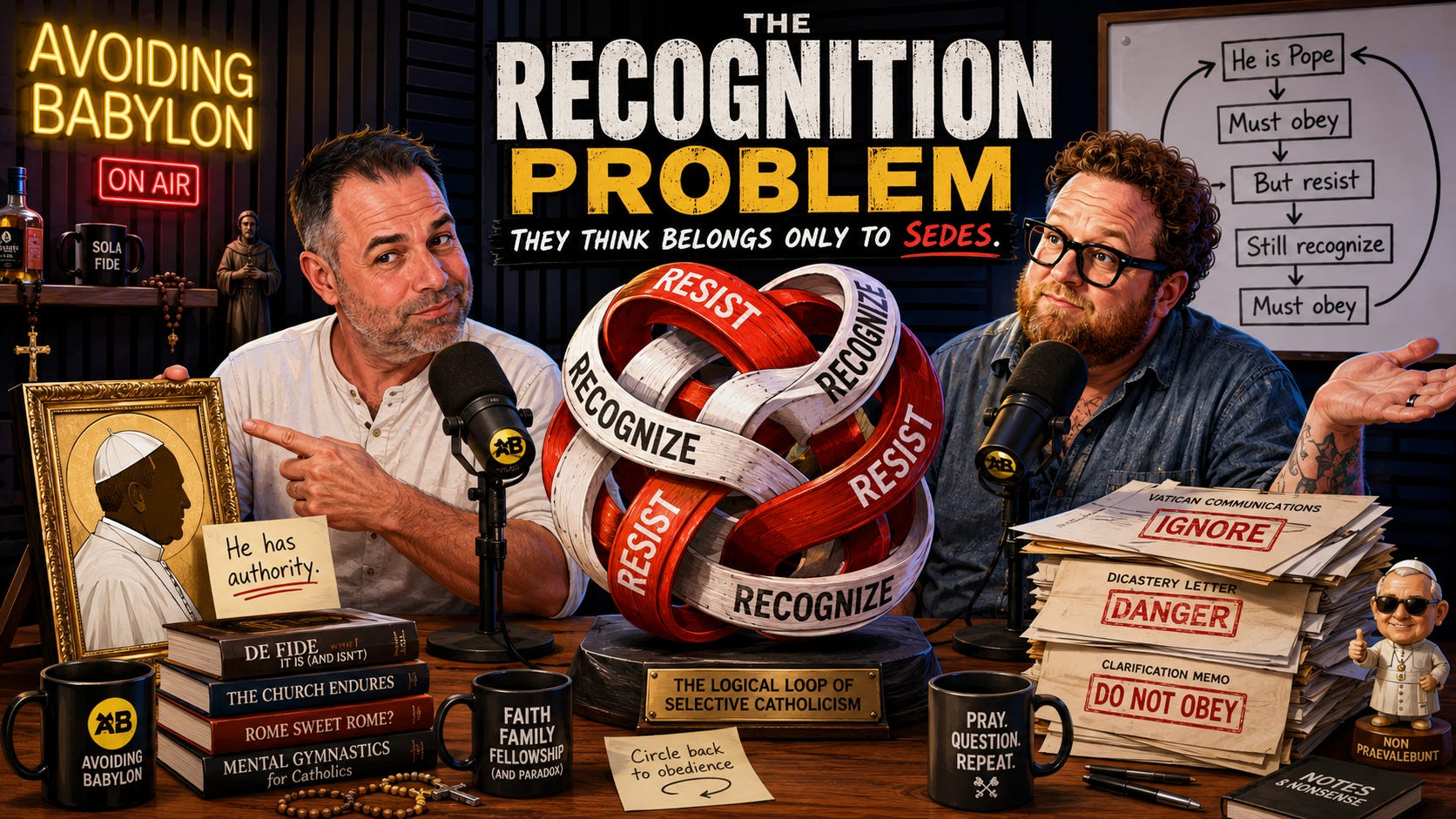
The hosts think the sedevacantist objection is simple and stupid: if the pope is really the pope, obey him.
They treat that as a gotcha from angry internet cranks. It is not a gotcha. It is the central wound of the recognize-and-resist position.
The SSPX recognizes the man in white as pope. It prays for him. It acknowledges his office. Then, at decisive moments, it treats his commands as dangerous to the Faith and proceeds without him. The hosts admire this. They say the Society is a sign of contradiction. They say Rome should just let them consecrate bishops and continue their mission and the Vatican is wrong to forbid it and wrong to excommunicate them.
But then what is recognition doing?
If recognition means “we name him as pope but reserve the right to reject his governance whenever Tradition requires it,” then recognition has become almost entirely verbal. It becomes a ceremonial acknowledgment attached to practical independence.
That may be emotionally satisfying, but is not stable Catholic doctrine.
The sedevacantist objection is not that Catholics must obey every wicked command. It is that the postconciliar crisis has forced Catholics into a position where the supposed rule of faith repeatedly functions as a danger to the Faith. The recognized authority promotes the new religion. The resistance preserves the old religion. The “pope” threatens the men preserving Tradition. The faithful are then told: recognize him, resist him, denounce his hierarchy, ignore his punishments, and call this Catholic normalcy.
That is not normalcy. That is a theological nervous breakdown.
The Visible Church Is Not Saved by Saying “Structure”
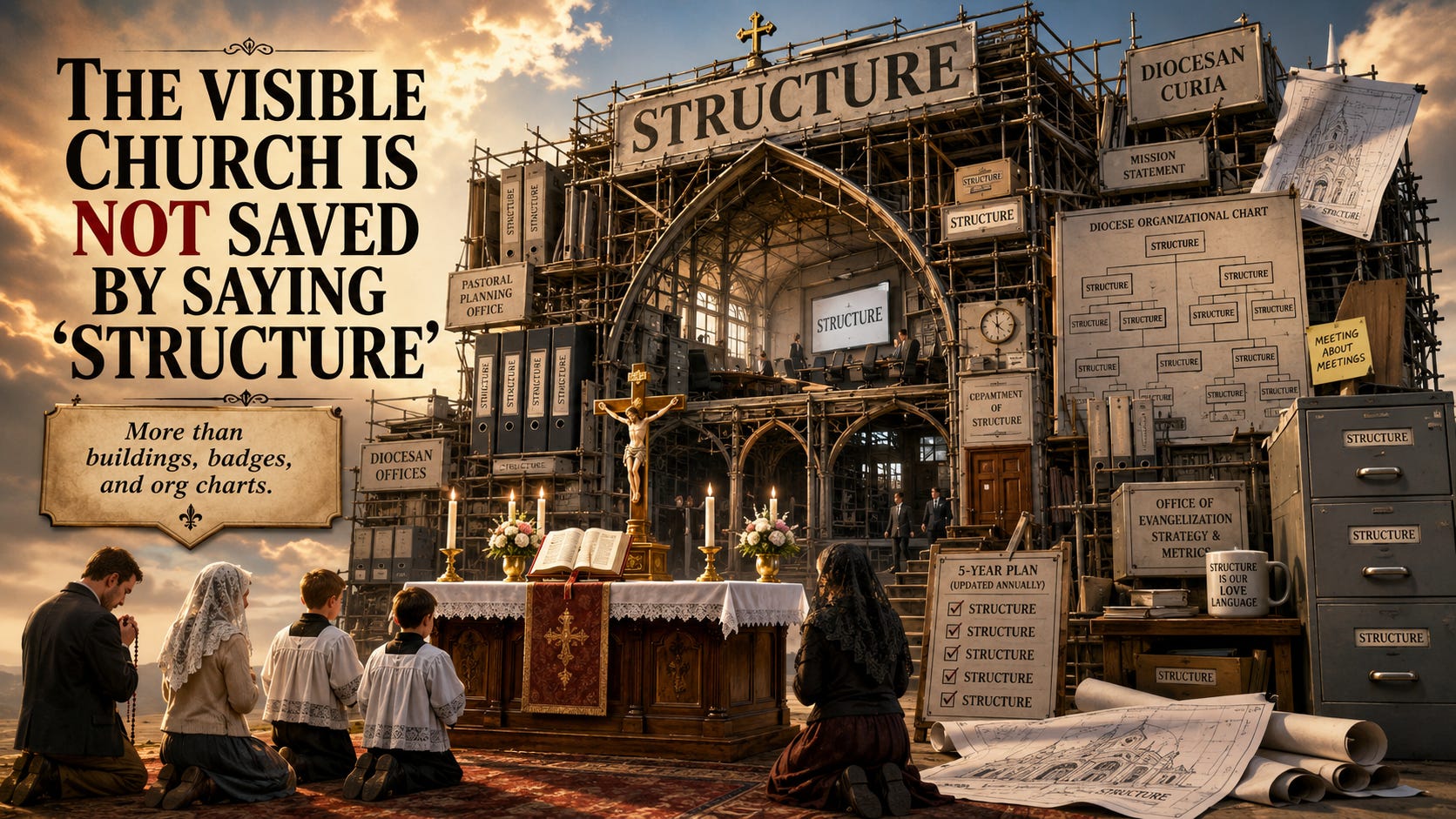
Rob argues that sedevacantists have a visibility problem, while the SSPX has structure, missions, bishops, priests, chapels, schools, and sacraments. There is truth buried inside that point. Many sedevacantist groups are fragmented, tiny, suspicious, and sometimes absurdly unstable. That is a real problem.
But the hosts use that problem as an escape hatch.
The Catholic Church’s visibility is not solved by pointing to a large priestly society with chapels and schools. Visibility is not mere institutional mass. Mormons have structure. Anglicans have structure. The Orthodox have structure. The postconciliar Church has immense structure. The question is not whether a group is organized. The question is whether the visible society is the Catholic Church, professing the Catholic Faith, governed by Catholic authority, teaching the same religion as before.
The SSPX’s structure is impressive and providential in many ways. It gives ordinary families access to the Mass, catechism, schools, and sacraments when diocesan structures have often failed them. But the SSPX itself does not claim to be the whole visible Church. It exists as a state-of-emergency response to a hierarchy it still recognizes while resisting its commands.
That may preserve much Catholic life. It does not solve the underlying contradiction.
Avoiding Babylon mocks sedevacantists for allegedly having no visible solution. Fine. Let that criticism land where it lands. But then the hosts must answer their own problem: what kind of visible Catholic Church is governed by men who hate Tradition, suppress the old Mass, protect the revolution, and threaten excommunication against bishops consecrated to preserve the traditional sacraments?
You cannot solve that by saying “well, at least the SSPX has missions.”
The Passion Analogy Has Limits
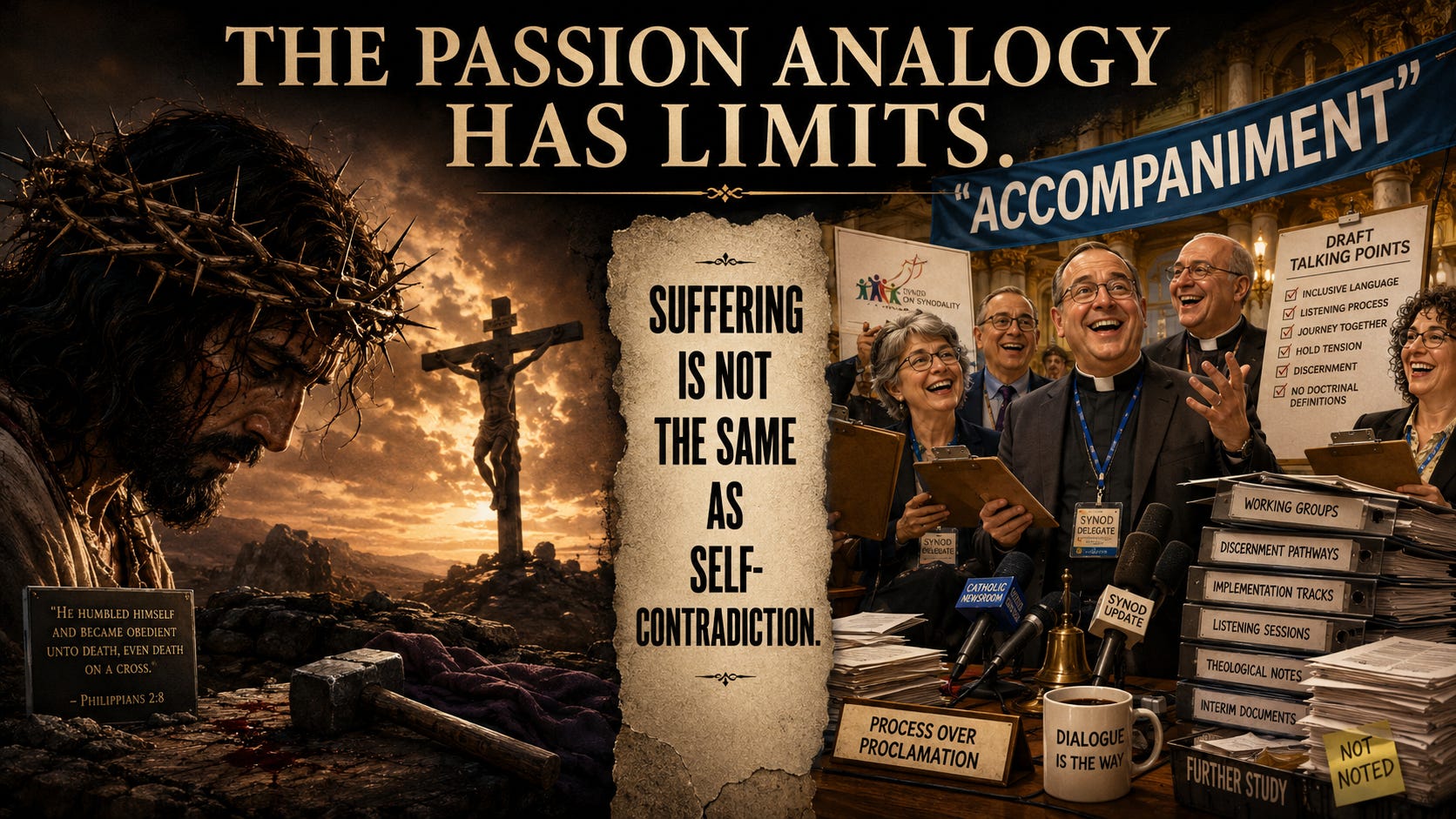
Anthony gives the familiar “Church in her Passion” argument. Christ at the pillar did not look like the Messiah, but He was still the Messiah. Therefore, the Church may look defeated, humiliated, disfigured, and almost unrecognizable, while remaining the Church.
There is truth here. The Church can suffer. The Church can be betrayed, can be mocked, and can appear weak before the world. The Church can be reduced, persecuted, and humanly powerless.
But Christ in His Passion never became the agent of falsehood.
He was disfigured. He did not teach error or clothe the enemies of God in religious legitimacy. He did not replace the Kingdom of God with interreligious fraternity, synodal consultation, liturgical experimentation, and managed ambiguity.
That is the problem with the Passion analogy. It can explain suffering. It cannot explain contradiction.
A suffering Church still teaches the Faith. A persecuted Church still sanctifies. A humiliated Church still condemns error. A Church in chains still remains the pillar and ground of truth.
The postconciliar establishment is not merely suffering under enemies. It is often promoting the enemies’ principles from within its own offices. That is why the analogy breaks down.
The question is not whether the Church can look weak.
The question is whether the Church can officially operate as the chaplaincy of the revolution and still be recognized as the spotless Bride speaking through her ordinary organs.
Avoiding Babylon feels the force of that question. Then it runs back to “God is writing a comeback story.”
Hopium Is Not Theology
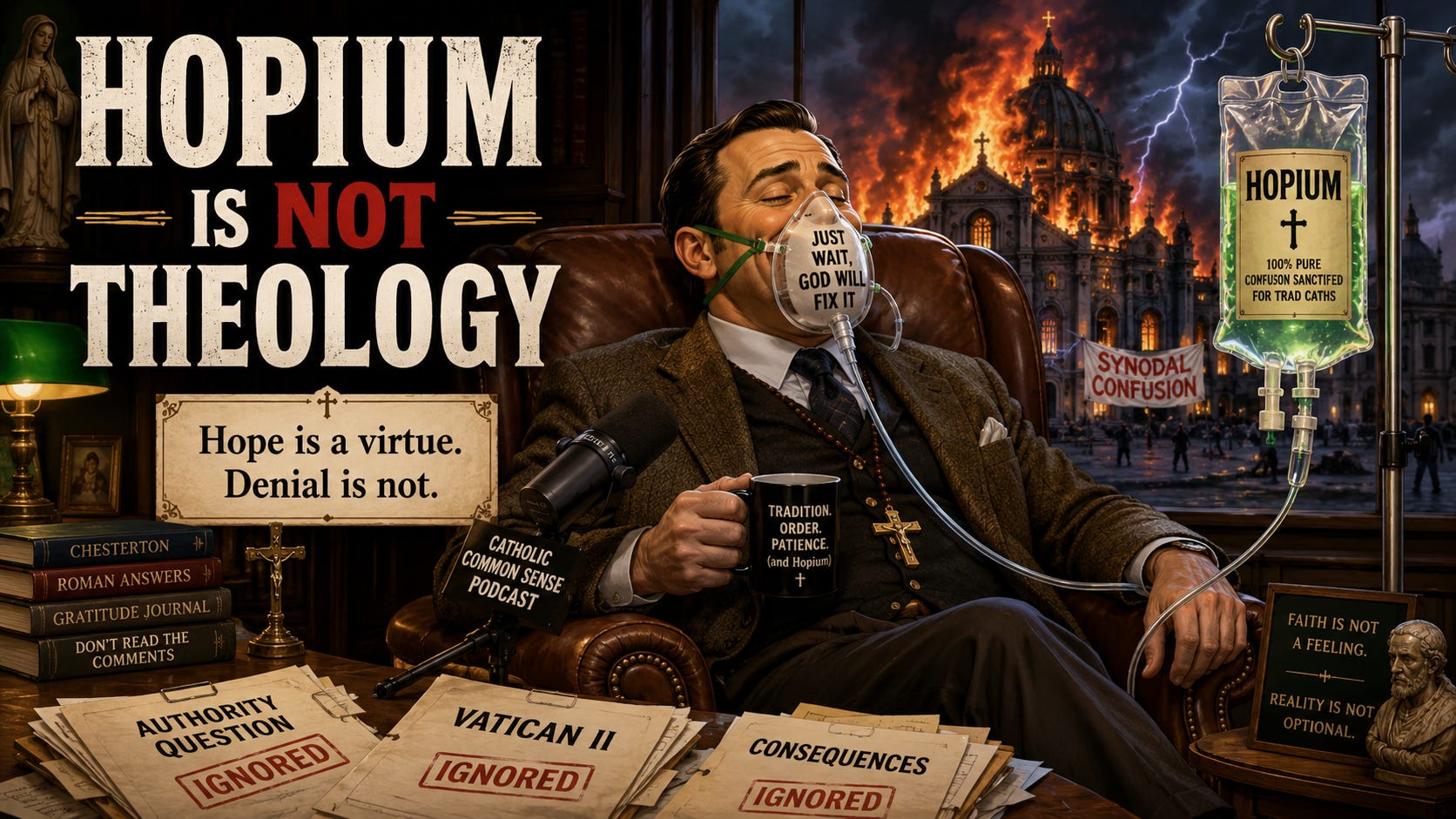
There is a lot of “God will do something spectacular” talk near the end of the show. The worse things get, the closer we are to divine intervention. The crisis will become the greatest comeback story in history. The faithful need to stay calm, raise their children, evangelize locally, avoid doomscrolling, and trust that God will act.
Much of that is spiritually good advice at the practical level. A father should raise his children. A Catholic should pray. A man should not pickle his soul in online scandal. God will act. God is never defeated.
But “God will fix it later” cannot be used to avoid naming what it is now.
The Catholic Faith is not built on feelings about the eventual comeback. It is built on the promises of Christ, the visibility of the Church, the indefectibility of her teaching, and the authority of her pastors. If the official postconciliar institution is continually producing anti-traditional fruits, Catholics cannot answer the problem by saying the third act of the movie will be amazing.
The hosts dislike the word “cope,” but their own solution is basically Catholic hopium with a livestream schedule. Do your local thing. Stay calm. Pray. Watch God work. Do not ask too hard whether the men commanding the official structure are actually exercising Catholic authority or presiding over a counterfeit religious settlement.
That is anesthesia.
“Don’t Drive a Wedge” Is the New Trad Ecumenism
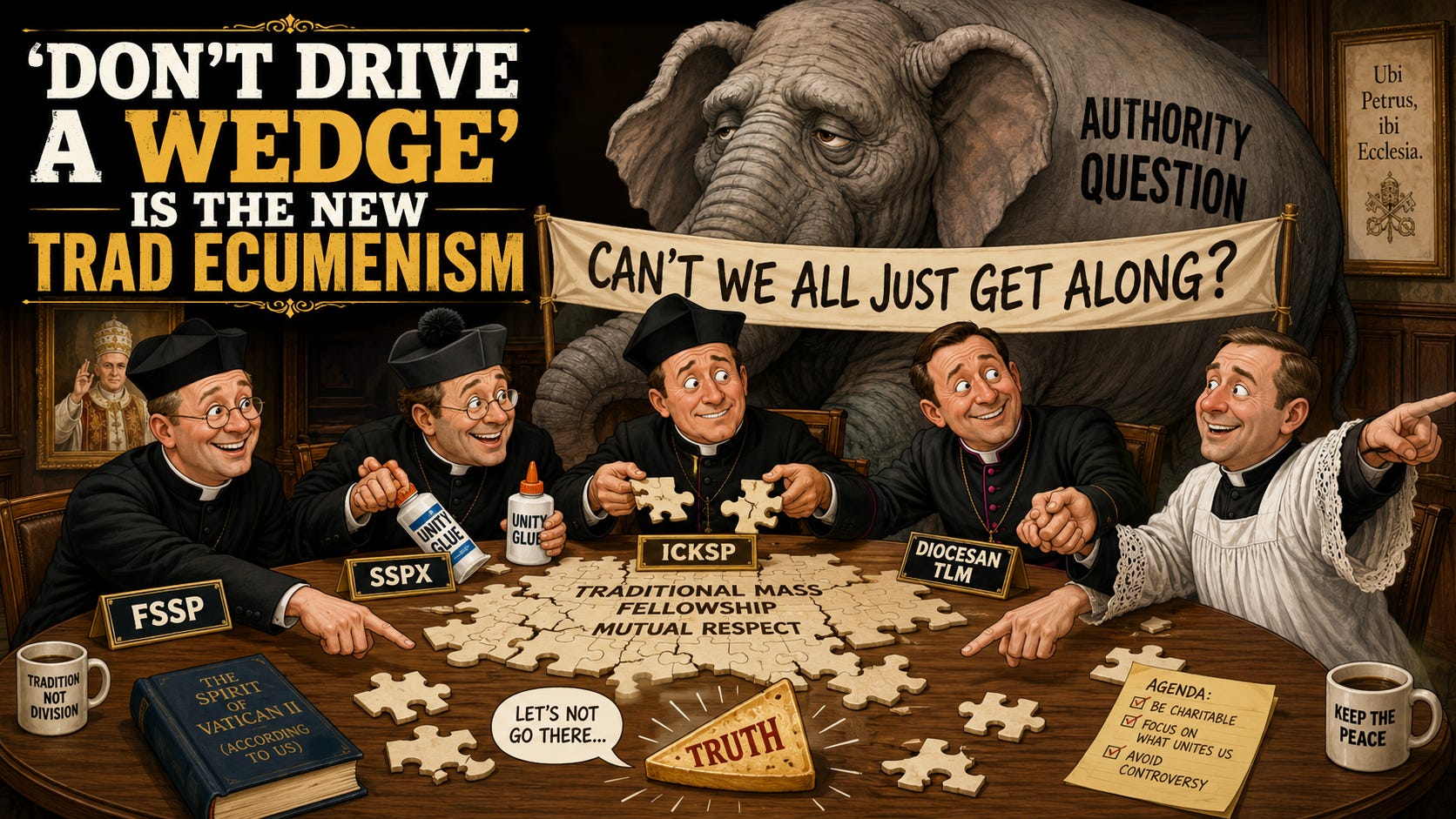
A major theme of the show is that sedevacantists are trying to drive a wedge between diocesan Latin Mass Catholics and SSPX Catholics. The hosts pride themselves on sympathy, conversation, and keeping the clans together.
There is a decent instinct here. Ordinary Catholics attached to the old Mass should not hate each other. FSSP families, diocesan TLM families, ICKSP families, SSPX families, and sedevacantist families often share far more in daily life than they share with the beige diocesan bureaucracy managing the revolution. They homeschool, pray the Rosary, have large families, read old catechisms, and want their children to remain Catholic.
But unity without truth becomes trad ecumenism.
At some point, the question is not whether everyone can be friendly. The question is what is true. Is the postconciliar claimant a true pope exercising authority over the Catholic Church? Is Vatican II reconcilable with the prior magisterium? Is the New Mass a legitimate expression of the Roman Rite or a manufactured rite expressing a new theology? Can the Catholic hierarchy officially promote religious liberty, false ecumenism, synodality, and interreligious fraternity in the way it has, without forcing a deeper conclusion?
These are not wedges. They are questions.
Avoiding Babylon acts as though asking them firmly is socially destructive. That is exactly how liberal Catholicism works too. The liberal says doctrine divides. The moderate trad says ecclesiology divides. Both prefer managed ambiguity because managed ambiguity allows the room to stay together.
But Catholic truth is not a podcast green room.
Taylor, Ripperger, and Predictable Caution
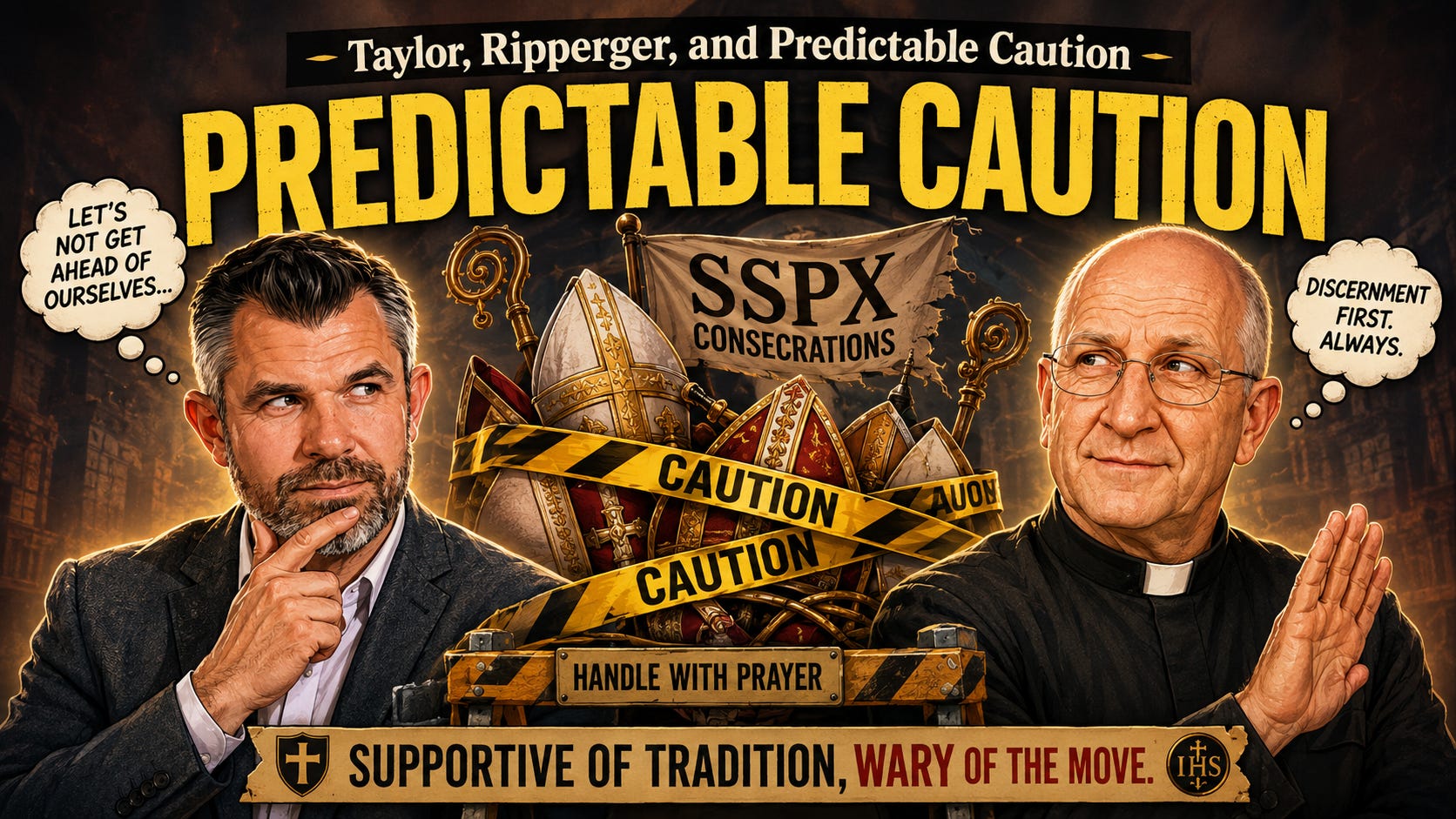
The hosts are right about one thing: no one should be surprised that Taylor Marshall or Father Ripperger would be cautious about unauthorized SSPX consecrations. Ripperger came through the Fraternity world. Taylor has long operated in a recognize-and-resist lane. Their sympathy for Lefebvre combined with reluctance to endorse new consecrations is not shocking. It is consistent with their position.
But that consistency is precisely the problem.
Domesticated traditionalism can admire Lefebvre safely because the dead Lefebvre can be turned into a symbol. The living Lefebvre problem is harder. The living problem asks whether the Catholic must obey men who use Catholic authority to dismantle Catholic Tradition. The living problem asks whether Vatican II is a reformable mess or the charter of a new religion and whether “recognition” can survive decades of practical resistance.
The old conservative-trad model wants to keep all the pieces: Vatican II in continuity, the new rite as valid and legitimate, the old Mass as better, the postconciliar claimants as popes, the hierarchy as hateful toward Tradition, the SSPX as understandable but disobedient, and the faithful as obligated to remain calm.
That model may feel balanced. It is actually a bundle of contradictions held together by piety and temperament.
Avoiding Babylon defends that ecosystem because that is the ecosystem it inhabits: sympathetic to the SSPX, friendly to diocesan trads, annoyed by Rome, hostile to sedevacantists, allergic to hard conclusions, and very invested in keeping the audience from splitting.
That may be good for a show. It is not good enough for the crisis.
Lefebvre’s Accusation Was the Main Question
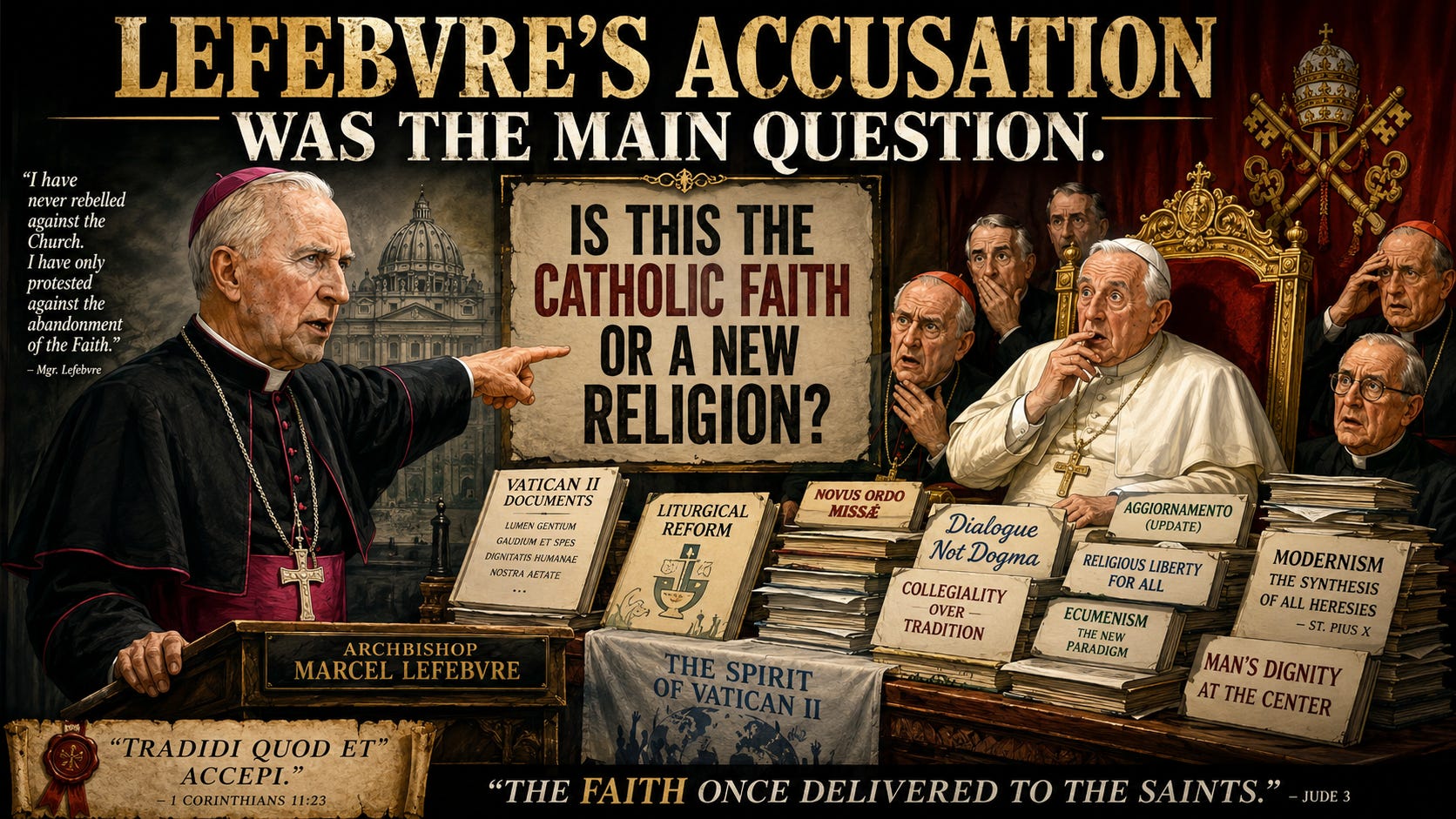
One of the most interesting parts of the transcript comes when they discuss Paul VI’s confrontation with Archbishop Lefebvre. Paul reportedly confronted Lefebvre over the accusation that he was a modernist pope and that applying the Council would betray the Church. Paul’s response was essentially: if that were true, I would have to resign and let you lead the Church.
That is the question.
Avoiding Babylon treats it as a wild historical moment. It was more than that. It was the hinge.
If Paul VI was truly using papal authority to impose modernist reforms that betrayed the Church, then the crisis cannot be reduced to “obedience versus disobedience.” If Lefebvre was wrong, then his resistance was gravely disordered. If Lefebvre was substantially right, then Catholics face a monstrous problem: the man recognized as pope was using the machinery of authority to revolutionize Catholic life.
Paul VI understood the implication better than most modern trad podcasters do. He knew that Lefebvre’s accusation, if true, did not leave everyone in a neat conservative Catholic framework. It struck at the root.
Avoiding Babylon wants Lefebvre’s diagnosis without Lefebvre’s consequences. They want to say the hierarchy hates Tradition, the SSPX is a sign of contradiction and Vatican offices promote revolutionary errors. They want to say the old Faith is under attack. But they do not want the theological burden that follows.
Lefebvre’s life forced the question.
Avoiding Babylon’s show avoided it.
The SSPX Is Not the Villain in This Story
The SSPX is not above criticism. It has its own weaknesses, blind spots, and unresolved contradictions. Its recognize-and-resist position can become incoherent. Its internal culture can become defensive. Its rhetoric can sometimes preserve the old Faith while refusing to solve the authority question that its own existence raises.
But in this dispute, the SSPX is not the villain.
The villain is the postconciliar machine that can tolerate almost every novelty except Tradition. It can dialogue with religions that deny Christ, negotiate endlessly with progressive bishops, and produce new language about human dignity, fraternity, accompaniment, synodality, and listening. It can watch the old moral order collapse. It can permit liturgical degradation for decades.
But when men consecrate bishops to preserve the traditional sacraments, suddenly the machine remembers law.
Avoiding Babylon sees this. It says Rome is wrong to forbid the consecrations and wrong to excommunicate. It says the faithful at SSPX chapels are often simply trying to live Catholic lives. It sees that Rome’s severity is selective.
Then it refuses to ask what selective severity reveals.
A real Catholic hierarchy should be severe against heresy, sacrilege, sexual corruption, false worship, and public attacks on doctrine. The postconciliar hierarchy is severe against Tradition. That fact cannot be domesticated.
The Real Question They Avoided
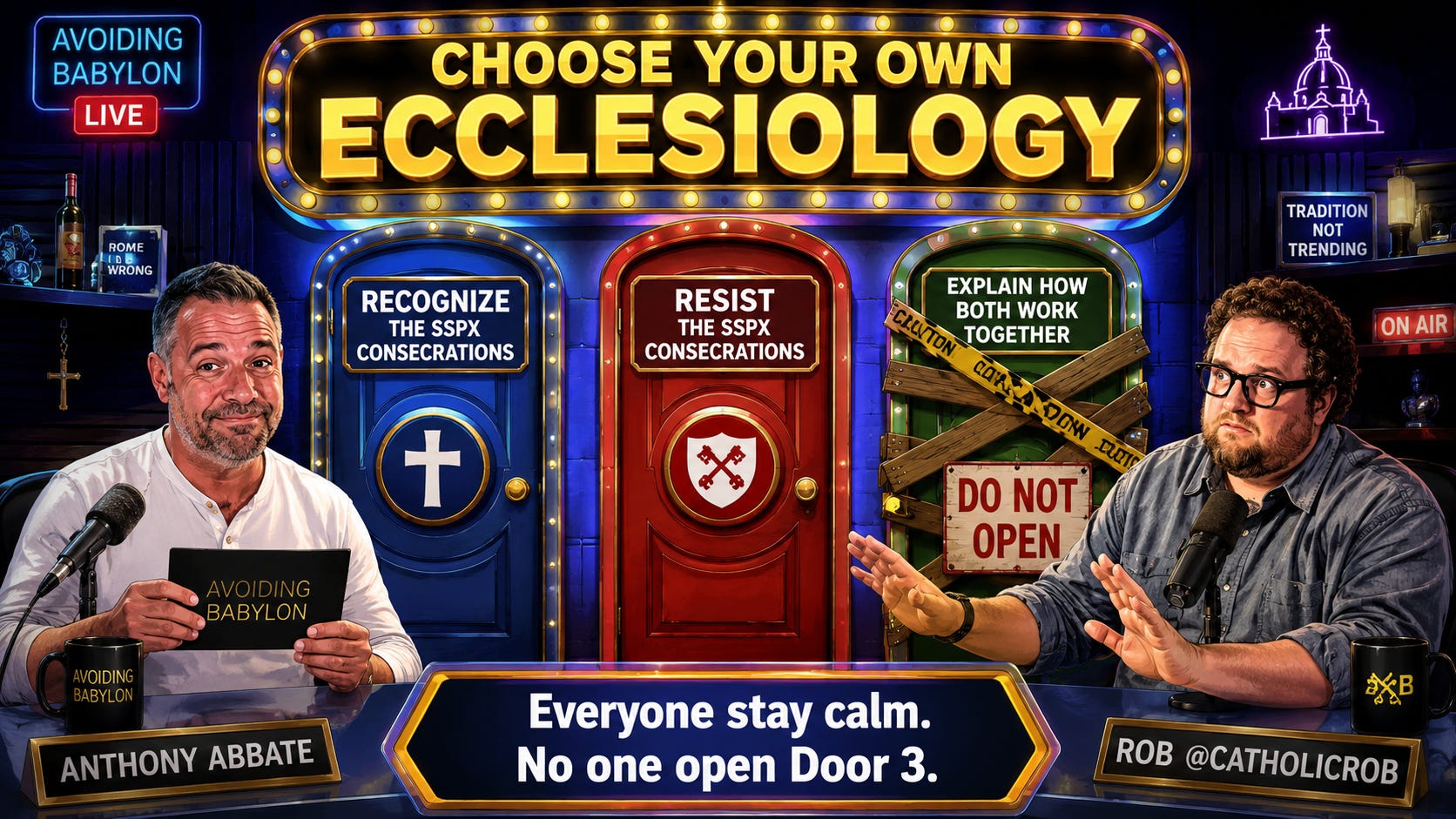
The real question is whether the postconciliar structure that claims to be the Catholic hierarchy can repeatedly act as the enemy of Catholic Tradition while retaining the ordinary claims Catholics are required to give the hierarchy of the Catholic Church.
That is the question.
Avoiding Babylon’s hosts come close to it again and again. They read the SSPX Profession and agree with it. They point to Vatican interreligious dialogue and see the contradiction. They admit the hierarchy hates Tradition. They sympathize with Lefebvre. They acknowledge the faithful’s confusion when the Church suddenly seemed completely different. They know something catastrophic happened.
Then they make fun of the people who refuse to stop there.
That is why the episode is so frustrating. It is not stupid because they see nothing. It is stupid because they see so much and then retreat into the safe pose: everyone calm down, sedes are nuts, SSPX is understandable, Rome is wrong, the hierarchy hates Tradition, but God will fix it and do not drive wedges.
That is managed paralysis.
Conclusion: The Safety Valve of Online Traditionalism
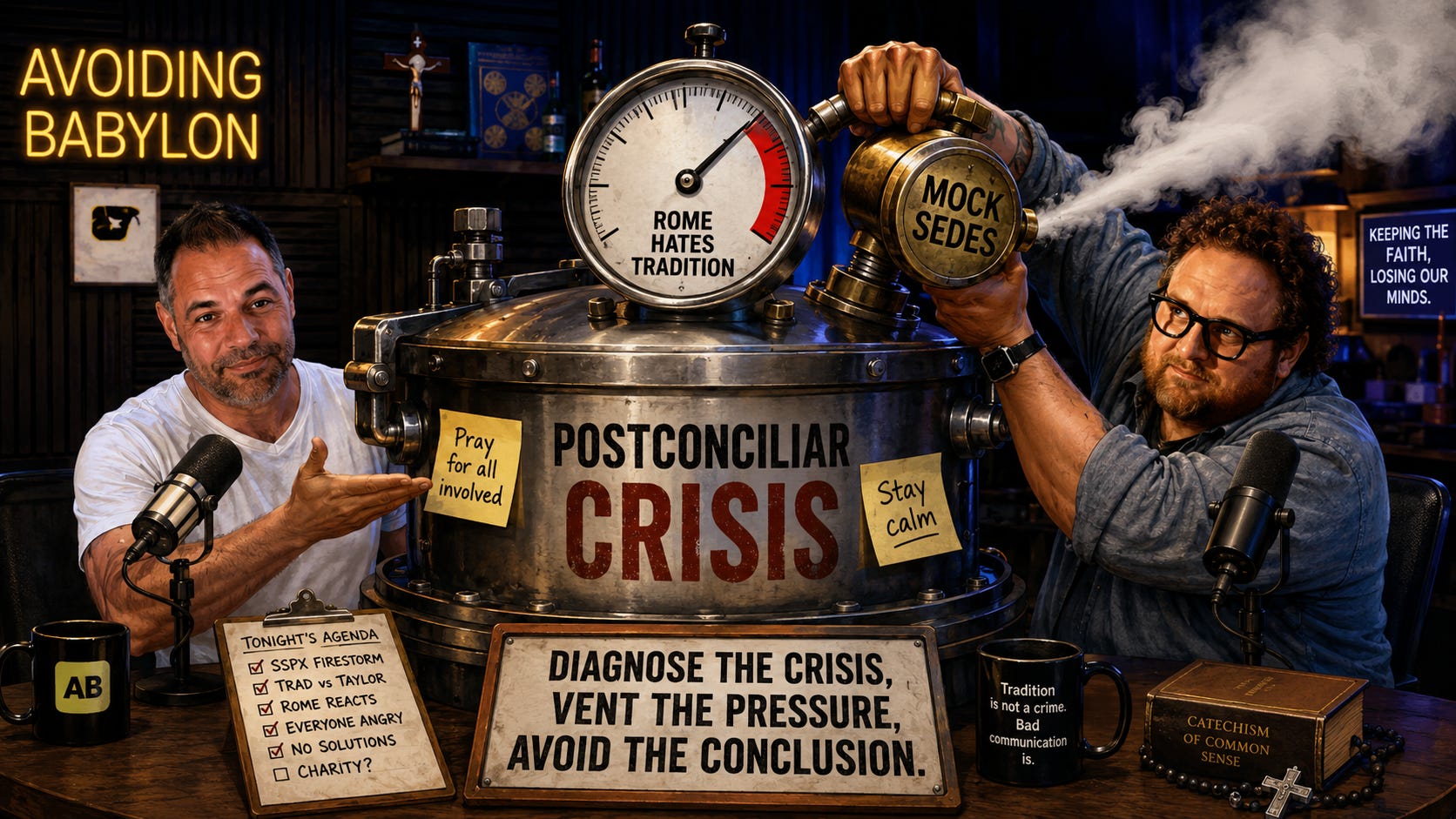
Avoiding Babylon functions as a safety valve for Catholics who know the official story is false but are not ready to face what follows.
It lets them laugh at the absurdity, criticize Rome, praise the SSPX and admire Abp. Lefebvre. It lets them talk about Vatican II, false ecumenism, liberalism, and liturgical collapse. It lets them say the hierarchy hates Tradition.
Then, just when the pressure reaches the point of real conclusion, it vents the steam by mocking sedevacantists and calling everyone back to calm.
That may keep an audience together. It does not resolve the crisis.
The SSPX consecrations tear away the polite fiction. They force Catholics to ask whether Tradition is allowed to live only by permission of the men trying to kill it and whether “communion” now means submission to the postconciliar settlement. They force Catholics to ask whether Vatican II has become the real loyalty oath and whether the old Faith can be preserved by men who still insist that the revolutionaries possess the authority of Christ.
The hosts wanted to talk about Catholics losing their minds.
The better question is whether Catholics have lost the will to use them.
If you value independent Catholic analysis and want to help keep this work going, you can make a contribution or subscribe below. Every donation and subscription directly supports the writing, research, and production of Hiraeth in Exile.
Thank you for helping preserve independent Catholic journalism rooted in truth and tradition.
At least they've dropped the Temu Nick Fuentes grift for a bit
Another great column Chris, but where do you come down on all this? Are you sedevacanist, sspx, fssp, diocese trad or what? Easy to criticize everyone else's position without revealing your own. It's time to do that. No hostility here, but your hiding a bit. I'm sspx by the way.